Stephen B. Heard - Böcker
Visar alla böcker från författaren Stephen B. Heard. Handla med fri frakt och snabb leverans.
8 produkter
8 produkter
912 kr
Skickas inom 7-10 vardagar
Blending deep experience, humor, and evidence-based advice, this is an invaluable resource for everyone involved in developing good scientific writers. Every scientist eventually teaches scientific writing or mentors junior scientists as they develop their writing skills—only to discover that the task is both challenging and remarkably time-consuming. If you are in this position, Teaching and Mentoring Writers in the Sciences is the resource you need, offering approaches that will help you help writers develop their skills more effectively and with less time and effort. Bethann Garramon Merkle and Stephen B. Heard, both experts in scientific communication, offer evidence-based advice that draws on their own extensive experience as well as on proven tactics from writing studies, science studies, and rhetoric and composition. Shorn of the unfamiliar and off-putting jargon that much pedagogy literature adopts, their advice is engaging and accessible to scientists. As you read, you’ll see where developing writers are coming from; how mastering scientific writing matters to the careers of students who do and don’t continue in academia; how writing occurs and is taught in both undergraduate and graduate curricula; how to find and harness teaching resources that help share the workload; how to teach writing to students who speak English as an additional language; and how to navigate the use (by yourself and by developing writers) of tools from pencils and dictionaries to AI writing assistants. If you teach or mentor scientific writers, this book will help you deliver what your students and mentees need most: clear, effective writing guidance.
184 kr
Skickas inom 7-10 vardagar
Blending deep experience, humor, and evidence-based advice, this is an invaluable resource for everyone involved in developing good scientific writers. Every scientist eventually teaches scientific writing or mentors junior scientists as they develop their writing skills—only to discover that the task is both challenging and remarkably time-consuming. If you are in this position, Teaching and Mentoring Writers in the Sciences is the resource you need, offering approaches that will help you help writers develop their skills more effectively and with less time and effort. Bethann Garramon Merkle and Stephen B. Heard, both experts in scientific communication, offer evidence-based advice that draws on their own extensive experience as well as on proven tactics from writing studies, science studies, and rhetoric and composition. Shorn of the unfamiliar and off-putting jargon that much pedagogy literature adopts, their advice is engaging and accessible to scientists. As you read, you’ll see where developing writers are coming from; how mastering scientific writing matters to the careers of students who do and don’t continue in academia; how writing occurs and is taught in both undergraduate and graduate curricula; how to find and harness teaching resources that help share the workload; how to teach writing to students who speak English as an additional language; and how to navigate the use (by yourself and by developing writers) of tools from pencils and dictionaries to AI writing assistants. If you teach or mentor scientific writers, this book will help you deliver what your students and mentees need most: clear, effective writing guidance.
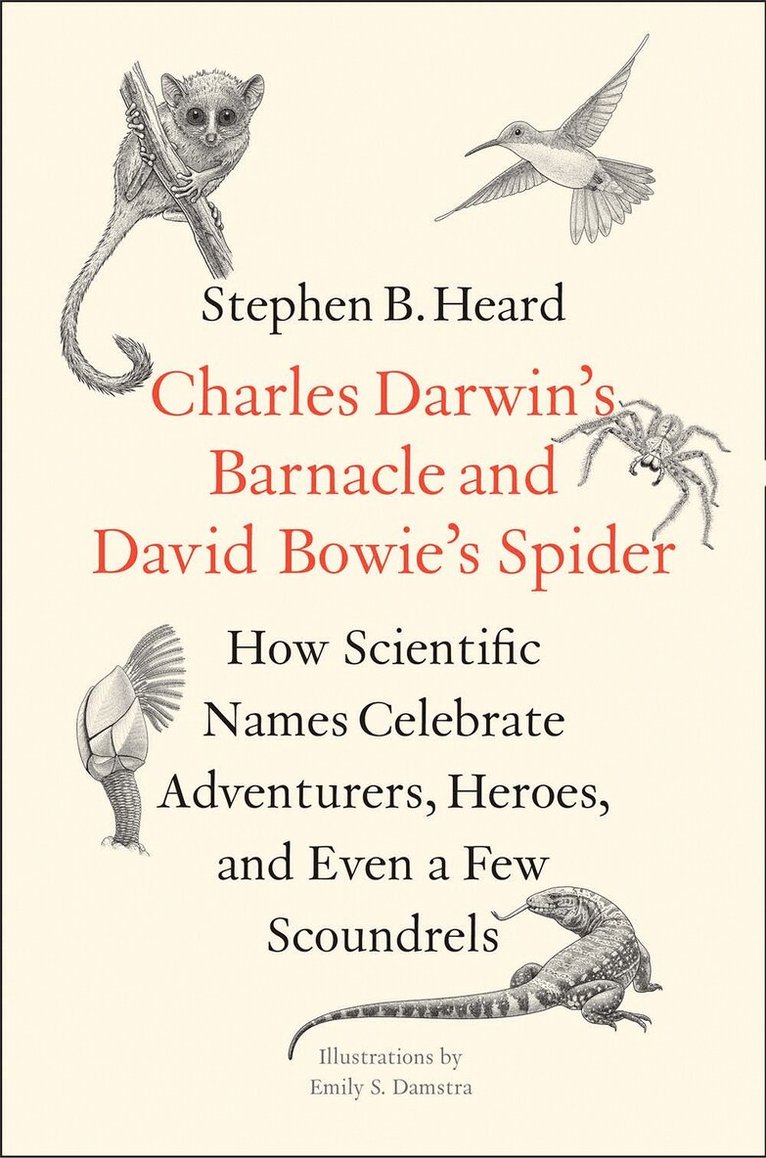
Charles Darwin's Barnacle and David Bowie's Spider
How Scientific Names Celebrate Adventurers, Heroes, and Even a Few Scoundrels
Inbunden, Engelska, 2020
256 kr
Skickas inom 7-10 vardagar
An engaging history of the surprising, poignant, and occasionally scandalous stories behind scientific names and their cultural significance, “More fun than you’ve ever had with taxonomy in your whole entire life!" (Diana Gabaldon, author of the Outlander series and PhD in Quantitative Behavioral Ecology)Ever since Carl Linnaeus’s binomial system of scientific names was adopted in the eighteenth century, scientists have been eponymously naming organisms in ways that both honor and vilify their namesakes. This charming, informative, and accessible history examines the fascinating stories behind taxonomic nomenclature, from Linnaeus himself naming a small and unpleasant weed after a rival botanist to the recent influx of scientific names based on pop-culture icons—including David Bowie’s spider, Frank Zappa’s jellyfish, and Beyoncé’s fly. Exploring the naming process as an opportunity for scientists to express themselves in creative ways, Stephen B. Heard’s fresh approach shows how scientific names function as a window into both the passions and foibles of the scientific community and as a more general indicator of the ways in which humans relate to, and impose order on, the natural world.
211 kr
Tillfälligt slut
Scientist’s Guide to Writing, 2nd Edition
How to Write More Easily and Effectively throughout Your Scientific Career
Häftad, Engelska, 2022
227 kr
An updated and expanded edition of the acclaimed writing guide for scientistsThe Scientist’s Guide to Writing explains the essential techniques that students, postdocs, and early-career scientists need to write more clearly, efficiently, and easily. Now fully updated and expanded, this incisive primer offers practical advice on such topics as generating and maintaining writing momentum, structuring a scientific paper, revising a first draft, handling citations, responding to peer reviews, managing coauthorships, and more. The ability to write clearly is critical to any scientific career. The Scientist’s Guide to Writing shows scientists how to become better writers so that their ideas have the greatest possible impact.New chapters discuss effective reading, choosing the right journal for your research, and the advantages and disadvantages of posting preprintsProvides additional advice on reporting statistical results, dealing with conflicting peer reviews, managing coauthorships, writing with English as an additional language, and moreEmphasizes writing as a process, not just a productEncourages habits that improve motivation and productivityOffers detailed guidance on submission, review, revision, and publicationIncludes a wealth of new exercises
Scientist’s Guide to Writing, 2nd Edition
How to Write More Easily and Effectively throughout Your Scientific Career
Inbunden, Engelska, 2022
872 kr
Skickas inom 7-10 vardagar
An updated and expanded edition of the acclaimed writing guide for scientistsThe Scientist’s Guide to Writing explains the essential techniques that students, postdocs, and early-career scientists need to write more clearly, efficiently, and easily. Now fully updated and expanded, this incisive primer offers practical advice on such topics as generating and maintaining writing momentum, structuring a scientific paper, revising a first draft, handling citations, responding to peer reviews, managing coauthorships, and more. The ability to write clearly is critical to any scientific career. The Scientist’s Guide to Writing shows scientists how to become better writers so that their ideas have the greatest possible impact.New chapters discuss effective reading, choosing the right journal for your research, and the advantages and disadvantages of posting preprintsProvides additional advice on reporting statistical results, dealing with conflicting peer reviews, managing coauthorships, writing with English as an additional language, and moreEmphasizes writing as a process, not just a productEncourages habits that improve motivation and productivityOffers detailed guidance on submission, review, revision, and publicationIncludes a wealth of new exercises
Scientist’s Guide to Writing, 3rd Edition
How to Write More Easily and Effectively Throughout Your Scientific Career
Inbunden, Engelska, 2026
1 129 kr
Kommande
A fully updated and expanded third edition of the acclaimed writing guide for scientistsThe Scientist’s Guide to Writing explains the essential techniques that students, postdocs, and early-career scientists need to write more clearly, efficiently, and easily. Now in its third edition, this incisive primer offers practical advice on a host of topics, from maintaining writing momentum to structuring a scientific paper, revising a first draft, reading effectively, handling citations, responding to peer reviews, and choosing the right journal for your research. The ability to write clearly is critical to any scientific career. This book shows scientists how to become better writers so that their ideas have the greatest possible impact.Features a new chapter on AI writing tools that discusses the benefits and pitfalls of using LLMs as well as the legal, ethical, and professional implications scientists need to consider before working with themProvides expanded coverage of preprinting and predatory journals, humor and cultural references in titles, graphical abstracts, and managing very large coauthorship teamsOffers detailed guidance on submission, review, revision, and publicationShares invaluable advice on reporting statistical results, dealing with conflicting peer reviews, writing with English as an additional language, and moreEncourages habits that improve motivation and productivityIncludes a wealth of exercises along with numerous new literature citations to support the discussions in the book
Scientist’s Guide to Writing, 3rd Edition
How to Write More Easily and Effectively Throughout Your Scientific Career
Häftad, Engelska, 2026
349 kr
Kommande
A fully updated and expanded third edition of the acclaimed writing guide for scientistsThe Scientist’s Guide to Writing explains the essential techniques that students, postdocs, and early-career scientists need to write more clearly, efficiently, and easily. Now in its third edition, this incisive primer offers practical advice on a host of topics, from maintaining writing momentum to structuring a scientific paper, revising a first draft, reading effectively, handling citations, responding to peer reviews, and choosing the right journal for your research. The ability to write clearly is critical to any scientific career. This book shows scientists how to become better writers so that their ideas have the greatest possible impact.Features a new chapter on AI writing tools that discusses the benefits and pitfalls of using LLMs as well as the legal, ethical, and professional implications scientists need to consider before working with themProvides expanded coverage of preprinting and predatory journals, humor and cultural references in titles, graphical abstracts, and managing very large coauthorship teamsOffers detailed guidance on submission, review, revision, and publicationShares invaluable advice on reporting statistical results, dealing with conflicting peer reviews, writing with English as an additional language, and moreEncourages habits that improve motivation and productivityIncludes a wealth of exercises along with numerous new literature citations to support the discussions in the book