Stephen B. Wicker – författare
Visar alla böcker från författaren Stephen B. Wicker. Handla med fri frakt och snabb leverans.
9 produkter
9 produkter
Inbunden, Engelska, 2013
1 120 kr
Skickas inom 5-8 vardagar
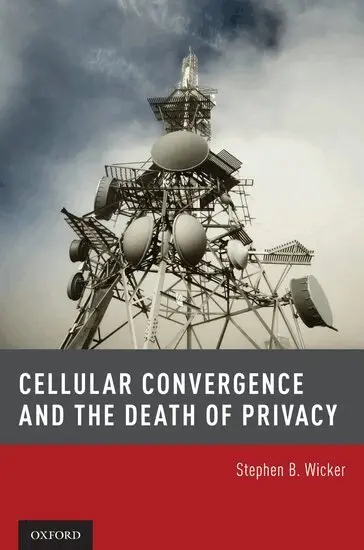
Cellular technology has always been a surveillance technology, but "cellular convergence" - the growing trend for all forms of communication to consolidate onto the cellular handset - has dramatically increased the impact of that surveillance. In Cellular Convergence and the Death of Privacy, Stephen Wicker explores this unprecedented threat to privacy from three distinct but overlapping perspectives: the technical, the legal, and the social. Professor Wicker first describes cellular technology and cellular surveillance using language accessible to non-specialists. He then examines current legislation and Supreme Court jurisprudence that form the framework for discussions about rights in the context of cellular surveillance. Lastly, he addresses the social impact of surveillance on individual users. The story he tells is one of a technology that is changing the face of politics and economics, but in ways that remain highly uncertain.
E-bok
PDF, Engelska, 2006687 kr
Läs direkt efter köp
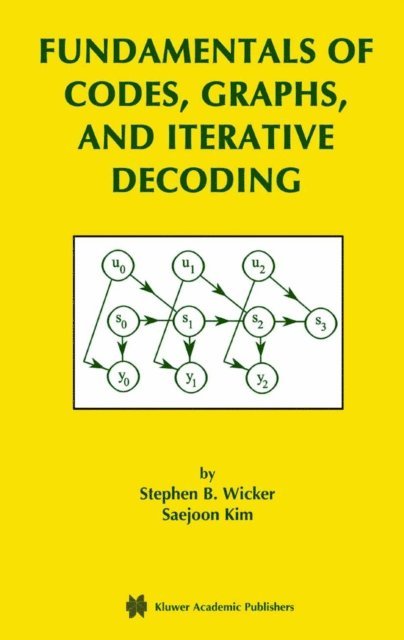
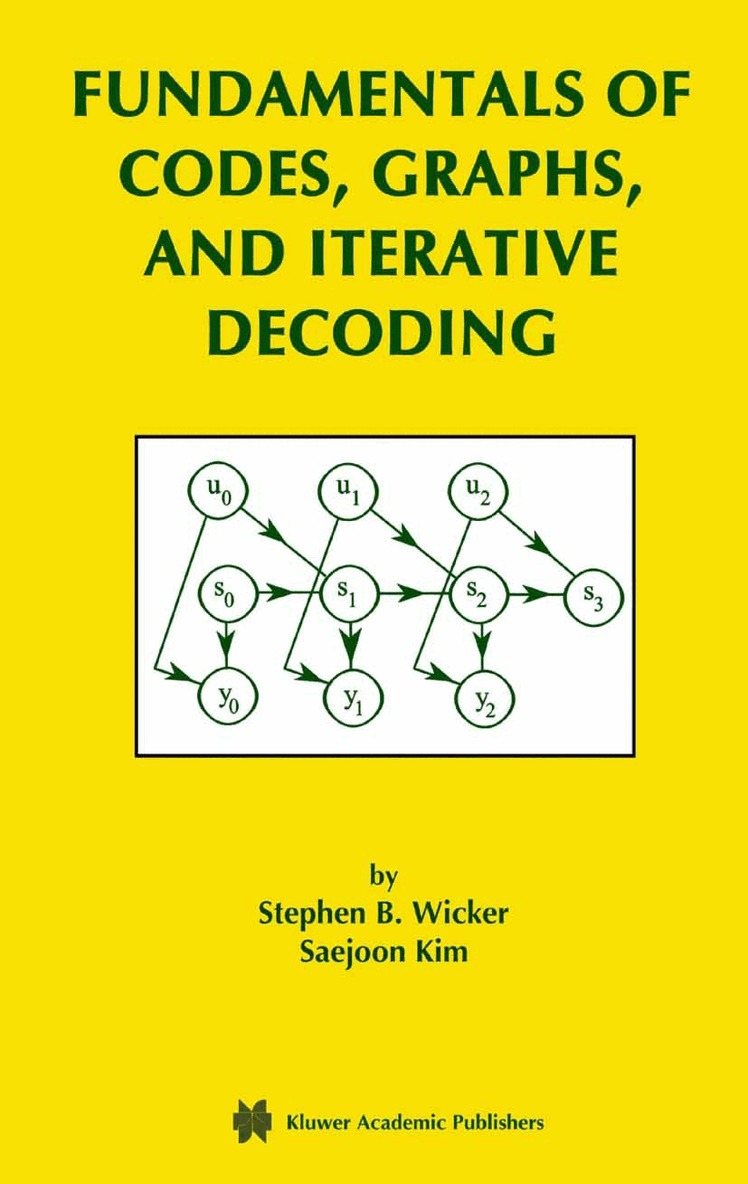
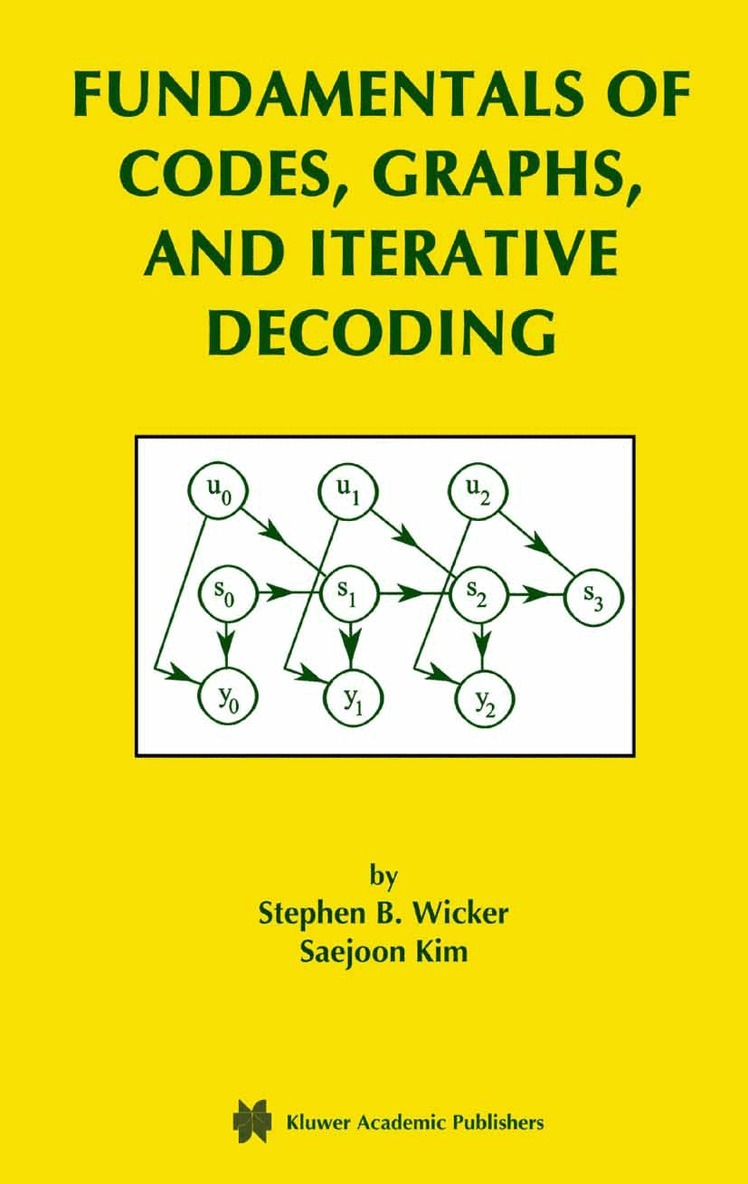
Fundamentals of Codes, Graphs, and Iterative Decoding is an explanation of how to introduce local connectivity, and how to exploit simple structural descriptions. Chapter 1 provides an overview of Shannon theory and the basic tools of complexity theory, communication theory, and bounds on code construction. Chapters 2 - 4 provide an overview of "classical" error control coding, with an introduction to abstract algebra, and block and convolutional codes. Chapters 5 - 9 then proceed to systematically develop the key research results of the 1990s and early 2000s with an introduction to graph theory, followed by chapters on algorithms on graphs, turbo error control, low density parity check codes, and low density generator codes.
Häftad, Engelska, 1999
2 553 kr
Skickas inom 5-8 vardagar
Electrical Engineering/Communications/Information Theory "The Berlekamp article alone will make this book worth having." --David Forney, Vice President, Motorola Codex Reed-Solomon Codes and Their Applications Edited by Stephen B. Wicker, Georgia Institute of Technology and Vijay K. Bhargava, University of Victoria On the Voyager spacecraft, they were responsible for sending clear pictures of the planets back to earth. They have also played a key role in the digital audio revolution. They are Reed-Solomon error codes: the extremely powerful codes that provide critical error control for many different types of digital communications systems. This outstanding collection of thirteen original articles written by leading researchers in the field provides a uniquely comprehensive overview of the history and practical applications--some never before published--of these important codes. Key features include:* Thirteen original articles from leading researchers in the field, with a historical overview by Reed and Solomon* An explanation of how Reed-Solomon codes were used in the Voyager spacecraft and how they are currently used in the compact disc player* Specific applications for digital audio, data transfer over mobile radio, satellite communications, spread spectrum systems, and more* New techniques for improving the performance of your own communications systemsThis book will be of interest to design and research engineers in the telecommunications field, particularly those in the aerospace/satellite and mobile radio industries. It is also well-suited for use as an advanced-level textbook on the subject of error control coding. Books of Related Interest from IEEE Press Clauide Elwood Shannon: Collected Papers Edited by N. J. A. Sloane and A. D. Wyner. AT&T Bell Labs The first published collection of papers by Claude E. Shannon, including his seminal article "The Mathematical Theory of Communication." 1993 Hardcover 968 pp IEEE Order Number PC0331-9 ISBN 0-7803-0434-9 Multiple Access Communications: Foundations for Emerging Technologies Edited by Norman Abramson, University of Hawaii at Manoa The first book to explain the connection between spread spectrum and ALOHA channels, providing a collection of key developments in the theory and practice of multiple user communications channels. 1993 Hardcover 528pp IEEE Order Number PC0287-3 ISBN 0-87942-292-0
Inbunden, Engelska, 1998
1 633 kr
Skickas inom 10-15 vardagar
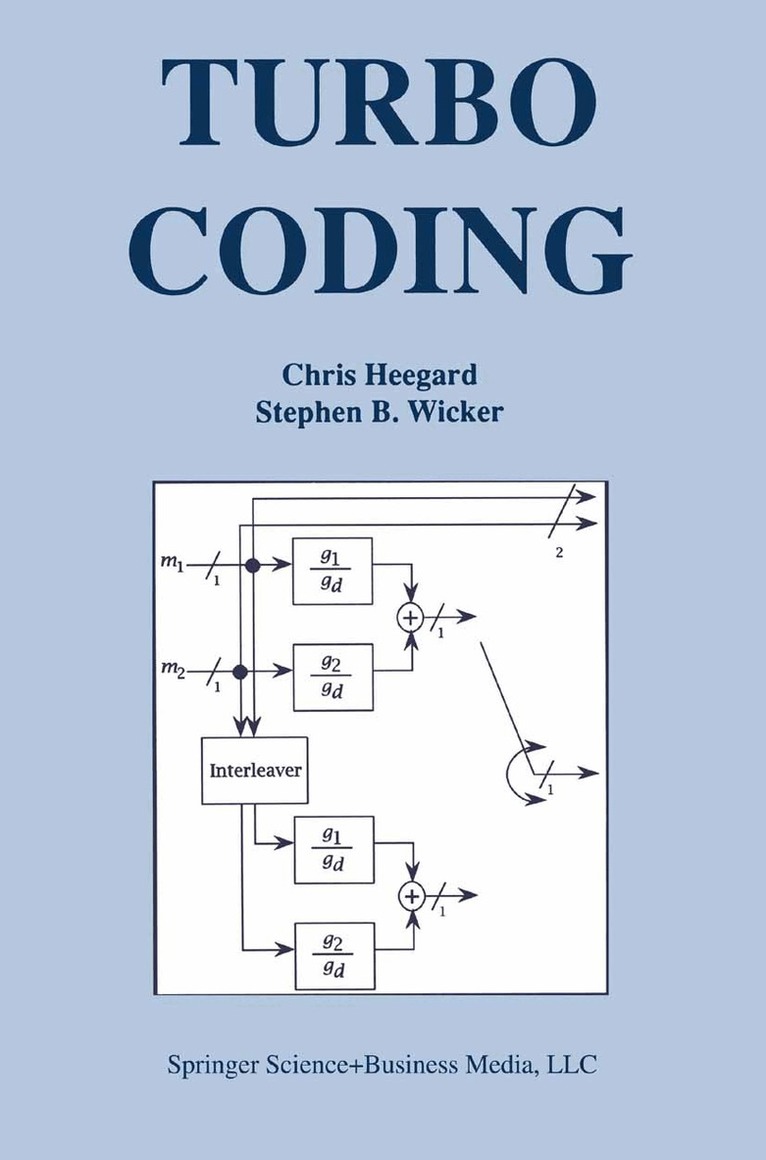
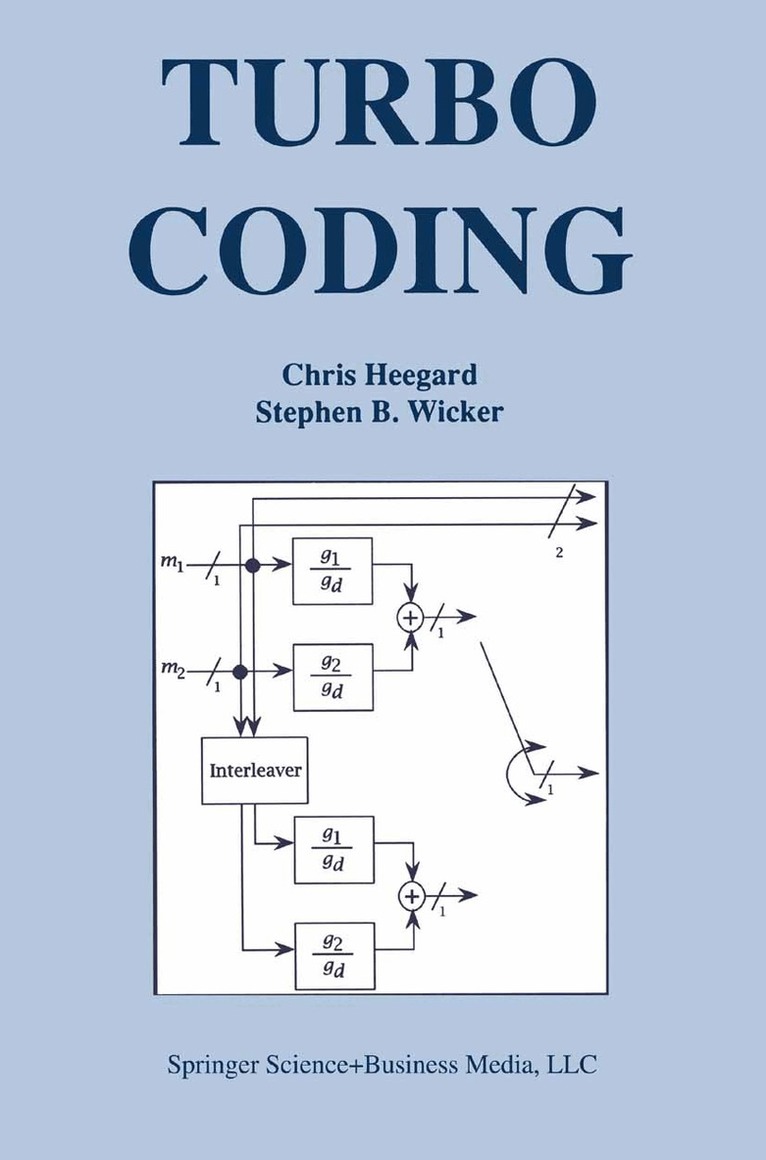
When the 50th anniversary of the birth of Information Theory was celebrated at the 1998 IEEE International Symposium on Informa tion Theory in Boston, there was a great deal of reflection on the the year 1993 as a critical year. As the years pass and more perspec tive is gained, it is a fairly safe bet that we will view 1993 as the year when the "early years" of error control coding came to an end. This was the year in which Berrou, Glavieux and Thitimajshima pre sented "Near Shannon Limit Error-Correcting Coding and Decoding: Turbo Codes" at the International Conference on Communications in Geneva. In their presentation, Berrou et al. claimed that a combi nation of parallel concatenation and iterative decoding can provide reliable communications at a signal to noise ratio that is within a few tenths of a dB of the Shannon limit. Nearly fifty years of striving to achieve the promise of Shannon's noisy channel coding theorem had come to an end. The implications of this result were immediately apparent to all -coding gains on the order of 10 dB could be used to dramatically extend the range of communication receivers, increase data rates and services, or substantially reduce transmitter power levels. The 1993 ICC paper set in motion several research efforts that have permanently changed the way we look at error control coding.
Del 714 - Springer International Series in Engineering and Computer Science
Fundamentals of Codes, Graphs, and Iterative Decoding
Inbunden, Engelska, 2002
547 kr
Skickas inom 10-15 vardagar
Fundamentals of Codes, Graphs, and Iterative Decoding is an explanation of how to introduce local connectivity, and how to exploit simple structural descriptions. Chapter 1 provides an overview of Shannon theory and the basic tools of complexity theory, communication theory, and bounds on code construction. Chapters 2 - 4 provide an overview of "classical" error control coding, with an introduction to abstract algebra, and block and convolutional codes. Chapters 5 - 9 then proceed to systematically develop the key research results of the 1990s and early 2000s with an introduction to graph theory, followed by chapters on algorithms on graphs, turbo error control, low density parity check codes, and low density generator codes.
Häftad, Engelska, 2010
1 626 kr
Skickas inom 10-15 vardagar
When the 50th anniversary of the birth of Information Theory was celebrated at the 1998 IEEE International Symposium on Informa tion Theory in Boston, there was a great deal of reflection on the the year 1993 as a critical year. As the years pass and more perspec tive is gained, it is a fairly safe bet that we will view 1993 as the year when the "early years" of error control coding came to an end. This was the year in which Berrou, Glavieux and Thitimajshima pre sented "Near Shannon Limit Error-Correcting Coding and Decoding: Turbo Codes" at the International Conference on Communications in Geneva. In their presentation, Berrou et al. claimed that a combi nation of parallel concatenation and iterative decoding can provide reliable communications at a signal to noise ratio that is within a few tenths of a dB of the Shannon limit. Nearly fifty years of striving to achieve the promise of Shannon's noisy channel coding theorem had come to an end. The implications of this result were immediately apparent to all -coding gains on the order of 10 dB could be used to dramatically extend the range of communication receivers, increase data rates and services, or substantially reduce transmitter power levels. The 1993 ICC paper set in motion several research efforts that have permanently changed the way we look at error control coding.
E-bok
PDF, Engelska, 20131 977 kr
Läs direkt efter köp
When the 50th anniversary of the birth of Information Theory was celebrated at the 1998 IEEE International Symposium on Informa tion Theory in Boston, there was a great deal of reflection on the the year 1993 as a critical year. As the years pass and more perspec tive is gained, it is a fairly safe bet that we will view 1993 as the year when the "early years" of error control coding came to an end. This was the year in which Berrou, Glavieux and Thitimajshima pre sented "Near Shannon Limit Error-Correcting Coding and Decoding: Turbo Codes" at the International Conference on Communications in Geneva. In their presentation, Berrou et al. claimed that a combi nation of parallel concatenation and iterative decoding can provide reliable communications at a signal to noise ratio that is within a few tenths of a dB of the Shannon limit. Nearly fifty years of striving to achieve the promise of Shannon''s noisy channel coding theorem had come to an end. The implications of this result were immediately apparent to all -coding gains on the order of 10 dB could be used to dramatically extend the range of communication receivers, increase data rates and services, or substantially reduce transmitter power levels. The 1993 ICC paper set in motion several research efforts that have permanently changed the way we look at error control coding.
Del 714 - Springer International Series in Engineering and Computer Science
Fundamentals of Codes, Graphs, and Iterative Decoding
Häftad, Engelska, 2013
547 kr
Skickas inom 10-15 vardagar
Fundamentals of Codes, Graphs, and Iterative Decoding is an explanation of how to introduce local connectivity, and how to exploit simple structural descriptions. Chapter 1 provides an overview of Shannon theory and the basic tools of complexity theory, communication theory, and bounds on code construction. Chapters 2 - 4 provide an overview of "classical" error control coding, with an introduction to abstract algebra, and block and convolutional codes. Chapters 5 - 9 then proceed to systematically develop the key research results of the 1990s and early 2000s with an introduction to graph theory, followed by chapters on algorithms on graphs, turbo error control, low density parity check codes, and low density generator codes.
Häftad, Engelska, 1994
566 kr
Skickas inom 10-15 vardagar
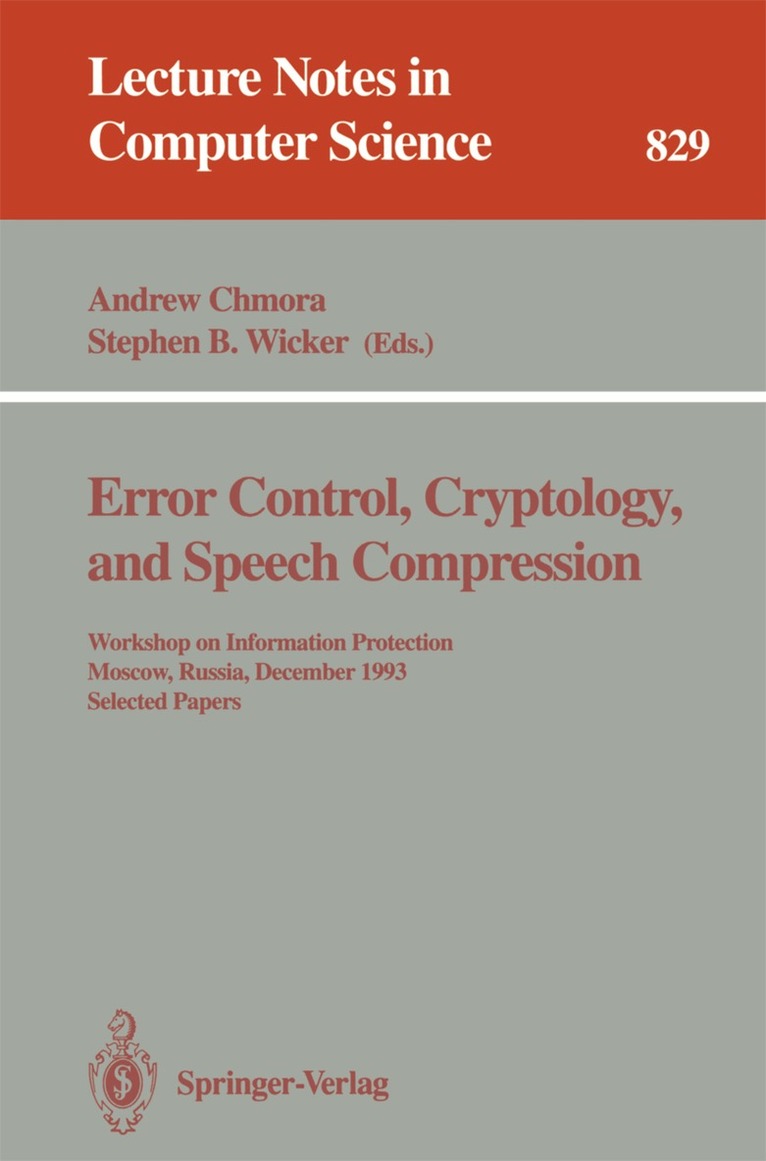
This volume comprises a collection of papers presented at the Workshop on Information Protection, held in Moscow, Russia in December 1993. The 16 thoroughly refereed papers by internationally known scientists selected for this volume offer an exciting perspective on error control coding, cryptology, and speech compression. In the former Soviet Union, research related to information protection was often shielded from the international scientific community. Therefore, the results presented by Russian researchers and engineers at this first international workshop on this topic are of particular interest; their work defines the cutting edge of research in many areas of error control, cryptology, and speech recognition.