Stephen C. Stearns – författare
Visar alla böcker från författaren Stephen C. Stearns. Handla med fri frakt och snabb leverans.
6 produkter
6 produkter
1 762 kr
Skickas inom 5-8 vardagar
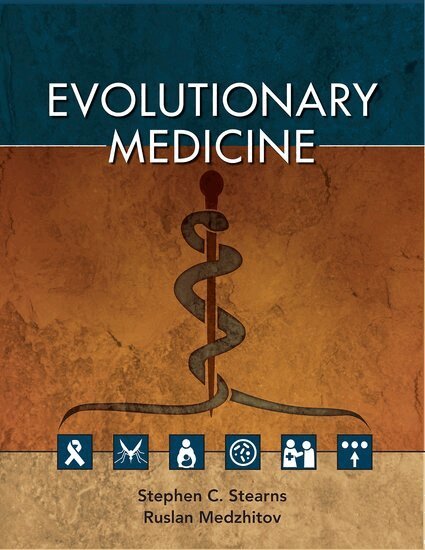
Evolutionary thinking provides insights into many different areas in the research and practice of medicine and public health. It takes specialties such as medical microbiology, epidemiology, oncology, gynecology, and psychiatry that had become increasingly siloed and places them in a larger framework. This foundational structure enables students to view medical knowledge as an integrated whole, underpinned by general principles rather than a loose collection of disparate facts. The discipline of evolutionary medicine continues to advance rapidly as new results come in showing where the insights pay off and where they do not. Its conceptual foundations have also been strengthened in papers not yet reflected in the textbooks, so a new edition is therefore timely. At the same time, the teaching of evolutionary medicine has also been steadily gaining momentum both in courses that prepare undergraduates for medical school in North America and in other contexts worldwide. Evolutionary Medicine is intended for undergraduate students preparing for careers in medicine and public health, students in schools of medicine and public health, and medical professionals curious about the insights that evolutionary thinking can bring to their field. It will also be relevant to students and researchers in the fields of evolutionary biology, anthropology, developmental biology, and genetics. It highlights the most important insights in a relatively brief and compelling book that does not attempt encyclopedic coverage of a rapidly changing field.
586 kr
Skickas inom 5-8 vardagar
Evolutionary thinking provides insights into many different areas in the research and practice of medicine and public health. It takes specialties such as medical microbiology, epidemiology, oncology, gynecology, and psychiatry that had become increasingly siloed and places them in a larger framework. This foundational structure enables students to view medical knowledge as an integrated whole, underpinned by general principles rather than a loose collection of disparate facts. The discipline of evolutionary medicine continues to advance rapidly as new results come in showing where the insights pay off and where they do not. Its conceptual foundations have also been strengthened in papers not yet reflected in the textbooks, so a new edition is therefore timely. At the same time, the teaching of evolutionary medicine has also been steadily gaining momentum both in courses that prepare undergraduates for medical school in North America and in other contexts worldwide. Evolutionary Medicine is intended for undergraduate students preparing for careers in medicine and public health, students in schools of medicine and public health, and medical professionals curious about the insights that evolutionary thinking can bring to their field. It will also be relevant to students and researchers in the fields of evolutionary biology, anthropology, developmental biology, and genetics. It highlights the most important insights in a relatively brief and compelling book that does not attempt encyclopedic coverage of a rapidly changing field.
1 078 kr
Skickas inom 5-8 vardagar
This book introduces life history evolution to postgraduate students just beginning their research in population biology, ecology, or evolutionary biology. It discusses major analytical tools, gives examples of their applications, and provides problems for discussion at the end of each chapter. It will interest all biologists wishing to understand the evolution of the life cycle and the causes of phenotypic variation in fitness, and it contains the seeds of applications of life history theory to population dynamics, behaviour, and community ecology.Care is taken in Part I to build up the tools needed for a well-rounded evolutionary explanation: demography, quantitative genetics, reaction norms, trade offs and phylogenetic/comparative analysis. Part II discusses the evolution of major life history traits. This is a comprehensive, up-to-date text in a field that holds a central position in modern ecology and evolution.
966 kr
Skickas inom 5-8 vardagar
In this fully revised and updated edition, the editors have integrated a completely new set of contributions from the leading researchers in the field to describe the latest research in evolutionary medicine, providing a fresh summary of this rapidly expanding field 10 years after its predecessor was first compiled. It continues to adopt a broad approach to the subject, drawing on medically relevant research from evolutionary genetics, human behavioural ecology, evolutionary microbiology (especially experimental evolution of virulence and resistance), the evolution of aging and degenerative disease, and other aspects of biology or medicine where evolutionary approaches make important contributions.Evolution in Health and Disease describes how evolutionary thinking gives valuable insights and fresh perspectives into human health and disease, establishing evolutionary biology as an essential complementary science for medicine. Integrating evolutionary thought into medical research and practice helps to explain the origins of many medical conditions, including diabetes, obesity, cardiovascular disease, asthma, allergies, other autoimmune diseases, and aging. It also provides life-saving insights into the evolutionary responses of pathogens to antibiotics, vaccinations, and other human interventions. Why are we vulnerable to disease? Why are our bodies not better designed? Are unpleasant surprises in store as we use more antibiotics and vaccines? Why do we respond to inappropriately to so many modern conditions? How do cancers evolve? Why must we grow old? The book discusses answers to these and many other questions while suggesting new approaches to treatment and research. This research-level text is suitable for graduate-level students and researchers in the fields of evolutionary (Darwinian) medicine, evolutionary biology, anthropology, developmental biology, and genetics. It will also be of relevance and use to medical researchers and doctors.
468 kr
Skickas inom 5-8 vardagar
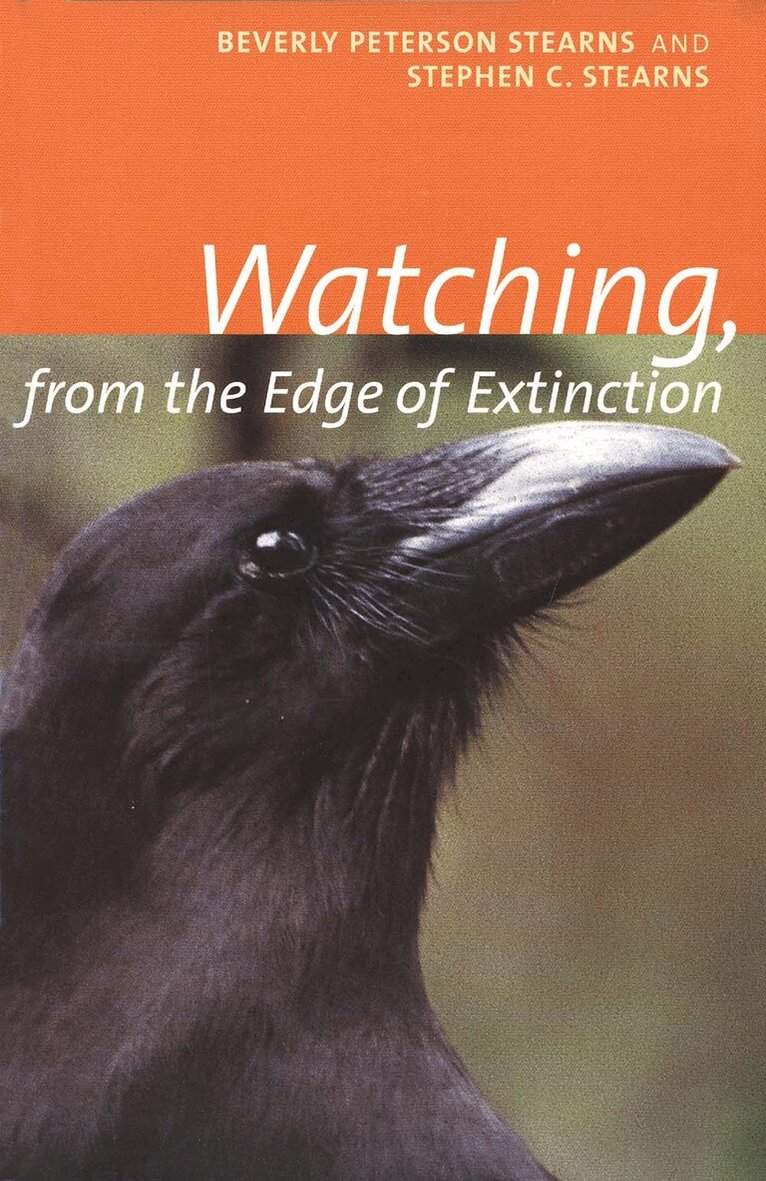
To those struggling on the frontlines to save endangered plants and animals, the crucial challenge is to confront the biological causes of those species’ decline. But just as threatening to their survival are obstacles erected by human politics, greed, corruption, folly, and hypocrisy. In this mesmerizing book, Beverly and Stephen Stearns tell the stories of people who have worked directly with disappearing species in Europe, Africa, North America, and Oceania. They are stories of passion and commitment, of competence and selflessness. They are also stories that alarm, for even as unheralded heroes are working to reverse what often seems to be a species’ inevitable march toward extinction, incompetent or self-interested parties are often working against them.The authors interviewed people who work with endangered species as diverse as Mediterranean monk seals, large blue butterflies, African wild dogs, native Hawaiian crows, Texas salamanders, and rare plants on Mauritius. These dedicated individuals, in discussing how they view their work, the problems they encounter, and their thoughts on the broader significance of extinction, reveal that the causes of extinction are unique to each species—sometimes subtle and complex, at other times obvious and simple. Yet an extinction always represents an irretrievable loss of evolutionary potential and a diminishing of the beauty, diversity, and value in our own lives. The dramatic lessons of this book shed new light on the problems of endangered species and offer hope that we may yet change the fate of those species that totter on the edge of extinction.
1 636 kr
Skickas inom 5-8 vardagar
Published by Sinauer Associates, an imprint of Oxford University Press. Evolutionary Medicine is a textbook intended for use in undergraduate, graduate, medical school, and continuing medical education (CME) courses. Its professional illustrations and summaries of chapters and sections make its messages readily accessible. Chapter 1 introduces evolutionary thinking about both current dynamic processes and the deep patterns of history and relationship. Chapter 2 asks, "What is a patient?" and answers from a series of perspectives. Chapter 3 asks, "What is a disease?" Some causes are found in patients; others in pathogens; many in the interactions between them. Chapter 4 discusses the nature of defenses, the strategies that determine how they are deployed, and their costs as well as their benefits. Chapter 5 discusses pathogen evolution: the evolution of intrinsic virulence, of evasion and manipulation of host defenses, and of resistance to treatment, and how therapy might be made evolution-proof. Chapter 6 describes cancer as an evolutionary process with a history traced in the genome and with major implications for treatment. Chapter 7 discusses conflicts in reproduction: between mother and offspring, between maternally and paternally derived genes in the offspring, and among siblings. It also discusses menstruation, menopause, and the connection between invasive placentas and metastatic cancer. Chapter 8 discusses mismatches to modern environments, including obesity, cardiovascular disease, and autoimmune diseases. Chapter 9 discusses evolutionary perspectives on addiction, anxiety, depression, obsessive-compulsive disorder, autism, and schizophrenia. Chapter 10 explores the tension between individual and group interests and shows how medicine is creating new problems while solving old ones. Chapter 11 starts with questions that have not yet been answered, discusses why we have not chosen to address some issues, and concludes by comparing classical with evolutionary medicine.