Stephen Elstub - Böcker
Visar alla böcker från författaren Stephen Elstub. Handla med fri frakt och snabb leverans.
8 produkter
8 produkter
616 kr
Skickas inom 10-15 vardagar
Deliberative democracy is an approach to democracy that requires collective decision-making to be preceded by reasoned, inclusive, and respectful debate for it to be legitimate. It has become an increasingly dominant approach to democracy over the last few decades. In recent years, there has been a particular focus on ‘deliberative systems.’ A systemic approach to deliberative democracy opens up a new way of thinking about public deliberation in both theory and practice. It suggests understanding deliberation as a communicative activity that occurs in a diversity of spaces, and emphasizes the need for interconnection between these spaces. It offers promising solutions to some of the long-standing theoretical issues in the deliberative democracy literature such as legitimation, inclusion, representation, as well as the interaction and interconnection between public opinion formation and decision-making sites more generally. The deliberative systems approach also offers a new way of conceptualizing and studying the practice of deliberation in contemporary democracies. Despite its conceptual and practical appeal, the concept of deliberative systems also entails potential problems and raises several important questions. These include the relationship with the parts and the whole of the deliberative system, the prospects of its institutionalization, and various difficulties related to its empirical analysis. The deliberative systems approach therefore requires greater theoretical critical scrutiny, and empirical investigation. This book contributes to this endeavour by bringing together cutting edge research on the theory and practice of deliberative systems. It will identify the key challenges against the concept to enhance understanding of both its prospects and problems promoting its refinement accordingly. The chapters originally published as a special issue in Critical Policy Studies.
2 103 kr
Skickas inom 10-15 vardagar
Democracy is an issue of major importance in theory and practice in politics throughout the world. However, democracy’s study and advancement has been significantly compromised by a dichotomy between theorising about democracy, and empirical studies of democracy in practice. In addition to highlighting the need for this gap to be overcome, this book contributes to overcoming this divide, by demonstrating a number of ways that democracy in theory and practice can be synthesised; deepening our understanding of the relationship between democracy in theory and practice in the process. Different, but related, democratic principles and concepts are considered such as legitimacy, political equality, deliberation, and participation. A range of practical contexts are also investigated including multi-level polities, deeply divided societies, whole polities, local rural and urban areas, and a range of democratic processes, innovations and spectacular events. Moreover, the book sets the agenda for future work to combine democracy in theory and practice.This book was originally published as a special issue of Representation.
1 266 kr
Skickas inom 7-10 vardagar
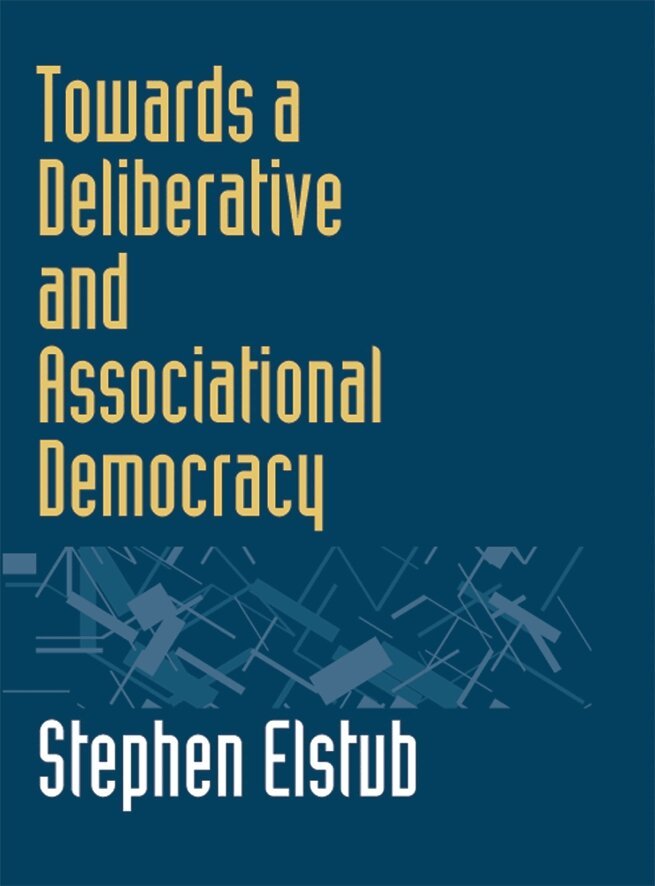
In an era where citizens of liberal democracies are becoming increasingly disillusioned, dissatisfied and disenfranchised by the dominant political institutions and decision-making processes in these polities, new ideas of how to deepen democracy, re-engage citizens and enhance decision-making legitimacy are required.This book suggests that a combination of deliberative democracy and associational democracy is both a normatively desirable and an empirically plausible solution to the complex problems that are present in contemporary societies - as well as being compatible with many recent trends in governance. Author Stephen Elstub argues that by combining deliberative with associational democracy, the weaknesses of each model alone are compensated by the other, allowing the key strengths of each to manifest themselves. And he goes further by offering a detailed set of original, institutional requirements for liberal democracies that, if adopted, will enable a deliberative and associational democracy to be realised in practice.The book achieves this by starting off with first principles, considering arguments about why democracy is valuable and elaborating on why both deliberative and associational democracy - especially when combined - can enhance these normative principles which make democracy and its required revitalisation so important.Key Features*Contemporary focus, concerned with recent trends in governance*Presents new and innovative ideas of how to institutionalise deliberative democracy*Original in its philosophical discussion of autonomy and how to promote it*Covers an array of important thinkers on democracy and a myriad of concepts central to democratic theory
367 kr
Skickas
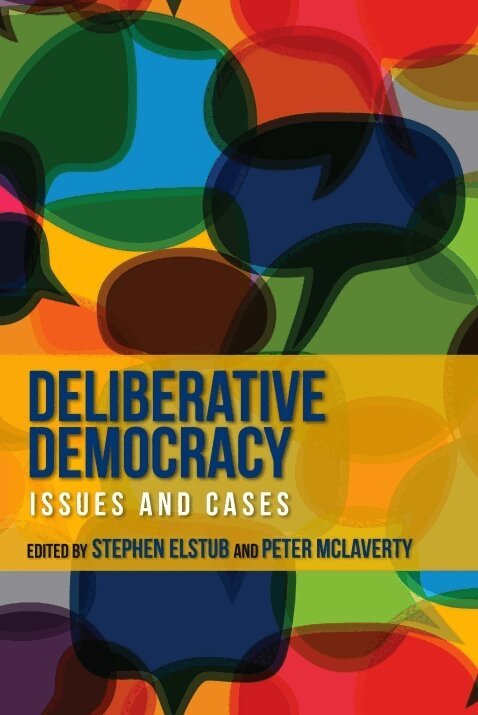
Deliberative democracy is the darling of democratic theory and political theory more generally, and generates international interest. In this book, a number of leading democratic theorists address the key issues that surround the theory and practice of deliberative democracy. They outline the problems faced by deliberative democracy in the context of the available empirical evidence, survey potential solutions and put forward new and innovative ideas to resolve these issues.
2 100 kr
Skickas inom 10-15 vardagar
Deliberative democracy is an approach to democracy that requires collective decision-making to be preceded by reasoned, inclusive, and respectful debate for it to be legitimate. It has become an increasingly dominant approach to democracy over the last few decades. In recent years, there has been a particular focus on ‘deliberative systems.’ A systemic approach to deliberative democracy opens up a new way of thinking about public deliberation in both theory and practice. It suggests understanding deliberation as a communicative activity that occurs in a diversity of spaces, and emphasizes the need for interconnection between these spaces. It offers promising solutions to some of the long-standing theoretical issues in the deliberative democracy literature such as legitimation, inclusion, representation, as well as the interaction and interconnection between public opinion formation and decision-making sites more generally. The deliberative systems approach also offers a new way of conceptualizing and studying the practice of deliberation in contemporary democracies. Despite its conceptual and practical appeal, the concept of deliberative systems also entails potential problems and raises several important questions. These include the relationship with the parts and the whole of the deliberative system, the prospects of its institutionalization, and various difficulties related to its empirical analysis. The deliberative systems approach therefore requires greater theoretical critical scrutiny, and empirical investigation. This book contributes to this endeavour by bringing together cutting edge research on the theory and practice of deliberative systems. It will identify the key challenges against the concept to enhance understanding of both its prospects and problems promoting its refinement accordingly. The chapters originally published as a special issue in Critical Policy Studies.
668 kr
Skickas inom 10-15 vardagar
Democracy is an issue of major importance in theory and practice in politics throughout the world. However, democracy’s study and advancement has been significantly compromised by a dichotomy between theorising about democracy, and empirical studies of democracy in practice. In addition to highlighting the need for this gap to be overcome, this book contributes to overcoming this divide, by demonstrating a number of ways that democracy in theory and practice can be synthesised; deepening our understanding of the relationship between democracy in theory and practice in the process. Different, but related, democratic principles and concepts are considered such as legitimacy, political equality, deliberation, and participation. A range of practical contexts are also investigated including multi-level polities, deeply divided societies, whole polities, local rural and urban areas, and a range of democratic processes, innovations and spectacular events. Moreover, the book sets the agenda for future work to combine democracy in theory and practice.This book was originally published as a special issue of Representation.
4 085 kr
Skickas inom 7-10 vardagar
Democracies are currently undergoing a period of both challenge and renewal. Democratic innovations are proliferating in politics, governance, policy, and public administration. This Handbook of Democratic Innovation and Governance advances understanding of democratic innovations by critically reviewing their importance throughout the world. The overarching themes are a focus on citizens and their relationship to these innovations, and the resulting effects on political equality and policy impact.The Handbook covers different types of democratic innovations; their potential to combat current problems with democracy; the various actors involved; their use in different areas of policy and governance; their application in different parts of the world; and the methods used to research them. Contributors therefore offer a definitive overview of existing research on democratic innovations, while also setting the agenda for future research and practice.Featuring a critical combination of theoretical, empirical and methodological work on democratic innovations, this insightful Handbook balances depth, originality and accessibility to make it an ideal research companion for scholars and students of democratic governance alike. Public administrators and participation practitioners will also benefit from its guidance on citizen engagement processes.Contributors include: G. Allegretti, J. Alver, E. Andersson, G. Baiocchi, B. Bedsted, S. Beste, L. Bherer, W. Blijleven, A. Bua, S. Bussu, E. Challies, J. Corbett, S.R. Davies, R. Dean, S. Elstub, O. Escobar, M. Evans, I. Ferreira, M. Flinders, E. Ganuza, B. Geissel, K. Grönlund, C. Harris, C.M. Hendriks, F. Hendriks, K. Herne, N.W. Jager, M.C. Jaramillo, M. Jäske, L. Kallio, C.F. Karpowitz, C.W. Lee, R. Levy, R. Lightbody, N. Mikami, J. Newig, S. Niemeyer, I. O'Flynn, L.J. Parry, T. Peixoto, T. Pogrebinschi, G. Pomatto, C. Raphael, M. Rask, J. Roberts, M. Ross, H. Russon Gilman, M. Ryan, M. Setälä, G. Smith, P. Spada, J. Steiner, G. Stoker, J. Talpin, A. Thompson, N. Thompson, M. van Hulst, A. Weale, M. Wood, D. Wyss
1 339 kr
Skickas inom 7-10 vardagar
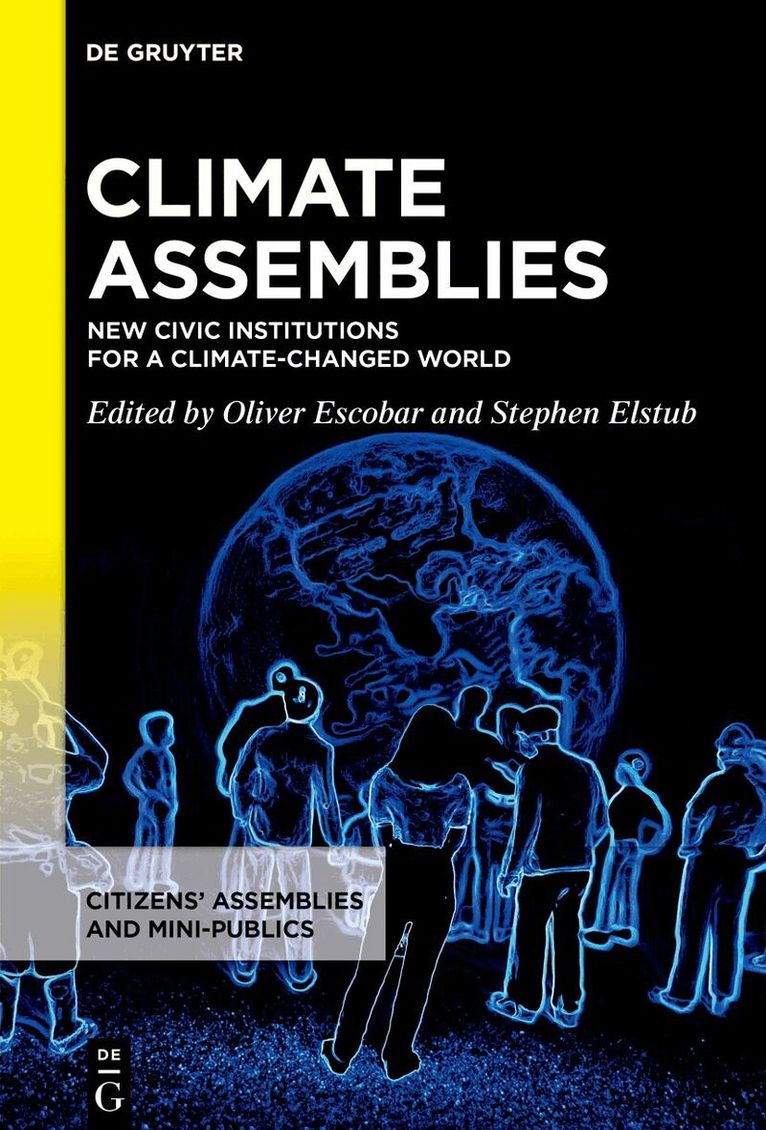
Climate Assemblies are capturing the imagination of people interested in how citizens can participate in decision-making to address the climate and ecological crisis. Traditional institutions are struggling to cope with the challenges of a climate-changed world. Climate Assemblies are new civic institutions that include a cross-section of the public in deliberation to influence environmental policy, governance, public discourse and collective action. With the rapid spread of this approach to public engagement, practice has developed well in advance of research. This book addresses that gap by analysing the internal and external dimensions of climate assemblies and how they interact. It brings together 25 authors to offer novel perspectives, critical insights and practical reflections based on original research about paradigmatic cases at local, national, transnational and global levels. The book investigates the state of the field, reflects on the hope and hype about this growing phenomenon, and proposes ways to improve climate assemblies so that they can make a difference in a climate-changed world.