Stephen Hilgartner - Böcker
Visar alla böcker från författaren Stephen Hilgartner. Handla med fri frakt och snabb leverans.
7 produkter
7 produkter
331 kr
Tillfälligt slut
724 kr
Skickas inom 10-15 vardagar
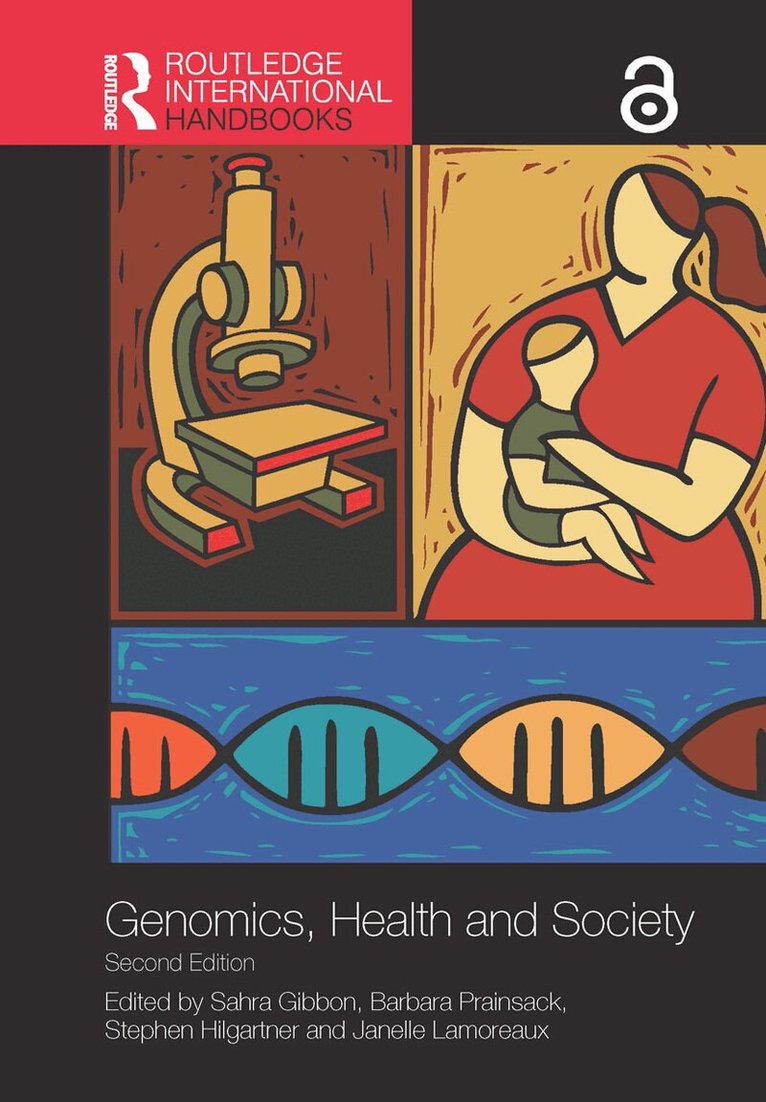
The Handbook provides an essential resource at the interface of Genomics, Health and Society, and forms a crucial research tool for both new students and established scholars across biomedicine and social sciences. Building from and extending the first Routledge Handbook of Genetics and Society, the book offers a comprehensive introduction to pivotal themes within the field, an overview of the current state of the art knowledge on genomics, science and society, and an outline of emerging areas of research. Key themes addressed include the way genomic based DNA technologies have become incorporated into diverse arenas of clinical practice and research whilst also extending beyond the clinic; the role of genomics in contemporary ‘bioeconomies’; how challenges in the governance of medical genomics can both reconfigure and stabilise regulatory processes and jurisdictional boundaries; how questions of diversity and justice are situated across different national and transnational terrains of genomic research; and how genomics informs – and is shaped by – developments in fields such as epigenetics, synthetic biology, stem cell, microbial and animal model research.Chapter 13 of this book is freely available as a downloadable Open Access PDF under a Creative Commons Attribution-Non Commercial-No Derivatives 3.0 license. https://www.routledgehandbooks.com/doi/10.4324/9781315451695-13Chapter 28 of this book is freely available as a downloadable Open Access PDF under a Creative Commons Attribution-Non Commercial-No Derivatives 3.0 license. https://www.routledgehandbooks.com/doi/10.4324/9781315451695-28
Science and Democracy
Making Knowledge and Making Power in the Biosciences and Beyond
Häftad, Engelska, 2019
649 kr
Skickas inom 10-15 vardagar
In the life sciences and beyond, new developments in science and technology and the creation of new social orders go hand in hand. In short, science and society are simultaneously and reciprocally coproduced and changed. Scientific research not only produces new knowledge and technological systems but also constitutes new forms of expertise and contributes to the emergence of new modes of living and new forms of exchange. These dynamic processes are tightly connected to significant redistributions of wealth and power, and they sometimes threaten and sometimes enhance democracy. Understanding these phenomena poses important intellectual and normative challenges: neither traditional social sciences nor prevailing modes of democratic governance have fully grappled with the deep and growing significance of knowledge-making in twenty-first century politics and markets.Building on new work in science and technology studies (STS), this book advances the systematic analysis of the coproduction of knowledge and power in contemporary societies. Using case studies in the new life sciences, supplemented with cases on informatics and other topics such as climate science, this book presents a theoretical framing of coproduction processes while also providing detailed empirical analyses and nuanced comparative work.Science and Democracy: Knowledge as Wealth and Power in the Biosciences and Beyond will be interesting for students of sociology, science & technology studies, history of science, genetics, political science, and public administration.
Science and Democracy
Making Knowledge and Making Power in the Biosciences and Beyond
Inbunden, Engelska, 2015
2 306 kr
Skickas inom 10-15 vardagar
In the life sciences and beyond, new developments in science and technology and the creation of new social orders go hand in hand. In short, science and society are simultaneously and reciprocally coproduced and changed. Scientific research not only produces new knowledge and technological systems but also constitutes new forms of expertise and contributes to the emergence of new modes of living and new forms of exchange. These dynamic processes are tightly connected to significant redistributions of wealth and power, and they sometimes threaten and sometimes enhance democracy. Understanding these phenomena poses important intellectual and normative challenges: neither traditional social sciences nor prevailing modes of democratic governance have fully grappled with the deep and growing significance of knowledge-making in twenty-first century politics and markets.Building on new work in science and technology studies (STS), this book advances the systematic analysis of the coproduction of knowledge and power in contemporary societies. Using case studies in the new life sciences, supplemented with cases on informatics and other topics such as climate science, this book presents a theoretical framing of coproduction processes while also providing detailed empirical analyses and nuanced comparative work.Science and Democracy: Knowledge as Wealth and Power in the Biosciences and Beyond will be interesting for students of sociology, science & technology studies, history of science, genetics, political science, and public administration.
1 367 kr
Skickas inom 10-15 vardagar
Behind the headlines of our time stands an unobtrusive army of science advisors. Panels of scientific, medical, and engineering experts evaluate the safety of the food we eat, the drugs we take, and the cars we drive. But despite the enormous influence of science advice, its authority is often problematic, and struggles over expert advice are thus a crucial aspect of contemporary politics. Science on Stage is a theoretically informed and empirically grounded study of the social process through which the credibility of expert advice is produced, challenged, and sustained.Building on the sociology of Erving Goffman, the author analyzes science advice as a form of performance, examining how advisory bodies work to bring authoritative advice to the public stage. From this perspective, advisory bodies emerge as performers who engage in impression management: they selectively reveal and conceal themselves, actively presenting some things to their audiences while hiding others "backstage."The book demonstrates that techniques for information control—including stagecraft, strategic self-presentation, and unauthorized disclosures or "leaks"—play a fundamental role in efforts to create and contest expert authority. The author uncovers this complex assemblage of dramaturgical machinery through a richly detailed comparative analysis of three controversial reports on diet and health, including a proposed revision to the Recommended Daily Allowances, prepared by the National Academy of Sciences—the most prestigious source of expert advice in the United States today.This lively and accessible analysis—which includes its own drama, complete with Greek chorus—provides not only new insights about science advice but also a fresh look at the social dimensions of scientific writing. The theatrical metaphor highlights issues that more familiar theoretical frameworks often leave waiting in the wings. In the author's hands, scientific texts emerge not just as rhetorical constructions or forms of discourse, but also as crucial parts of systems for controlling the enclosure and disclosure of information, and thereby for structuring relations between experts and their audiences.
328 kr
Skickas inom 7-10 vardagar
Behind the headlines of our time stands an unobtrusive army of science advisors. Panels of scientific, medical, and engineering experts evaluate the safety of the food we eat, the drugs we take, and the cars we drive. But despite the enormous influence of science advice, its authority is often problematic, and struggles over expert advice are thus a crucial aspect of contemporary politics. Science on Stage is a theoretically informed and empirically grounded study of the social process through which the credibility of expert advice is produced, challenged, and sustained.Building on the sociology of Erving Goffman, the author analyzes science advice as a form of performance, examining how advisory bodies work to bring authoritative advice to the public stage. From this perspective, advisory bodies emerge as performers who engage in impression management: they selectively reveal and conceal themselves, actively presenting some things to their audiences while hiding others "backstage."The book demonstrates that techniques for information control—including stagecraft, strategic self-presentation, and unauthorized disclosures or "leaks"—play a fundamental role in efforts to create and contest expert authority. The author uncovers this complex assemblage of dramaturgical machinery through a richly detailed comparative analysis of three controversial reports on diet and health, including a proposed revision to the Recommended Daily Allowances, prepared by the National Academy of Sciences—the most prestigious source of expert advice in the United States today.This lively and accessible analysis—which includes its own drama, complete with Greek chorus—provides not only new insights about science advice but also a fresh look at the social dimensions of scientific writing. The theatrical metaphor highlights issues that more familiar theoretical frameworks often leave waiting in the wings. In the author's hands, scientific texts emerge not just as rhetorical constructions or forms of discourse, but also as crucial parts of systems for controlling the enclosure and disclosure of information, and thereby for structuring relations between experts and their audiences.
3 280 kr
Skickas inom 10-15 vardagar
The Handbook provides an essential resource at the interface of Genomics, Health and Society, and forms a crucial research tool for both new students and established scholars across biomedicine and social sciences. Building from and extending the first Routledge Handbook of Genetics and Society, the book offers a comprehensive introduction to pivotal themes within the field, an overview of the current state of the art knowledge on genomics, science and society, and an outline of emerging areas of research.Key themes addressed include the way genomic based DNA technologies have become incorporated into diverse arenas of clinical practice and research whilst also extending beyond the clinic; the role of genomics in contemporary ‘bioeconomies’; how challenges in the governance of medical genomics can both reconfigure and stabilise regulatory processes and jurisdictional boundaries; how questions of diversity and justice are situated across different national and transnational terrains of genomic research; and how genomics informs – and is shaped by – developments in fields such as epigenetics, synthetic biology, stem cell, microbial and animal model research.Chapters 13 and 28 of this book are freely available as downloadable Open Access PDFs at http://www.taylorfrancis.com, under a Creative Commons Attribution-Non Commercial-No Derivatives (CC-BY-NC-ND) 4.0 license.