Stephen J. Hill – författare
Visar alla böcker från författaren Stephen J. Hill. Handla med fri frakt och snabb leverans.
2 produkter
2 produkter
Häftad, Engelska, 2020
837 kr
Skickas inom 11-20 vardagar
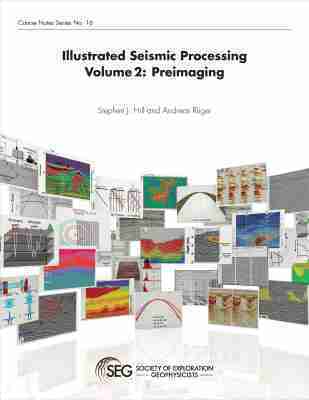
This second volume provides a foundation for understanding the vigorous, relevant, and fascinating field of seismic processing, addressing that portion which precedes migration. Written for the non-expert, this second volume of the two-volume introductory text reveals the limitations and potential pitfalls of seismic data, prepares both seismic interpreters and acquisition specialists for working with seismic processing geophysicists, explains seismic processing operations as a series of solutions to problems, and demonstrates the dependence of a final interpretable seismic volume on its many seismic processing decisions.Although seismic processing is inherently mathematical, this text uses numerous illustrations and real data examples, providing an intuitive understanding of the seismic processing procedures and resorting to an algebra-based argument only on rare occasions. The first volume starts with migration. This second volume addresses pre-migration processing. In combination, these two volumes present seismic processing topics in order reverse of a typical processing sequence. Through this reverse ordering, the reader understands an algorithm's input requirements, providing motivation for understanding the preceding algorithm in the processing sequence.
E-bok
Engelska, 2008986 kr
Läs direkt efter köp
As our understanding of the biological sciences expands, the bou- aries between traditional disciplines tend to blur at the edges. Physio- gists and pharmacologists, for instance, now need to embrace techniques that until recently were the strict preserves of biochemists and mole- lar biologists. However, the acquisition of new technologies can be a time-consuming and frustrating business, and unless an expert is on hand to give instruction, precious hours can be spent poring over half-described Methods sections with no guarantee of eventual success. The aim of Signal Transduction Protocols has been to get experts with "hands-on" experience in particular techniques to give detailed accounts of experimental protocols in a recipe-type format, which we hope will circumvent the problems of ambiguity often encountered when reading the literature. The techniques described in Signal Transduction Protocols are those that we think will be most useful in addressing questions in the area of receptor-mediated cell signaling, with particular regard to those receptors that are part of the G-protein-linked superfamily. To keep it to a manageable size, we have omitted any reference to electrophysi- ogy and have instead concentrated on more biochemical approaches.