Stephen Lovett - Böcker
Visar alla böcker från författaren Stephen Lovett. Handla med fri frakt och snabb leverans.
10 produkter
10 produkter
1 322 kr
Skickas inom 10-15 vardagar
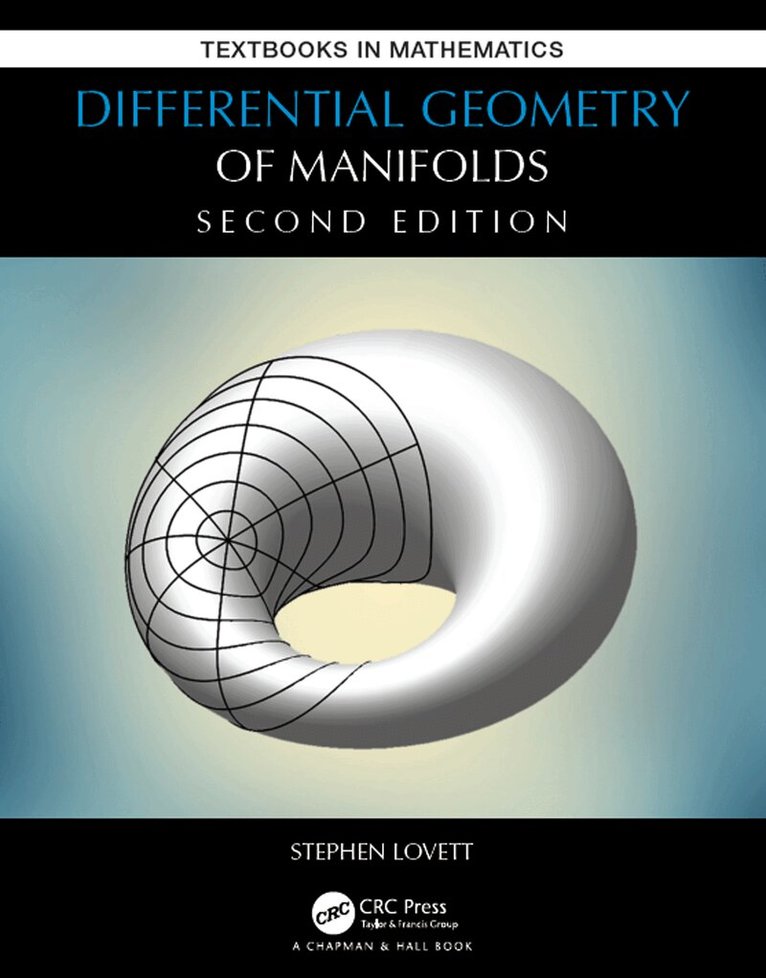
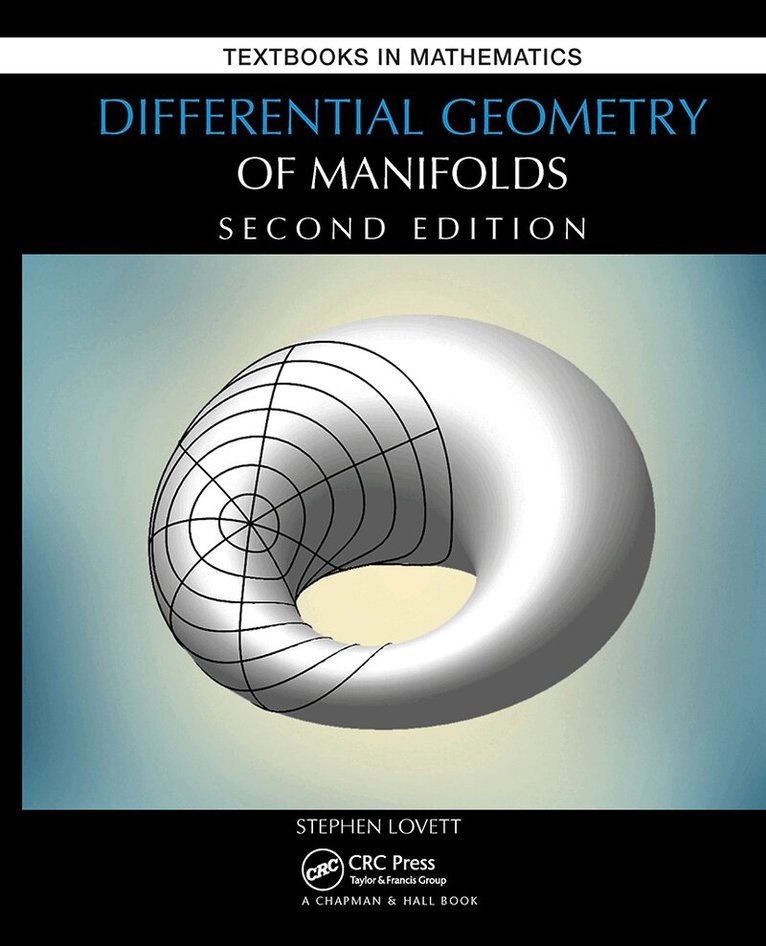
Differential Geometry of Manifolds, Second Edition presents the extension of differential geometry from curves and surfaces to manifolds in general. The book provides a broad introduction to the field of differentiable and Riemannian manifolds, tying together classical and modern formulations. It introduces manifolds in a both streamlined and mathematically rigorous way while keeping a view toward applications, particularly in physics. The author takes a practical approach, containing extensive exercises and focusing on applications, including the Hamiltonian formulations of mechanics, electromagnetism, string theory. The Second Edition of this successful textbook offers several notable points of revision.New to the Second Edition: New problems have been added and the level of challenge has been changed to the exercises Each section corresponds to a 60-minute lecture period, making it more user-friendly for lecturers Includes new sections which provide more comprehensive coverage of topics Features a new chapter on Multilinear Algebra
1 295 kr
Skickas inom 10-15 vardagar
This unique and contemporary text not only offers an introduction to proofs with a view towards algebra and analysis, a standard fare for a transition course, but also presents practical skills for upper-level mathematics coursework and exposes undergraduate students to the context and culture of contemporary mathematics. The authors implement the practice recommended by the Committee on the Undergraduate Program in Mathematics (CUPM) curriculum guide, that a modern mathematics program should include cognitive goals and offer a broad perspective of the discipline.Part I offers: An introduction to logic and set theory. Proof methods as a vehicle leading to topics useful for analysis, topology, algebra, and probability. Many illustrated examples, often drawing on what students already know, that minimize conversation about "doing proofs." An appendix that provides an annotated rubric with feedback codes for assessing proof writing.Part II presents the context and culture aspects of the transition experience, including: 21st century mathematics, including the current mathematical culture, vocations, and careers. History and philosophical issues in mathematics. Approaching, reading, and learning from journal articles and other primary sources. Mathematical writing and typesetting in LaTeX.Together, these Parts provide a complete introduction to modern mathematics, both in content and practice. Table of ContentsPart I - Introduction to Proofs Logic and SetsArguments and ProofsFunctionsProperties of the IntegersCounting and Combinatorial ArgumentsRelationsPart II - Culture, History, Reading, and Writing Mathematical Culture, Vocation, and CareersHistory and Philosophy of MathematicsReading and Researching MathematicsWriting and Presenting MathematicsAppendix A. Rubric for Assessing ProofsAppendix B. Index of Theorems and Definitions from Calculus and Linear AlgebraBibliographyIndexBiographiesDanilo R. Diedrichs is an Associate Professor of Mathematics at Wheaton College in Illinois. Raised and educated in Switzerland, he holds a PhD in applied mathematical and computational sciences from the University of Iowa, as well as a master’s degree in civil engineering from the Ecole Polytechnique Fédérale in Lausanne, Switzerland. His research interests are in dynamical systems modeling applied to biology, ecology, and epidemiology.Stephen Lovett is a Professor of Mathematics at Wheaton College in Illinois. He holds a PhD in representation theory from Northeastern University. His other books include Abstract Algebra: Structures and Applications (2015), Differential Geometry of Curves and Surfaces, with Tom Banchoff (2016), and Differential Geometry of Manifolds (2019).
824 kr
Skickas inom 10-15 vardagar
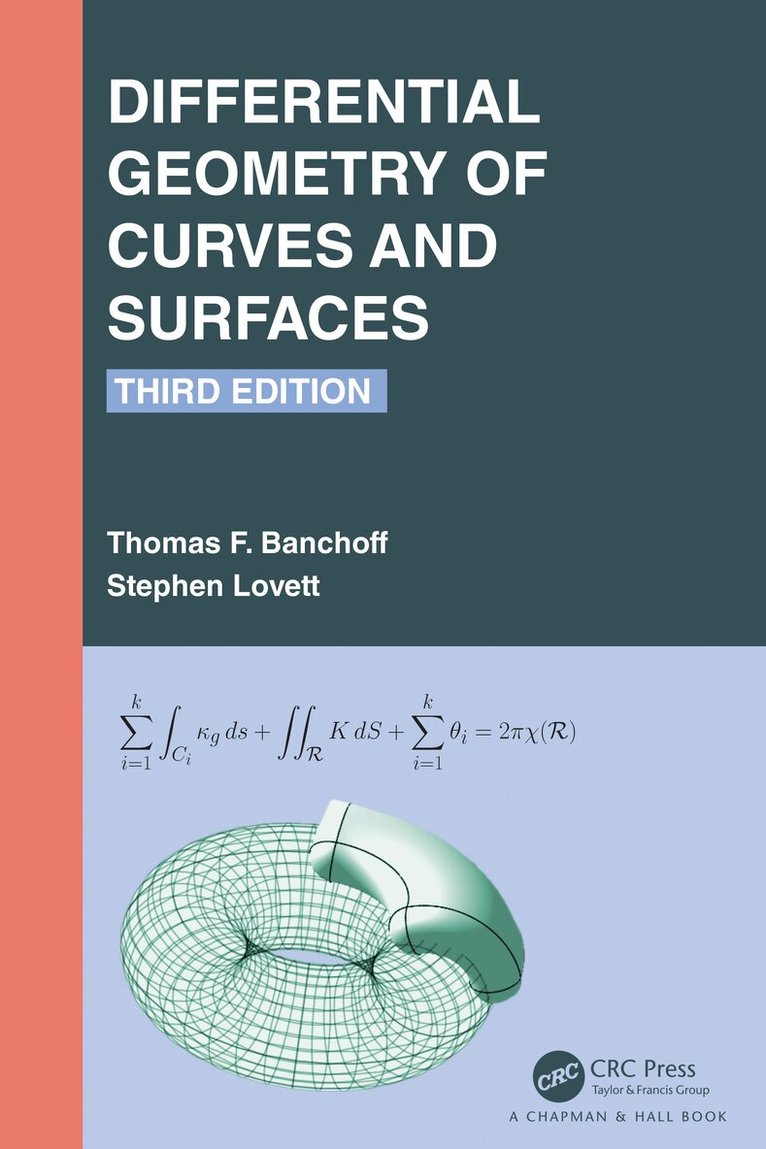
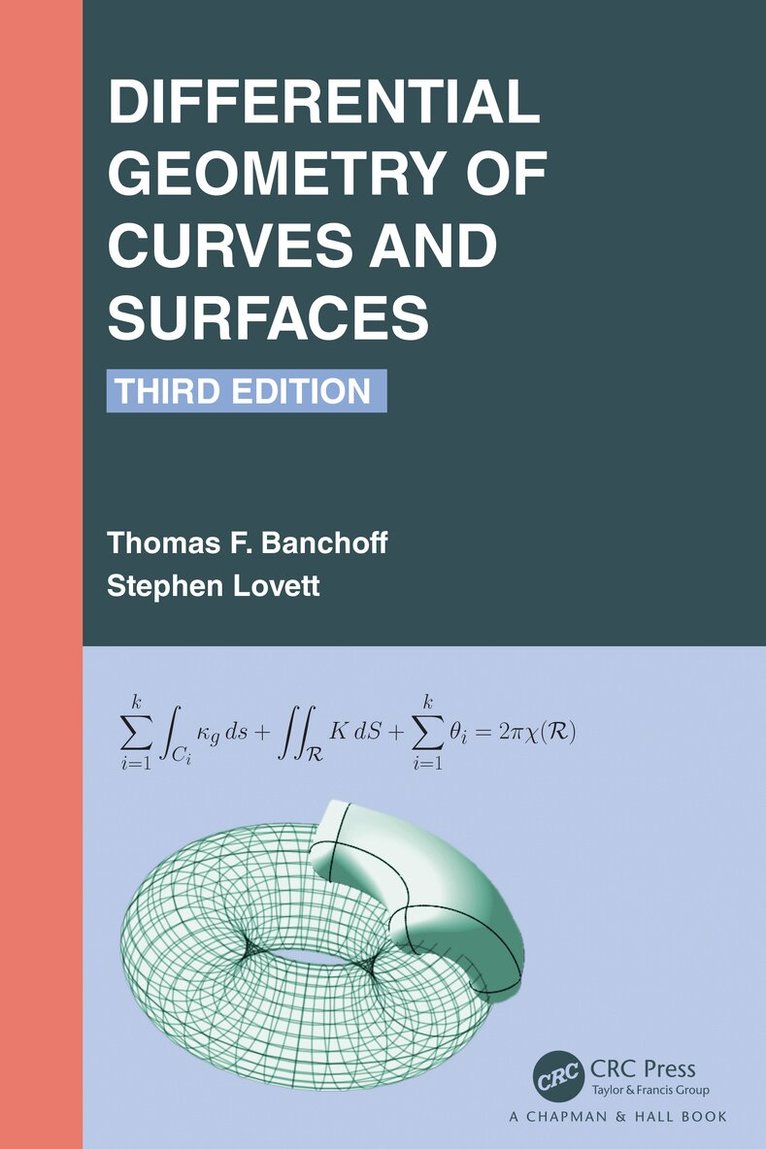
Through two previous editions, the third edition of this popular and intriguing text takes both an analytical/theoretical approach and a visual/intuitive approach to the local and global properties of curves and surfaces.Requiring only multivariable calculus and linear algebra, it develops students’ geometric intuition through interactive graphics applets. Applets are presented in Maple workbook format, which readers can access using the free Maple Player.The book explains the reasons for various definitions while the interactive applets offer motivation for definitions, allowing students to explore examples further, and give a visual explanation of complicated theorems. The ability to change parametric curves and parametrized surfaces in an applet lets students probe the concepts far beyond what static text permits. Investigative project ideas promote student research.At users of the previous editions' request, this third edition offers a broader list of exercises. More elementary exercises are added and some challenging problems are moved later in exercise sets to assure more graduated progress. The authors also add hints to motivate students grappling with the more difficult exercises.This student-friendly and readable approach offers additional examples, well-placed to assist student comprehension. In the presentation of the Gauss-Bonnet Theorem, the authors provide more intuition and stepping-stones to help students grasp phenomena behind it. Also, the concept of a homeomorphism is new to students even though it is a key theoretical component of the definition of a regular surface. Providing more examples show students how to prove certain functions are homeomorphisms.
824 kr
Skickas inom 10-15 vardagar
This unique and contemporary text not only offers an introduction to proofs with a view towards algebra and analysis, a standard fare for a transition course, but also presents practical skills for upper-level mathematics coursework and exposes undergraduate students to the context and culture of contemporary mathematics. The authors implement the practice recommended by the Committee on the Undergraduate Program in Mathematics (CUPM) curriculum guide, that a modern mathematics program should include cognitive goals and offer a broad perspective of the discipline.Part I offers: An introduction to logic and set theory. Proof methods as a vehicle leading to topics useful for analysis, topology, algebra, and probability. Many illustrated examples, often drawing on what students already know, that minimize conversation about "doing proofs." An appendix that provides an annotated rubric with feedback codes for assessing proof writing.Part II presents the context and culture aspects of the transition experience, including: 21st century mathematics, including the current mathematical culture, vocations, and careers. History and philosophical issues in mathematics. Approaching, reading, and learning from journal articles and other primary sources. Mathematical writing and typesetting in LaTeX.Together, these Parts provide a complete introduction to modern mathematics, both in content and practice. Table of ContentsPart I - Introduction to Proofs Logic and SetsArguments and ProofsFunctionsProperties of the IntegersCounting and Combinatorial ArgumentsRelationsPart II - Culture, History, Reading, and Writing Mathematical Culture, Vocation, and CareersHistory and Philosophy of MathematicsReading and Researching MathematicsWriting and Presenting MathematicsAppendix A. Rubric for Assessing ProofsAppendix B. Index of Theorems and Definitions from Calculus and Linear AlgebraBibliographyIndexBiographiesDanilo R. Diedrichs is an Associate Professor of Mathematics at Wheaton College in Illinois. Raised and educated in Switzerland, he holds a PhD in applied mathematical and computational sciences from the University of Iowa, as well as a master’s degree in civil engineering from the Ecole Polytechnique Fédérale in Lausanne, Switzerland. His research interests are in dynamical systems modeling applied to biology, ecology, and epidemiology.Stephen Lovett is a Professor of Mathematics at Wheaton College in Illinois. He holds a PhD in representation theory from Northeastern University. His other books include Abstract Algebra: Structures and Applications (2015), Differential Geometry of Curves and Surfaces, with Tom Banchoff (2016), and Differential Geometry of Manifolds (2019).
851 kr
Skickas inom 10-15 vardagar
Through two previous editions, the third edition of this popular and intriguing text takes both an analytical/theoretical approach and a visual/intuitive approach to the local and global properties of curves and surfaces.Requiring only multivariable calculus and linear algebra, it develops students’ geometric intuition through interactive graphics applets. Applets are presented in Maple workbook format, which readers can access using the free Maple Player.The book explains the reasons for various definitions while the interactive applets offer motivation for definitions, allowing students to explore examples further, and give a visual explanation of complicated theorems. The ability to change parametric curves and parametrized surfaces in an applet lets students probe the concepts far beyond what static text permits. Investigative project ideas promote student research.At users of the previous editions' request, this third edition offers a broader list of exercises. More elementary exercises are added and some challenging problems are moved later in exercise sets to assure more graduated progress. The authors also add hints to motivate students grappling with the more difficult exercises.This student-friendly and readable approach offers additional examples, well-placed to assist student comprehension. In the presentation of the Gauss-Bonnet Theorem, the authors provide more intuition and stepping-stones to help students grasp phenomena behind it. Also, the concept of a homeomorphism is new to students even though it is a key theoretical component of the definition of a regular surface. Providing more examples show students how to prove certain functions are homeomorphisms.
1 693 kr
Skickas inom 10-15 vardagar
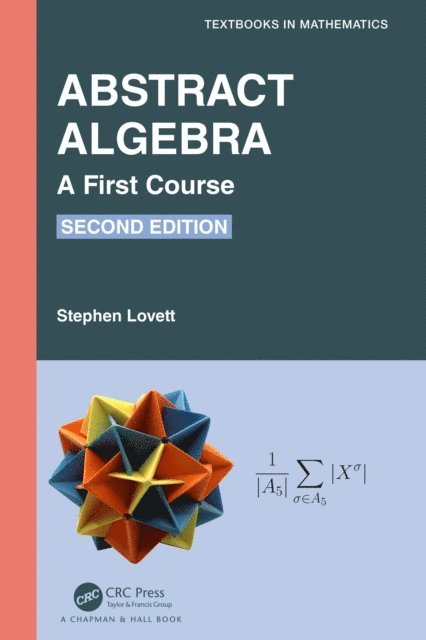
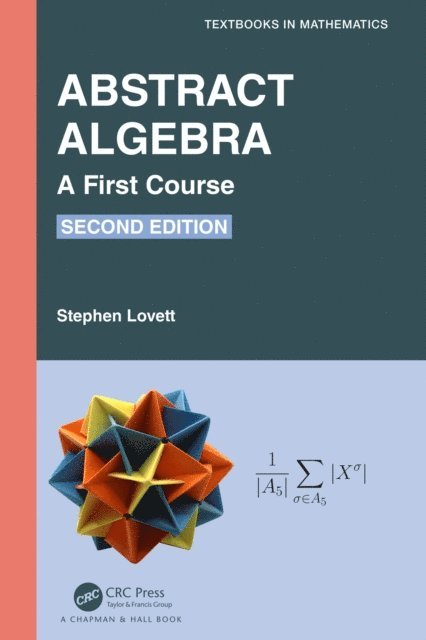
When a student of mathematics studies abstract algebra, he or she inevitably faces questions in the vein of, "What is abstract algebra" or "What makes it abstract?" Algebra, in its broadest sense, describes a way of thinking about classes of sets equipped with binary operations. In high school algebra, a student explores properties of operations (+, −, ×, and ÷) on real numbers. Abstract algebra studies properties of operations without specifying what types of number or object we work with. Any theorem established in the abstract context holds not only for real numbers but for every possible algebraic structure that has operations with the stated properties.This textbook intends to serve as a first course in abstract algebra. The selection of topics serves both of the common trends in such a course: a balanced introduction to groups, rings, and fields; or a course that primarily emphasizes group theory. The writing style is student-centered, conscientiously motivating definitions and offering many illustrative examples. Various sections or sometimes just examples or exercises introduce applications to geometry, number theory, cryptography and many other areas.This book offers a unique feature in the lists of projects at the end of each section. the author does not view projects as just something extra or cute, but rather an opportunity for a student to work on and demonstrate their potential for open-ended investigation.The projects ideas come in two flavors: investigative or expository. The investigative projects briefly present a topic and posed open-ended questions that invite the student to explore the topic, asking and to trying to answer their own questions. Expository projects invite the student to explore a topic with algebraic content or pertain to a particular mathematician’s work through responsible research.The exercises challenge the student to prove new results using the theorems presented in the text. The student then becomes an active participant in the development of the field.
820 kr
Skickas inom 10-15 vardagar
When a student of mathematics studies abstract algebra, he or she inevitably faces questions in the vein of, "What is abstract algebra" or "What makes it abstract?" Algebra, in its broadest sense, describes a way of thinking about classes of sets equipped with binary operations. In high school algebra, a student explores properties of operations (+, −, ×, and ÷) on real numbers. Abstract algebra studies properties of operations without specifying what types of number or object we work with. Any theorem established in the abstract context holds not only for real numbers but for every possible algebraic structure that has operations with the stated properties.This textbook intends to serve as a first course in abstract algebra. The selection of topics serves both of the common trends in such a course: a balanced introduction to groups, rings, and fields; or a course that primarily emphasizes group theory. The writing style is student-centered, conscientiously motivating definitions and offering many illustrative examples. Various sections or sometimes just examples or exercises introduce applications to geometry, number theory, cryptography and many other areas.This book offers a unique feature in the lists of projects at the end of each section. the author does not view projects as just something extra or cute, but rather an opportunity for a student to work on and demonstrate their potential for open-ended investigation.The projects ideas come in two flavors: investigative or expository. The investigative projects briefly present a topic and posed open-ended questions that invite the student to explore the topic, asking and to trying to answer their own questions. Expository projects invite the student to explore a topic with algebraic content or pertain to a particular mathematician’s work through responsible research.The exercises challenge the student to prove new results using the theorems presented in the text. The student then becomes an active participant in the development of the field.
688 kr
Skickas inom 10-15 vardagar
Differential Geometry of Manifolds, Second Edition presents the extension of differential geometry from curves and surfaces to manifolds in general. The book provides a broad introduction to the field of differentiable and Riemannian manifolds, tying together classical and modern formulations. It introduces manifolds in a both streamlined and mathematically rigorous way while keeping a view toward applications, particularly in physics. The author takes a practical approach, containing extensive exercises and focusing on applications, including the Hamiltonian formulations of mechanics, electromagnetism, string theory. The Second Edition of this successful textbook offers several notable points of revision.New to the Second Edition: New problems have been added and the level of challenge has been changed to the exercises Each section corresponds to a 60-minute lecture period, making it more user-friendly for lecturers Includes new sections which provide more comprehensive coverage of topics Features a new chapter on Multilinear Algebra
785 kr
Tillfälligt slut
Differential Geometry of Curves and Surfaces, Second Edition takes both an analytical/theoretical approach and a visual/intuitive approach to the local and global properties of curves and surfaces. Requiring only multivariable calculus and linear algebra, it develops students’ geometric intuition through interactive computer graphics applets supported by sound theory.The book explains the reasons for various definitions while the interactive applets offer motivation for certain definitions, allow students to explore examples further, and give a visual explanation of complicated theorems. The ability to change parametric curves and parametrized surfaces in an applet lets students probe the concepts far beyond what static text permits.New to the Second EditionReworked presentation to make it more approachableMore exercises, both introductory and advancedNew section on the application of differential geometry to cartographyAdditional investigative project ideasSignificantly reorganized material on the Gauss–Bonnet theoremTwo new sections dedicated to hyperbolic and spherical geometry as applications of intrinsic geometryA new chapter on curves and surfaces in Rn Suitable for an undergraduate-level course or self-study, this self-contained textbook and online software applets provide students with a rigorous yet intuitive introduction to the field of differential geometry. The text gives a detailed introduction of definitions, theorems, and proofs and includes many types of exercises appropriate for daily or weekly assignments. The applets can be used for computer labs, in-class illustrations, exploratory exercises, or self-study aids.
996 kr
Tillfälligt slut