Stephen Menn – författare
Visar alla böcker från författaren . Handla med fri frakt och snabb leverans.
5 produkter
5 produkter
Inbunden, Engelska, 2020
1 139 kr
Skickas inom 5-8 vardagar
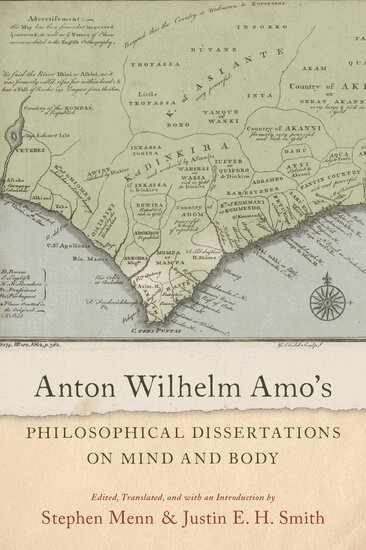
Anton Wilhelm Amo (c.1703-after 1752) was the first African philosopher in the modern period to write in the European philosophical tradition and study and teach in European universities. At the dawn of the eighteenth century, while still a small boy, he was sent from his home in present-day Ghana to Amsterdam. From there he was sent to Germany as a court attendant of Duke Anton Ulrich of Braunschweig-Wolfenbüttel, and was subsequently baptized in 1708. He matriculated at the University of Halle in 1727, where he defended a law thesis. He then studied and taught at the University of Wittenberg, before returning to Halle to teach, and later also teaching in Jena. He returned to West Africa permanently in 1747. Though much attention on and study of Amo has previously focused on his symbolic importance as a historical figure--the first African philosopher in modern Europe--Stephen Menn and Justin E. H. Smith argue for a serious engagement with Amo's work as a philosopher. In an extensive introduction, they contextualize his biography and writing within the surrounding intellectual and historical environment, and discuss and analyze his arguments in conversation with other philosophers of the time. This volume contains his two Wittenberg philosophical dissertations, On the Impassivity of the Human Mind and the Philosophical Disputation containing a Distinct Idea of those Things that Pertain either to the Mind or to our Living and Organic Body, both first published in 1734. The editors present the original Latin texts with side-by-side English translations and detailed explanatory annotations. In centering Amo's philosophical thought and making it accessible to more students and scholars, Menn and Smith establish the originality and significance of Amo's rigorous contributions to the mind-body debate of the seventeenth and eighteenth centuries.
E-bok
PDF, Engelska, 2020338 kr
Läs direkt efter köp
Anton Wilhelm Amo (c.1703-after 1752) was the first African philosopher in the modern period to write in the European philosophical tradition and study and teach in European universities.At the dawn of the eighteenth century, while still a small boy, he was sent from his home in present-day Ghana to Amsterdam. From there he was sent to Germany as a court attendant of Duke Anton Ulrich of Braunschweig-Wolfenbüttel, and was subsequently baptized in 1708. He matriculated at the University of Halle in 1727, where he defended a law thesis. He then studied and taught at the University of Wittenberg, before returning to Halle to teach, and later also teaching in Jena. He returned to West Africa permanently in 1747.Though much attention on and study of Amo has previously focused on his symbolic importance as a historical figure--the first African philosopher in modern Europe--Stephen Menn and Justin E. H. Smith argue for a serious engagement with Amo''s work as a philosopher. In an extensive introduction, they contextualize his biography and writing within the surrounding intellectual and historical environment, and discuss and analyze his arguments in conversation with other philosophers of the time. This volume contains his two Wittenberg philosophical dissertations, On the Impassivity of the Human Mind and the Philosophical Disputation containing a Distinct Idea of those Things that Pertain either to the Mind or to our Living and Organic Body, both first published in 1734. The editors present the original Latin texts with side-by-side English translations and detailed explanatory annotations. In centering Amo''s philosophical thought and making it accessible to more students and scholars, Menn and Smith establish the originality and significance of Amo''s rigorous contributions to the mind-body debate of the seventeenth and eighteenth centuries.
E-bok
Engelska, 2020338 kr
Läs direkt efter köp
Anton Wilhelm Amo (c.1703-after 1752) was the first African philosopher in the modern period to write in the European philosophical tradition and study and teach in European universities.At the dawn of the eighteenth century, while still a small boy, he was sent from his home in present-day Ghana to Amsterdam. From there he was sent to Germany as a court attendant of Duke Anton Ulrich of Braunschweig-Wolfenbüttel, and was subsequently baptized in 1708. He matriculated at the University of Halle in 1727, where he defended a law thesis. He then studied and taught at the University of Wittenberg, before returning to Halle to teach, and later also teaching in Jena. He returned to West Africa permanently in 1747.Though much attention on and study of Amo has previously focused on his symbolic importance as a historical figure--the first African philosopher in modern Europe--Stephen Menn and Justin E. H. Smith argue for a serious engagement with Amo''s work as a philosopher. In an extensive introduction, they contextualize his biography and writing within the surrounding intellectual and historical environment, and discuss and analyze his arguments in conversation with other philosophers of the time. This volume contains his two Wittenberg philosophical dissertations, On the Impassivity of the Human Mind and the Philosophical Disputation containing a Distinct Idea of those Things that Pertain either to the Mind or to our Living and Organic Body, both first published in 1734. The editors present the original Latin texts with side-by-side English translations and detailed explanatory annotations. In centering Amo''s philosophical thought and making it accessible to more students and scholars, Menn and Smith establish the originality and significance of Amo''s rigorous contributions to the mind-body debate of the seventeenth and eighteenth centuries.
Häftad, Engelska, 2022
394 kr
Skickas inom 5-8 vardagar
Anton Wilhelm Amo (c.1703-after 1752) was the first African philosopher in the modern period to write in the European philosophical tradition and study and teach in European universities. At the dawn of the eighteenth century, while still a small boy, he was sent from his home in present-day Ghana to Amsterdam. From there he was sent to Germany as a court attendant of Duke Anton Ulrich of Braunschweig-Wolfenbüttel, and was subsequently baptized in 1708. He matriculated at the University of Halle in 1727, where he defended a law thesis. He then studied and taught at the University of Wittenberg, before returning to Halle to teach, and later also teaching in Jena. He returned to West Africa permanently in 1747. Though much attention on and study of Amo has previously focused on his symbolic importance as a historical figure--the first African philosopher in modern Europe--Stephen Menn and Justin E. H. Smith argue for a serious engagement with Amo's work as a philosopher. In an extensive introduction, they contextualize his biography and writing within the surrounding intellectual and historical environment, and discuss and analyze his arguments in conversation with other philosophers of the time. This volume contains his two Wittenberg philosophical dissertations, On the Impassivity of the Human Mind and the Philosophical Disputation containing a Distinct Idea of those Things that Pertain either to the Mind or to our Living and Organic Body, both first published in 1734. The editors present the original Latin texts with side-by-side English translations and detailed explanatory annotations. In centering Amo's philosophical thought and making it accessible to more students and scholars, Menn and Smith establish the originality and significance of Amo's rigorous contributions to the mind-body debate of the seventeenth and eighteenth centuries.
Häftad, Engelska, 2002
571 kr
Skickas inom 7-10 vardagar
This book is a systematic study of Descartes' relation to Augustine. It offers a complete reevaluation of Descartes' thought and as such will be of major importance to all historians of medieval, neo-Platonic, or early modern philosophy. Stephen Menn demonstrates that Descartes uses Augustine's central ideas as a point of departure for a critique of medieval Aristotelian physics, which he replaces with a new, mechanistic anti-Aristotelian physics. Special features of the book include a reading of the Meditations, a comprehensive historical and philosophical introduction to Augustine's thought, a detailed account of Plotinus, and a contextualization of Descartes' mature philosophical project which explores both the framework within which it evolved and the early writings, to show how the collapse of the early project drove Descartes to the writings of Augustine.