Stephen Paul Miller – författare
Visar alla böcker från författaren Stephen Paul Miller. Handla med fri frakt och snabb leverans.
4 produkter
4 produkter
E-bok
Engelska, 2011845 kr
Läs direkt efter köp
"What have I in common with Jews? I hardly have anything in common with myself!" --Franz Kafka Kafka''s quip--paradoxical, self-questioning, ironic--highlights vividly some of the key issues of identity and self-representation for Jewish writers in the 20th century. No group of writers better represents the problems of Jewish identity than Jewish poets writing in the American modernist tradition--specifically secular Jews: those disdainful or suspicious of organized religion, yet forever shaped by those traditions. This collection of essays is the first to address this often obscured dimension of modern and contemporary poetry: the secular Jewish dimension. Editors Daniel Morris and Stephen Paul Miller asked their contributors to address what constitutes radical poetry written by Jews defined as "secular," and whether or not there is a Jewish component or dimension to radical and modernist poetic practice in general. These poets and critics address these questions by exploring the legacy of those poets who preceded and influenced them--Stein, Zukofsky, Reznikoff, Oppen, and Ginsberg, among others. While there is no easy answer for these writers about what it means to be a Jew, in their responses there is a rich sense of how being Jewish reflects on their aesthetics and practices as poets, and how the tradition of the avant-garde informs their identities as Jews. Fragmented identities, irony, skepticism, a sense of self as "other" or "outsider," distrust of the literal, and belief in a tradition that questions rather than answers--these are some of the qualities these poets see as common to themselves, the poetry they make, and the tradition they work within.
Häftad, Engelska, 1999
432 kr
Skickas inom 5-8 vardagar
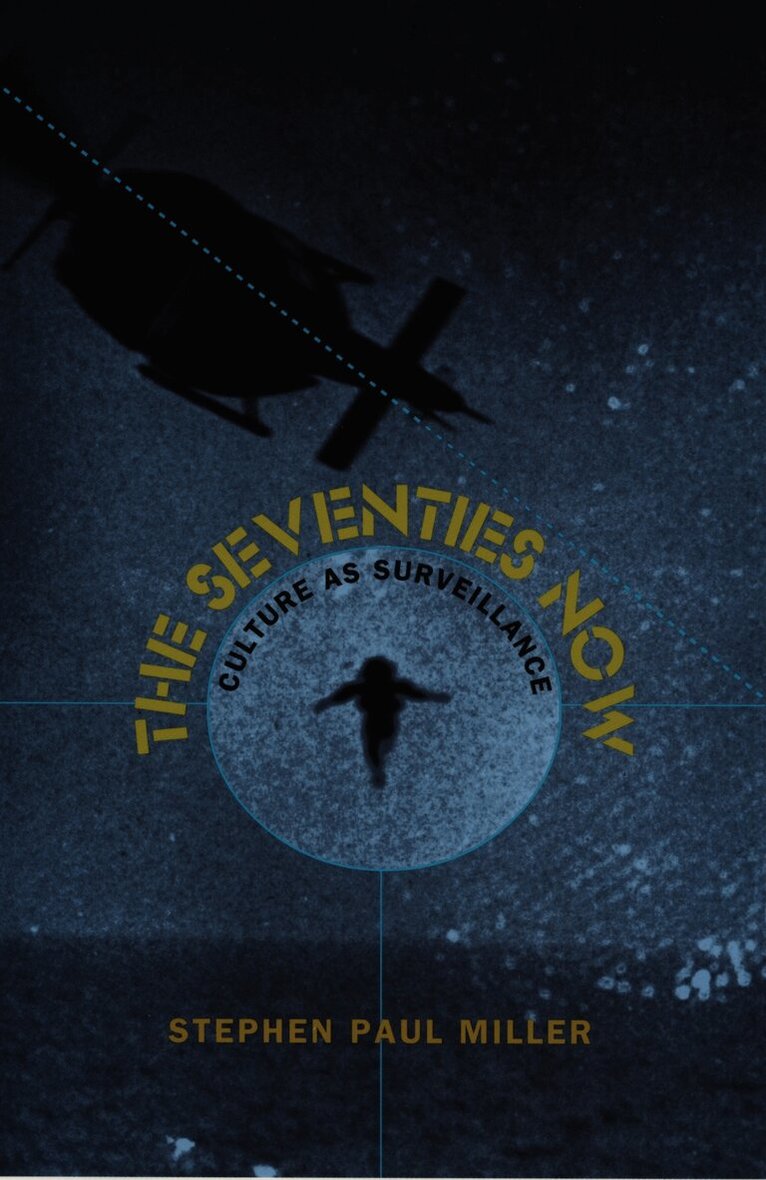
Most would agree that American culture changed dramatically from the 1960s to the 1980s. Yet the 1970s, the decade “in between,” is still somehow thought of as a cultural wasteland. In The Seventies Now Stephen Paul Miller debunks this notion by examining a wide range of political and cultural phenomena-from the long shadow cast by Richard Nixon and the Watergate scandal to Andy Warhol and the disco scene-identifying in these phenomena a pivotal yet previously unidentified social trend, the movement from institutionalized external surveillance to the widespread internalization of such practices.The concept of surveillance and its attendant social ramifications have been powerful agents in U.S. culture for many decades, but in describing how during the 1970s Americans learned to “survey” themselves, Miller shines surprising new light on such subjects as the women’s movement, voting rights enforcement, the Ford presidency, and environmental legislation. He illuminates the significance of what he terms “microperiods” and analyzes relevant themes in many of the decade’s major films-such as The Deer Hunter, Network, Jaws, Star Wars, and Apocalypse Now-and in the literature of writers including John Ashbery, Toni Morrison, Adrienne Rich, and Sam Shepard. In discussing the reverberations of the 1969 Stonewall riots, technological innovations, the philosophy of Michel Foucault, and a host of documents and incidents, Miller shows how the 1970s marked an important period of transition, indeed a time of many transitions, to the world we confront at the end of the millennium.The Seventies Now will interest students and scholars of cultural studies, American history, theories of technology, film and literature, visual arts, and gay and lesbian studies.
E-bok
PDF, Engelska, 1999651 kr
Läs direkt efter köp
Most would agree that American culture changed dramatically from the 1960s to the 1980s. Yet the 1970s, the decade “in between,” is still somehow thought of as a cultural wasteland. In The Seventies Now Stephen Paul Miller debunks this notion by examining a wide range of political and cultural phenomena—from the long shadow cast by Richard Nixon and the Watergate scandal to Andy Warhol and the disco scene—identifying in these phenomena a pivotal yet previously unidentified social trend, the movement from institutionalized external surveillance to the widespread internalization of such practices.The concept of surveillance and its attendant social ramifications have been powerful agents in U.S. culture for many decades, but in describing how during the 1970s Americans learned to “survey” themselves, Miller shines surprising new light on such subjects as the women’s movement, voting rights enforcement, the Ford presidency, and environmental legislation. He illuminates the significance of what he terms “microperiods” and analyzes relevant themes in many of the decade’s major films—such as The Deer Hunter, Network, Jaws, Star Wars, and Apocalypse Now—and in the literature of writers including John Ashbery, Toni Morrison, Adrienne Rich, and Sam Shepard. In discussing the reverberations of the 1969 Stonewall riots, technological innovations, the philosophy of Michel Foucault, and a host of documents and incidents, Miller shows how the 1970s marked an important period of transition, indeed a time of many transitions, to the world we confront at the end of the millennium.The Seventies Now will interest students and scholars of cultural studies, American history, theories of technology, film and literature, visual arts, and gay and lesbian studies.
Häftad, Engelska, 2026
259 kr
Kommande