Stephen Przybylinski - Böcker
Visar alla böcker från författaren Stephen Przybylinski. Handla med fri frakt och snabb leverans.
3 produkter
3 produkter
1 635 kr
Skickas inom 5-8 vardagar
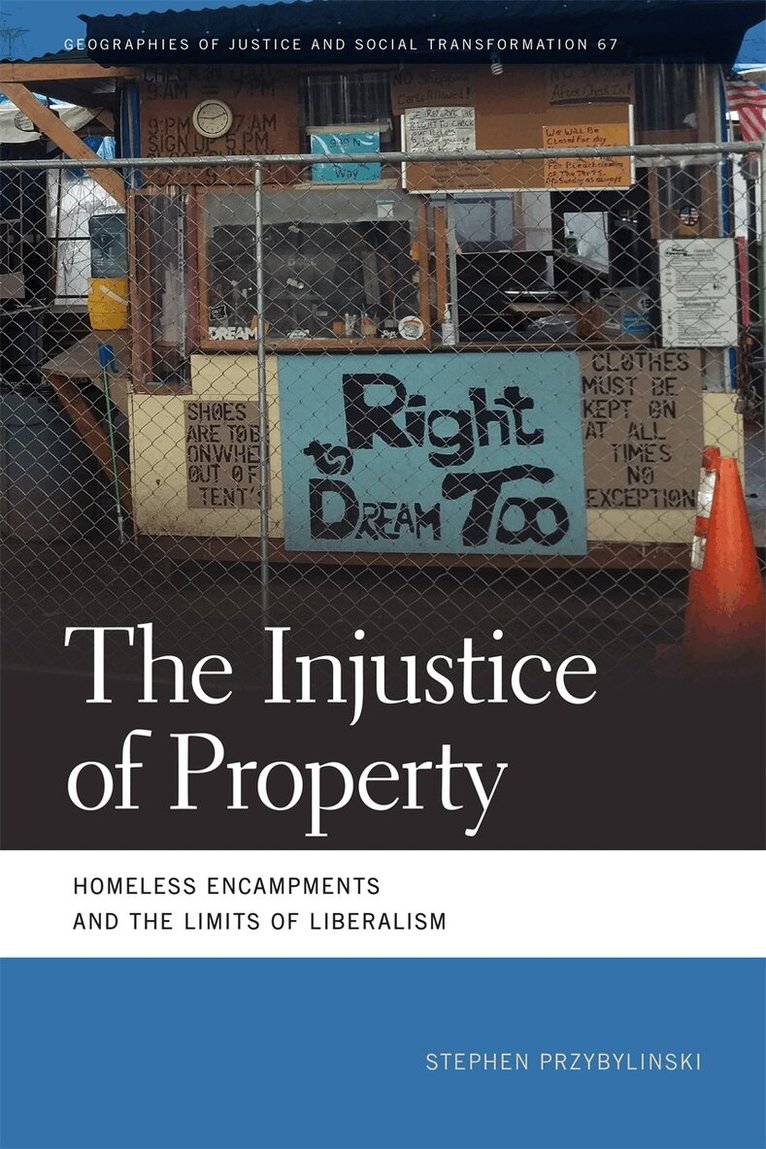
With the rise of homelessness in many U.S. cities, municipal governments are sanctioning organized encampments as an official strategy for sheltering unhoused people. Examining the shortcomings and consequences of these municipal policies, The Injustice of Property explores how unhoused individuals living in self-managed encampments navigate and organize themselves within and against the confines of liberal property systems. Through ethnographic research in Portland, Oregon, a paradigmatic city in advancing this model of homeless shelter, Stephen Przybylinski details the everyday struggles of self-managed encampments to highlight how key contradictions inherent to liberal ideology maintain property as a means of structuring sociopolitical equality. He argues that justice cannot be realized for unhoused communities within the liberal model of private property due to how liberalism and liberal ideology prioritize the rights and values of property over the personal rights of self-governance.The Injustice of Property is a conceptually robust and empirically rich account of the limits of liberal thinking regarding what “just” property relations look like for unhoused and housed people alike. The book shows that while encampment communities struggle to establish alternative property relationships to the traditional model of private ownership, the injustices that residents of encampments face provoke a necessary reevaluation of how beneficiaries of property systems influence who can become housing stable and on which terms. This insightful book reveals how the injustices surrounding Portland’s encampment communities reflect the limits and injustice of liberal property more broadly.
340 kr
Skickas inom 5-8 vardagar
With the rise of homelessness in many U.S. cities, municipal governments are sanctioning organized encampments as an official strategy for sheltering unhoused people. Examining the shortcomings and consequences of these municipal policies, The Injustice of Property explores how unhoused individuals living in self-managed encampments navigate and organize themselves within and against the confines of liberal property systems. Through ethnographic research in Portland, Oregon, a paradigmatic city in advancing this model of homeless shelter, Stephen Przybylinski details the everyday struggles of self-managed encampments to highlight how key contradictions inherent to liberal ideology maintain property as a means of structuring sociopolitical equality. He argues that justice cannot be realized for unhoused communities within the liberal model of private property due to how liberalism and liberal ideology prioritize the rights and values of property over the personal rights of self-governance.The Injustice of Property is a conceptually robust and empirically rich account of the limits of liberal thinking regarding what “just” property relations look like for unhoused and housed people alike. The book shows that while encampment communities struggle to establish alternative property relationships to the traditional model of private ownership, the injustices that residents of encampments face provoke a necessary reevaluation of how beneficiaries of property systems influence who can become housing stable and on which terms. This insightful book reveals how the injustices surrounding Portland’s encampment communities reflect the limits and injustice of liberal property more broadly.
413 kr
Skickas inom 7-10 vardagar
Available Open Access digitally under CC-BY-NC-ND licence.Bringing together divergent approaches to justice theorising, this volume connects normative and philosophical theories with the more empirically focused approaches emerging today in the social and political sciences and policy scholarship. The chapters overview a variety of mainstream approaches and radical critiques of justice to illustrate their value in addressing the pressing problems of climate change and economic development. Stressing the value of assessing justice theories in light of the material conditions of our changing world, the book concludes with an in-depth synthesis of how these wide ranging approaches to justice will be useful for students, scholars and practitioners concerned with realising justice.