Stephen Rupp - Böcker
Visar alla böcker från författaren Stephen Rupp. Handla med fri frakt och snabb leverans.
3 produkter
3 produkter
657 kr
Skickas inom 5-8 vardagar
This study examines issues in politics and political theory in selected works of Pedro Calderón de la Barca (1600–1681), the major dramatist of the middle and later decades of the seventeenth century in Spain. By analyzing secular dramas (comedias) and religious plays (autos sacramentales), Stephen Rupp demonstrates Calderón's awareness of the ideas and institutions of power in Hapsburg Spain and explores the terms of his intervention in the long debate over the principles of Christian statecraft. Through references to Rivadeneira, Saavedra Fajardo, and Quevedo, Rupp describes the anti-Machiavellian theory of kingship that informs Calderón's political theater.Rupp's argument proceeds from abstract principles of political theory to particular institutions and events at the Hapsburg court. Discussion of two comedias (La vida es sueño and La cisma de Inglaterra) and five autos (La vida es sueño, A Dios por razón de Estado, El maestrazgo del Toisón, El nuevo palacio del Retiro, and El lirio y la azucena) demonstrates Calderón's assimilation of true reason of state to providence, his attitudes concerning the conciliar system and the regime of the royal favorite or valido, and his allegorical treatment of significant state occasions.
704 kr
Skickas inom 7-10 vardagar
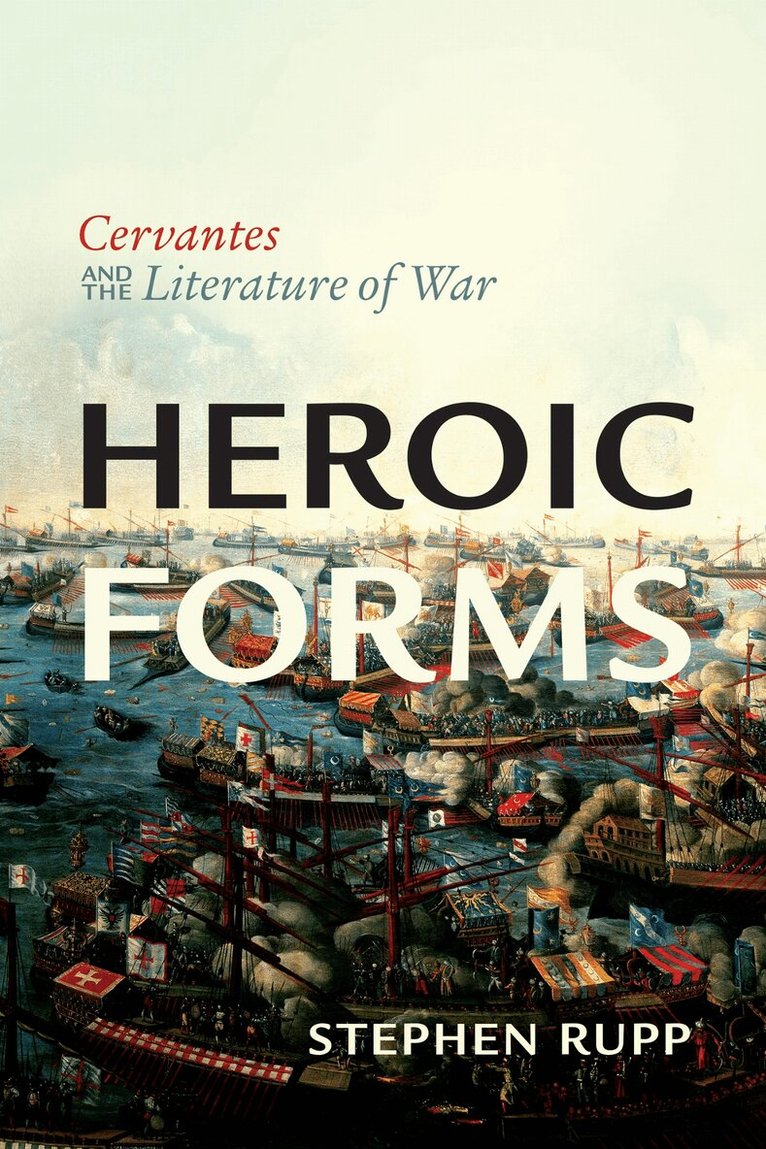
Before he was a writer, Miguel de Cervantes was a soldier. Enlisting in the Spanish infantry in 1570, he fought at the battle of Lepanto, was seized at sea and held captive by Algerian corsairs, and returned to Spain with a deep knowledge of military life. He understood the costs of heroism, the fragility of fame, and the power of the military culture of brotherhood.In Heroic Forms, Stephen Rupp connects Cervantes’s complex and inventive approach to literary genre and his many representations of early modern warfare. Examining Cervantes’s plays and poetry as well as his prose, Rupp demonstrates how Cervantes’s works express his perceptions of military life and how Cervantes interpreted the experience of war through the genres of the era: epic, tragedy, pastoral, romance, and picaresque fiction.
386 kr
Skickas inom 7-10 vardagar
Before he was a writer, Miguel de Cervantes was a soldier. Enlisting in the Spanish infantry in 1570, he fought at the battle of Lepanto, was seized at sea and held captive by Algerian corsairs, and returned to Spain with a deep knowledge of military life. He understood the costs of heroism, the fragility of fame, and the power of the military culture of brotherhood.In Heroic Forms, Stephen Rupp connects Cervantes’s complex and inventive approach to literary genre and his many representations of early modern warfare. Examining Cervantes’s plays and poetry as well as his prose, Rupp demonstrates how Cervantes’s works express his perceptions of military life and how Cervantes interpreted the experience of war through the genres of the era: epic, tragedy, pastoral, romance, and picaresque fiction.