Stephen Scully – författare
Visar alla böcker från författaren . Handla med fri frakt och snabb leverans.
8 produkter
8 produkter
Inbunden, Engelska, 2018
3 130 kr
Skickas inom 5-8 vardagar
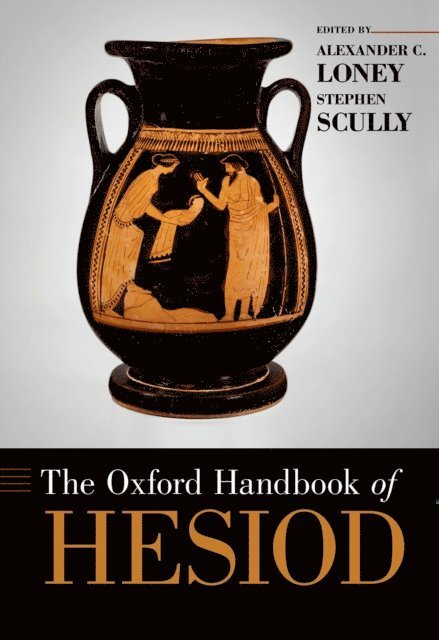
This volume brings together 29 junior and senior scholars to discuss aspects of Hesiod's poetry and its milieu and to explore questions of reception over two and half millennia from shortly after the poems' conception to Twitter hashtags. Rather than an exhaustive study of Hesiodic themes, the Handbook is conceived as a guide through terrain, some familiar, other less charted, examining both Hesiodic craft and later engagements with Hesiod's stories of the gods and moralizing proscriptions of just human behavior.The volume opens with the "Hesiodic Question," to address questions of authorship, historicity, and the nature of composition of Hesiod's two major poems, the Theogony and Works and Days. Subsequent chapters on the archaeology and economic history of archaic Boiotia, Indo-European poetics, and Hesiodic style offer a critical picture of the sorts of questions that have been asked rather than an attempt to resolve debate. Other chapters discuss Hesiod's particular rendering of the supernatural and the performative nature of the Works and Days, as well as competing diachronic and synchronic temporalities and varying portrayals of female in the two poems. The rich story of reception ranges from Solon to comic books. These chapters continue to explore the nature of Hesiod's poetics, as different writers through time single out new aspects of his art less evident to earlier readers. Long before the advent of Christianity, classical writers leveled their criticism at Hesiod's version of polytheism. The relative importance of Hesiod's two major poems across time also tells us a tale of the age receiving the poems. In the past two centuries, artists and writers have come to embrace the Hesiodic stories for themselves for the insight they offer of the human condition but even as old allegory looks quaint to modern eyes new forms of allegory take form.
E-bok
PDF, Engelska, 20182 021 kr
Läs direkt efter köp
This volume brings together 29 junior and senior scholars to discuss aspects of Hesiod''s poetry and its milieu and to explore questions of reception over two and half millennia from shortly after the poems'' conception to Twitter hashtags. Rather than an exhaustive study of Hesiodic themes, the Handbook is conceived as a guide through terrain, some familiar, other less charted, examining both Hesiodic craft and later engagements with Hesiod''s stories of the gods and moralizing proscriptions of just human behavior.The volume opens with the "Hesiodic Question," to address questions of authorship, historicity, and the nature of composition of Hesiod''s two major poems, the Theogony and Works and Days. Subsequent chapters on the archaeology and economic history of archaic Boiotia, Indo-European poetics, and Hesiodic style offer a critical picture of the sorts of questions that have been asked rather than an attempt to resolve debate. Other chapters discuss Hesiod''s particular rendering of the supernatural and the performative nature of the Works and Days, as well as competing diachronic and synchronic temporalities and varying portrayals of female in the two poems. The rich story of reception ranges from Solon to comic books. These chapters continue to explore the nature of Hesiod''s poetics, as different writers through time single out new aspects of his art less evident to earlier readers. Long before the advent of Christianity, classical writers leveled their criticism at Hesiod''s version of polytheism. The relative importance of Hesiod''s two major poems across time also tells us a tale of the age receiving the poems. In the past two centuries, artists and writers have come to embrace the Hesiodic stories for themselves for the insight they offer of the human condition but even as old allegory looks quaint to modern eyes new forms of allegory take form.
Inbunden, Engelska, 2015
2 473 kr
Skickas inom 5-8 vardagar
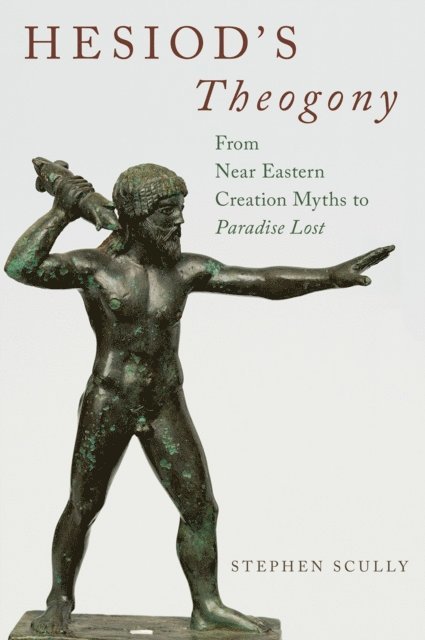
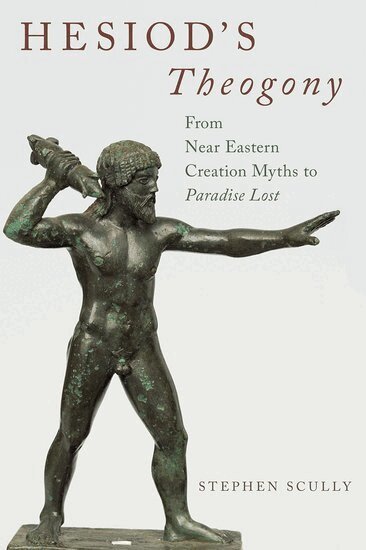
Stephen Scully both offers a reading of Hesiod's Theogony and traces the reception and shadows of this authoritative Greek creation story in Greek and Roman texts up to Milton's own creation myth, which sought to "soar above th' Aonian Mount [i.e., the Theogony] ... and justify the ways of God to men." Scully also considers the poem in light of Near Eastern creation stories, including the Enûma elish and Genesis, as well as the most striking of modern "scientific myths," Freud's Civilization and its Discontents. Scully reads Hesiod's poem as a hymn to Zeus and a city-state creation myth, arguing that Olympus is portrayed as an idealized polity and - with but one exception - a place of communal harmony. This reading informs his study of the Theogony's reception in later writings about polity, discord, and justice. The rich and various story of reception pays particular attention to the long Homeric Hymns, Solon, the Presocratics, Pindar, Aeschylus, Aristophanes, and Plato in the Archaic and Classical periods; to the Alexandrian scholars, Callimachus, Euhemerus, and the Stoics in the Hellenistic period; to Ovid, Apollodorus, Lucan, a few Church fathers, and the Neoplatonists in the Roman period. Tracing the poem's reception in the Byzantine, medieval, and early Renaissance, including Petrarch and Erasmus, the book ends with a lengthy exploration of Milton's imitations of the poem in Paradise Lost. Scully also compares what he considers Hesiod's artful interplay of narrative, genealogical lists, and keen use of personified abstractions in the Theogony to Homeric narrative techniques and treatment of epic verse.
E-bok
PDF, Engelska, 20151 658 kr
Läs direkt efter köp
Stephen Scully both offers a reading of Hesiod''s Theogony and traces the reception and shadows of this authoritative Greek creation story in Greek and Roman texts up to Milton''s own creation myth, which sought to "soar above th'' Aonian Mount [i.e., the Theogony]...and justify the ways of God to men." Scully also considers the poem in light of Near Eastern creation stories, including the Enûma elish and Genesis, as well as the most striking of modern "scientific myths," Freud''s Civilization and its Discontents. Scully reads Hesiod''s poem as a hymn to Zeus and a city-state creation myth, arguing that Olympus is portrayed as an idealized polity and--with but one exception--a place of communal harmony. This reading informs his study of the Theogony''s reception in later writings about polity, discord, and justice. The rich and various story of reception pays particular attention to the long Homeric Hymns, Solon, the Presocratics, Pindar, Aeschylus, Aristophanes, and Plato in the Archaic and Classical periods; to the Alexandrian scholars, Callimachus, Euhemerus, and the Stoics in the Hellenistic period; to Ovid, Apollodorus, Lucian, a few Church fathers, and the Neoplatonists in the Roman period. Tracing the poem''s reception in the Byzantine, medieval, and early Renaissance, including Petrarch and Erasmus, the book ends with a lengthy exploration of Milton''s imitations of the poem in Paradise Lost. Scully also compares what he considers Hesiod''s artful interplay of narrative, genealogical lists, and keen use of personified abstractions in the Theogony to Homeric narrative techniques and treatment of epic verse.
E-bok
Engelska, 20151 600 kr
Läs direkt efter köp
Stephen Scully both offers a reading of Hesiod''s Theogony and traces the reception and shadows of this authoritative Greek creation story in Greek and Roman texts up to Milton''s own creation myth, which sought to "soar above th'' Aonian Mount [i.e., the Theogony]...and justify the ways of God to men." Scully also considers the poem in light of Near Eastern creation stories, including the Enûma elish and Genesis, as well as the most striking of modern "scientific myths," Freud''s Civilization and its Discontents. Scully reads Hesiod''s poem as a hymn to Zeus and a city-state creation myth, arguing that Olympus is portrayed as an idealized polity and--with but one exception--a place of communal harmony. This reading informs his study of the Theogony''s reception in later writings about polity, discord, and justice. The rich and various story of reception pays particular attention to the long Homeric Hymns, Solon, the Presocratics, Pindar, Aeschylus, Aristophanes, and Plato in the Archaic and Classical periods; to the Alexandrian scholars, Callimachus, Euhemerus, and the Stoics in the Hellenistic period; to Ovid, Apollodorus, Lucian, a few Church fathers, and the Neoplatonists in the Roman period. Tracing the poem''s reception in the Byzantine, medieval, and early Renaissance, including Petrarch and Erasmus, the book ends with a lengthy exploration of Milton''s imitations of the poem in Paradise Lost. Scully also compares what he considers Hesiod''s artful interplay of narrative, genealogical lists, and keen use of personified abstractions in the Theogony to Homeric narrative techniques and treatment of epic verse.
E-bok
Engelska, 20182 021 kr
Läs direkt efter köp
This volume brings together 29 junior and senior scholars to discuss aspects of Hesiod''s poetry and its milieu and to explore questions of reception over two and half millennia from shortly after the poems'' conception to Twitter hashtags. Rather than an exhaustive study of Hesiodic themes, the Handbook is conceived as a guide through terrain, some familiar, other less charted, examining both Hesiodic craft and later engagements with Hesiod''s stories of the gods and moralizing proscriptions of just human behavior.The volume opens with the "Hesiodic Question," to address questions of authorship, historicity, and the nature of composition of Hesiod''s two major poems, the Theogony and Works and Days. Subsequent chapters on the archaeology and economic history of archaic Boiotia, Indo-European poetics, and Hesiodic style offer a critical picture of the sorts of questions that have been asked rather than an attempt to resolve debate. Other chapters discuss Hesiod''s particular rendering of the supernatural and the performative nature of the Works and Days, as well as competing diachronic and synchronic temporalities and varying portrayals of female in the two poems. The rich story of reception ranges from Solon to comic books. These chapters continue to explore the nature of Hesiod''s poetics, as different writers through time single out new aspects of his art less evident to earlier readers. Long before the advent of Christianity, classical writers leveled their criticism at Hesiod''s version of polytheism. The relative importance of Hesiod''s two major poems across time also tells us a tale of the age receiving the poems. In the past two centuries, artists and writers have come to embrace the Hesiodic stories for themselves for the insight they offer of the human condition but even as old allegory looks quaint to modern eyes new forms of allegory take form.
Inbunden, Engelska, 2013
456 kr
Kommande
Häftad, Engelska, 2013
287 kr
Kommande