Stephen Sparks – författare
Visar alla böcker från författaren Stephen Sparks. Handla med fri frakt och snabb leverans.
3 produkter
3 produkter
Häftad, Engelska, 2022
167 kr
Kommande
Object Lessons is a series of short, beautifully designed books about the hidden lives of ordinary things. Fog, a cloud that touches the ground, marks the fuzzy and shifting boundary of just how much (or little) we are willing to tolerate the natural world. Viewed from beyond the fog line, it is picturesque, the stuff of postcards and viral videos; yet from within it is a menace, responsible for travel delays and accidents—including the deadliest airline disaster in history—and is a vessel of terror and contagion. Stephen Spark's Fog traces the brief history of fog from the mid-19th century, when Oscar Wilde claimed that fog was invented, to the 21st-century Pacific coast, where scientists believe fog may be going extinct, to reveal a history of our conflicting desires to eliminate and appreciate fog. Object Lessons is published in partnership with an essay series in The Atlantic.
E-bok
PDF, Engelska, 2019386 kr
Läs direkt efter köp
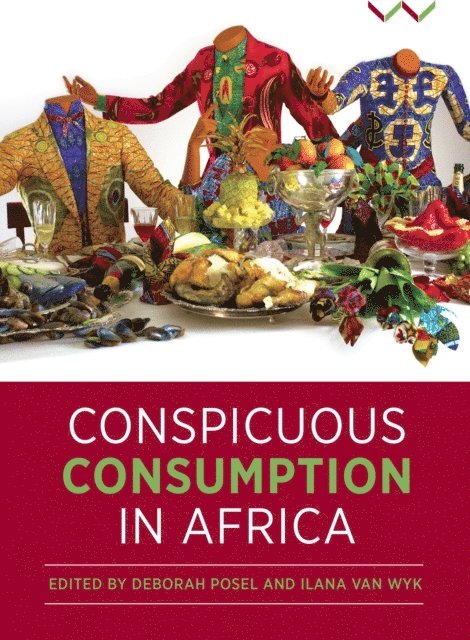
From early department stores in Cape Town to gendered histories of sartorial success in urban Togo, contestations over expense accounts at an apartheid state enterprise, elite wealth and political corruption in Angola and Zambia, the role of popular religion in the political intransigence of Jacob Zuma, funerals of big men in Cameroon, youth cultures of consumption in Niger and South Africa, queer consumption in Cape Town, middle-class food consumption in Durban and the consumption of luxury handcrafted beads, this collection of essays explores the ways in which conspicuous consumption is foregrounded in various African contexts and historical moments. In 1899, Thorstein Veblen coined the phrase ‘conspicuous consumption’ to describe status-seeking in the obscenely unequal world of late-nineteenth century America. Many of the aspects he described in The Theory of the Leisure Class are still evident in our world today. While Veblen’s crude denunciation of material extravagance finds echoes in media exposés about the lifestyles of the rich worldwide, it is particularly recognisable in reporting on Africa. Here, images of conspicuous consumption have long circulated in local and global media as indictments of political corruption and signs of moral depravity. The essays in Conspicuous Consumption in Africa put Veblen’s concept under robust critical scrutiny, drawing on theorists like Mbembe, Guyer and Bayart by way of critique or addition. They delve into the pleasures, stresses and challenges of consuming in its religious, generational, gendered and racialised aspects, revealing conspicuous consumption as a layered set of practices, textures and relations. The authors resist the trap of easy moralisation, pointing to more complex ethical and political registers of analysis and judgement. This volume shows how central and revealing conspicuous consumption can be to fathoming the history of Africa’s projects of modernity, and their global lineages and legacies. In its grounded, up-close case studies, it is likely to feed into current public debates on the nature and future of African societies – South African society in particular.
E-bok
Engelska, 2019386 kr
Läs direkt efter köp
From early department stores in Cape Town to gendered histories of sartorial success in urban Togo, contestations over expense accounts at an apartheid state enterprise, elite wealth and political corruption in Angola and Zambia, the role of popular religion in the political intransigence of Jacob Zuma, funerals of big men in Cameroon, youth cultures of consumption in Niger and South Africa, queer consumption in Cape Town, middle-class food consumption in Durban and the consumption of luxury handcrafted beads, this collection of essays explores the ways in which conspicuous consumption is foregrounded in various African contexts and historical moments. In 1899, Thorstein Veblen coined the phrase ‘conspicuous consumption’ to describe status-seeking in the obscenely unequal world of late-nineteenth century America. Many of the aspects he described in The Theory of the Leisure Class are still evident in our world today. While Veblen’s crude denunciation of material extravagance finds echoes in media exposés about the lifestyles of the rich worldwide, it is particularly recognisable in reporting on Africa. Here, images of conspicuous consumption have long circulated in local and global media as indictments of political corruption and signs of moral depravity. The essays in Conspicuous Consumption in Africa put Veblen’s concept under robust critical scrutiny, drawing on theorists like Mbembe, Guyer and Bayart by way of critique or addition. They delve into the pleasures, stresses and challenges of consuming in its religious, generational, gendered and racialised aspects, revealing conspicuous consumption as a layered set of practices, textures and relations. The authors resist the trap of easy moralisation, pointing to more complex ethical and political registers of analysis and judgement. This volume shows how central and revealing conspicuous consumption can be to fathoming the history of Africa’s projects of modernity, and their global lineages and legacies. In its grounded, up-close case studies, it is likely to feed into current public debates on the nature and future of African societies – South African society in particular.