Steven Barrett – författare
Visar alla böcker från författaren Steven Barrett. Handla med fri frakt och snabb leverans.
16 produkter
16 produkter
Inbunden, Engelska, 2022
653 kr
Skickas inom 10-15 vardagar
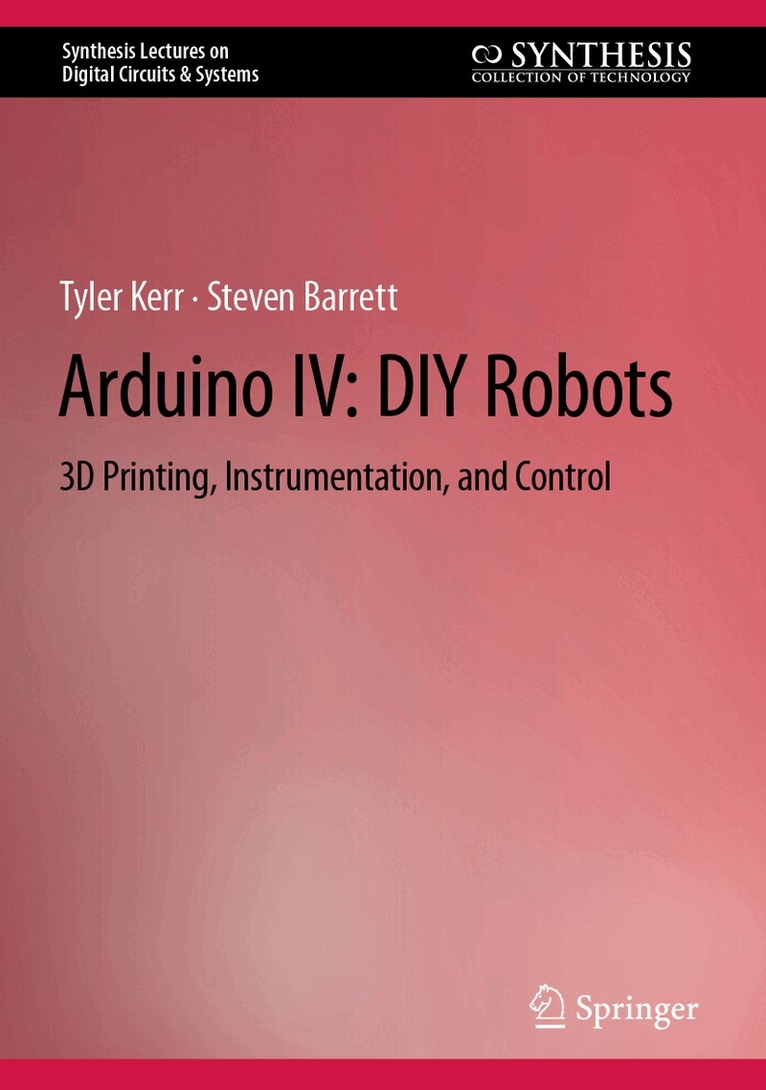
This book gives a step-by-step introduction to designing and building your own robots. As with other books in the Arduino series, the book begins with a quick overview of the Arduino Integrated Development Environment (IDE) used to write sketches, and the hardware systems aboard the Arduino UNO R3 and the Mega 2560 Rev 3. The level of the text makes it accessible for students, hobbyist and professionals' first introduction to both Arduino and Robotics. This book will be accessible by all levels of students, advanced hobbyists and engineering professionals, whether using as a self-reference or within a structure design laboratory. The text then examines the many concepts and characteristics common to all robots. In addition, throughout the book , reasonably priced, easily accessible and available off-the-shelf robots are examined. Examples include wheeled robots, tracked robots and also a robotic arm. After a thorough and easy to follow Arduino IDE and hardware introduction, the book launches into “do it yourself” or DIY concepts. A unique feature of the book is to start with a hands-on introduction to low cost 3D printing. These concepts will allow you to design and print your own custom robot parts and chassis. We then explore concepts to sense a robot's environment, move the robot about and provide a portable power source. We conclude with a several DIY robot projects.
E-bok
Engelska, 2022870 kr
Läs direkt efter köp
This book gives a step-by-step introduction to designing and building your own robots. As with other books in the Arduino series, the book begins with a quick overview of the Arduino Integrated Development Environment (IDE) used to write sketches, and the hardware systems aboard the Arduino UNO R3 and the Mega 2560 Rev 3. The level of the text makes it accessible for students, hobbyist and professionals'' first introduction to both Arduino and Robotics. This book will be accessible by all levels of students, advanced hobbyists and engineering professionals, whether using as a self-reference or within a structure design laboratory. The text then examines the many concepts and characteristics common to all robots. In addition, throughout the book , reasonably priced, easily accessible and available off-the-shelf robots are examined. Examples include wheeled robots, tracked robots and also a robotic arm. After a thorough and easy to follow Arduino IDE and hardware introduction, the book launches into “do it yourself” or DIY concepts. A unique feature of the book is to start with a hands-on introduction to low cost 3D printing. These concepts will allow you to design and print your own custom robot parts and chassis. We then explore concepts to sense a robot''s environment, move the robot about and provide a portable power source. We conclude with a several DIY robot projects.
Häftad, Engelska, 2023
410 kr
Skickas inom 5-8 vardagar
This book gives a step-by-step introduction to designing and building your own robots. As with other books in the Arduino series, the book begins with a quick overview of the Arduino Integrated Development Environment (IDE) used to write sketches, and the hardware systems aboard the Arduino UNO R3 and the Mega 2560 Rev 3. The level of the text makes it accessible for students, hobbyist and professionals' first introduction to both Arduino and Robotics. This book will be accessible by all levels of students, advanced hobbyists and engineering professionals, whether using as a self-reference or within a structure design laboratory. The text then examines the many concepts and characteristics common to all robots. In addition, throughout the book , reasonably priced, easily accessible and available off-the-shelf robots are examined. Examples include wheeled robots, tracked robots and also a robotic arm. After a thorough and easy to follow Arduino IDE and hardware introduction, the book launches into “do it yourself” or DIY concepts. A unique feature of the book is to start with a hands-on introduction to low cost 3D printing. These concepts will allow you to design and print your own custom robot parts and chassis. We then explore concepts to sense a robot's environment, move the robot about and provide a portable power source. We conclude with a several DIY robot projects.
Häftad, Engelska, 2012
238 kr
Skickas inom 11-20 vardagar
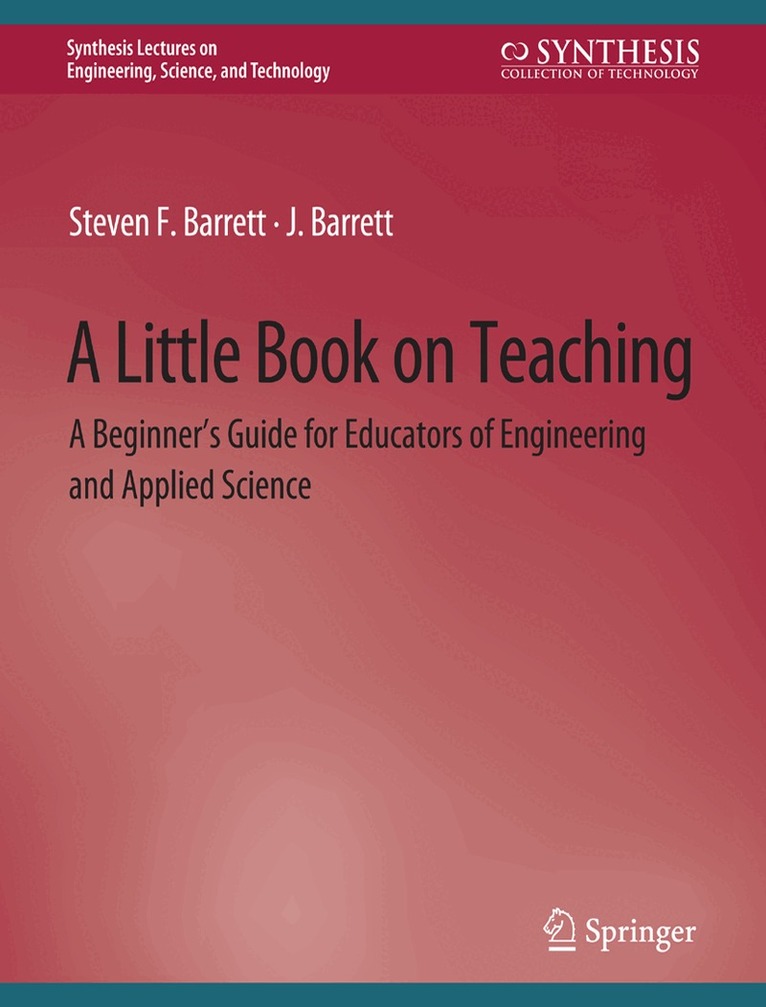
It is often a challenging and overwhelming transition to go from being a student to being a teacher. Many new faculty members of engineering and science have to make this dramatic transition in a very short time. In the same closing months of your Ph.D. program you are trying to complete your research, finish and defend your dissertation, find a job, move to a new location, and start a new job as a faculty member. If you are lucky, you've had the opportunity to serve as a teaching assistant and possibly have taught a university-level course. If you have served as a research assistant, your teaching opportunities may have been limited. Somehow, in this quick transition from student to teacher, one is supposed to become a good teacher and be ready for the first day of school.This book is intended as a basic primer on college-level teaching and learning for a new faculty member of engineering and applied science. New faculty members in other disciplines will find much of the information applicable to their area of expertise as well. First and foremost, this book is about learning and teaching. However, it also provides helpful information on related topics such as mentorship, student challenges, graduate students, tenure, and promotion and accreditation.This book is also intended as a reference for seasoned professionals. It is a good reference for those mentoring the next generation of college educators.Table of Contents: List of Figures / What makes a Great Teacher? / A little learning theory / Preparation for the first day of classes / Assessment / Beyond the first day
E-bok
PDF, Engelska, 2022285 kr
Läs direkt efter köp
It is often a challenging and overwhelming transition to go from being a student to being a teacher. Many new faculty members of engineering and science have to make this dramatic transition in a very short time. In the same closing months of your Ph.D. program you are trying to complete your research, finish and defend your dissertation, find a job, move to a new location, and start a new job as a faculty member. If you are lucky, you''ve had the opportunity to serve as a teaching assistant and possibly have taught a university-level course. If you have served as a research assistant, your teaching opportunities may have been limited. Somehow, in this quick transition from student to teacher, one is supposed to become a good teacher and be ready for the first day of school.This book is intended as a basic primer on college-level teaching and learning for a new faculty member of engineering and applied science. New faculty members in other disciplines will find much of the information applicable to their area of expertise as well. First and foremost, this book is about learning and teaching. However, it also provides helpful information on related topics such as mentorship, student challenges, graduate students, tenure, and promotion and accreditation.This book is also intended as a reference for seasoned professionals. It is a good reference for those mentoring the next generation of college educators.Table of Contents: List of Figures / What makes a Great Teacher? / A little learning theory / Preparation for the first day of classes / Assessment / Beyond the first day
Engelska, 2012
667 kr
Skickas inom 5-8 vardagar
Häftad, Engelska, 2009
438 kr
Skickas inom 10-15 vardagar
This textbook provides practicing scientists and engineers an advanced treatment of the Atmel AVR microcontroller. This book is intended as a follow-on to a previously published book, titled Atmel AVR Microcontroller Primer: Programming and Interfacing. Some of the content from this earlier text is retained for completeness. This book will emphasize advanced programming and interfacing skills. We focus on system level design consisting of several interacting microcontroller subsystems. The first chapter discusses the system design process. Our approach is to provide the skills to quickly get up to speed to operate the internationally popular Atmel AVR microcontroller line by developing systems level design skills. We use the Atmel ATmega164 as a representative sample of the AVR line. The knowledge you gain on this microcontroller can be easily translated to every other microcontroller in the AVR line. In succeeding chapters, we cover the main subsystems aboard the microcontroller, providing a short theory section followed by a description of the related microcontroller subsystem with accompanying software for the subsystem. We then provide advanced examples exercising some of the features discussed. In all examples, we use the C programming language. The code provided can be readily adapted to the wide variety of compilers available for the Atmel AVR microcontroller line. We also include a chapter describing how to interface the microcontroller to a wide variety of input and output devices. The book concludes with several detailed system level design examples employing the Atmel AVR microcontroller. Table of Contents: Embedded Systems Design / Atmel AVR Architecture Overview / Serial Communication Subsystem / Analog to Digital Conversion (ADC) / Interrupt Subsystem / Timing Subsystem / Atmel AVR Operating Parameters and Interfacing / System Level Design
E-bok
PDF, Engelska, 2022554 kr
Läs direkt efter köp
This textbook provides practicing scientists and engineers an advanced treatment of the Atmel AVR microcontroller. This book is intended as a follow-on to a previously published book, titled Atmel AVR Microcontroller Primer: Programming and Interfacing. Some of the content from this earlier text is retained for completeness. This book will emphasize advanced programming and interfacing skills. We focus on system level design consisting of several interacting microcontroller subsystems. The first chapter discusses the system design process. Our approach is to provide the skills to quickly get up to speed to operate the internationally popular Atmel AVR microcontroller line by developing systems level design skills. We use the Atmel ATmega164 as a representative sample of the AVR line. The knowledge you gain on this microcontroller can be easily translated to every other microcontroller in the AVR line. In succeeding chapters, we cover the main subsystems aboard the microcontroller, providing a short theory section followed by a description of the related microcontroller subsystem with accompanying software for the subsystem. We then provide advanced examples exercising some of the features discussed. In all examples, we use the C programming language. The code provided can be readily adapted to the wide variety of compilers available for the Atmel AVR microcontroller line. We also include a chapter describing how to interface the microcontroller to a wide variety of input and output devices. The book concludes with several detailed system level design examples employing the Atmel AVR microcontroller. Table of Contents: Embedded Systems Design / Atmel AVR Architecture Overview / Serial Communication Subsystem / Analog to Digital Conversion (ADC) / Interrupt Subsystem / Timing Subsystem / Atmel AVR Operating Parameters and Interfacing / System Level Design
Häftad, Engelska, 2009
438 kr
Skickas inom 10-15 vardagar
This textbook provides practicing scientists and engineers an advanced treatment of the Atmel AVR microcontroller. This book is intended as a follow-on to a previously published book, titled Atmel AVR Microcontroller Primer: Programming and Interfacing. Some of the content from this earlier text is retained for completeness. This book will emphasize advanced programming and interfacing skills. We focus on system level design consisting of several interacting microcontroller subsystems. The first chapter discusses the system design process. Our approach is to provide the skills to quickly get up to speed to operate the internationally popular Atmel AVR microcontroller line by developing systems level design skills. We use the Atmel ATmega164 as a representative sample of the AVR line. The knowledge you gain on this microcontroller can be easily translated to every other microcontroller in the AVR line. In succeeding chapters, we cover the main subsystems aboard the microcontroller, providing a short theory section followed by a description of the related microcontroller subsystem with accompanying software for the subsystem. We then provide advanced examples exercising some of the features discussed. In all examples, we use the C programming language. The code provided can be readily adapted to the wide variety of compilers available for the Atmel AVR microcontroller line. We also include a chapter describing how to interface the microcontroller to a wide variety of input and output devices. The book concludes with several detailed system level design examples employing the Atmel AVR microcontroller.Table of Contents: Embedded Systems Design / Atmel AVR Architecture Overview / Serial Communication Subsystem / Analog to Digital Conversion (ADC) / Interrupt Subsystem / Timing Subsystem / Atmel AVR Operating Parameters and Interfacing / System Level Design
E-bok
PDF, Engelska, 2022554 kr
Läs direkt efter köp
This textbook provides practicing scientists and engineers an advanced treatment of the Atmel AVR microcontroller. This book is intended as a follow-on to a previously published book, titled Atmel AVR Microcontroller Primer: Programming and Interfacing. Some of the content from this earlier text is retained for completeness. This book will emphasize advanced programming and interfacing skills. We focus on system level design consisting of several interacting microcontroller subsystems. The first chapter discusses the system design process. Our approach is to provide the skills to quickly get up to speed to operate the internationally popular Atmel AVR microcontroller line by developing systems level design skills. We use the Atmel ATmega164 as a representative sample of the AVR line. The knowledge you gain on this microcontroller can be easily translated to every other microcontroller in the AVR line. In succeeding chapters, we cover the main subsystems aboard the microcontroller, providing a short theory section followed by a description of the related microcontroller subsystem with accompanying software for the subsystem. We then provide advanced examples exercising some of the features discussed. In all examples, we use the C programming language. The code provided can be readily adapted to the wide variety of compilers available for the Atmel AVR microcontroller line. We also include a chapter describing how to interface the microcontroller to a wide variety of input and output devices. The book concludes with several detailed system level design examples employing the Atmel AVR microcontroller.Table of Contents: Embedded Systems Design / Atmel AVR Architecture Overview / Serial Communication Subsystem / Analog to Digital Conversion (ADC) / Interrupt Subsystem / Timing Subsystem / Atmel AVR Operating Parameters and Interfacing / System Level Design
E-bok
PDF, Engelska, 20221 266 kr
Läs direkt efter köp
This book is about the Arduino microcontroller and the Arduino concept. The visionary Arduino team of Massimo Banzi, David Cuartielles, Tom Igoe, Gianluca Martino, and David Mellis launched a new innovation in microcontroller hardware in 2005, the concept of open source hardware. Their approach was to openly share details of microcontroller-based hardware design platforms to stimulate the sharing of ideas and promote innovation. This concept has been popular in the software world for many years. This book is intended for a wide variety of audiences including students of the fine arts, middle and senior high school students, engineering design students, and practicing scientists and engineers. To meet this wide audience, the book has been divided into sections to satisfy the need of each reader. The book contains many software and hardware examples to assist the reader in developing a wide variety of systems. For the examples, the Arduino Duemilanove and the Atmel ATmega328 is employedas the target processor.Table of Contents: Getting Started / Programming / Embedded Systems Design / Serial Communication Subsystem / Analog to Digital Conversion (ADC) / Interrupt Subsystem / Timing Subsystem / Atmel AVR Operating Parameters and Interfacing
E-bok
PDF, Engelska, 20221 424 kr
Läs direkt efter köp
This book is about the Arduino microcontroller and the Arduino concept. The visionary Arduino team of Massimo Banzi, David Cuartielles, Tom Igoe, Gianluca Martino, and David Mellis launched a new innovation in microcontroller hardware in 2005, the concept of open source hardware. Their approach was to openly share details of microcontroller-based hardware design platforms to stimulate the sharing of ideas and promote innovation. This concept has been popular in the software world for many years. This book is intended for a wide variety of audiences including students of the fine arts, middle and senior high school students, engineering design students, and practicing scientists and engineers. To meet this wide audience, the book has been divided into sections to satisfy the need of each reader. The book contains many software and hardware examples to assist the reader in developing a wide variety of systems. For the examples, the Arduino Duemilanove and the Atmel ATmega328 is employedas the target processor.Table of Contents: Getting Started / Programming / Embedded Systems Design / Serial Communication Subsystem / Analog to Digital Conversion (ADC) / Interrupt Subsystem / Timing Subsystem / Atmel AVR Operating Parameters and Interfacing
E-bok
PDF, Engelska, 20221 582 kr
Läs direkt efter köp
This book is about the Arduino microcontroller and the Arduino concept. The visionary Arduino team of Massimo Banzi, David Cuartielles, Tom Igoe, Gianluca Martino, and David Mellis launched a new innovation in microcontroller hardware in 2005, the concept of open source hardware. Their approach was to openly share details of microcontroller-based hardware design platforms to stimulate the sharing of ideas and promote innovation.This concept has been popular in the software world for many years. This book is intended for a wide variety of audiences including students of the fine arts, middle and senior high school students, engineering design students, and practicing scientists and engineers. To meet this wide audience, the book has been divided into sections to satisfy the need of each reader. The book contains many software and hardware examples to assist the reader in developing a wide variety of systems. For the examples, the Arduino UNO R3 and the Atmel ATmega328 is employed asthe target processor.The second edition has been updated with the latest on the Arduino UNO R3 processor, changes to the Arduino Development Environment and several extended examples.Table of Contents: Getting Started / Programming / Embedded Systems Design / Serial Communication Subsystem / Analog to Digital Conversion (ADC) / Interrupt Subsystem / Timing Subsystem / Atmel AVR Operating Parameters and Interfacing
E-bok
PDF, Engelska, 20221 424 kr
Läs direkt efter köp
This textbook provides practicing scientists and engineers a primer on the Atmel AVR microcontroller. In this second edition we highlight the popular ATmega164 microcontroller and other pin-for-pin controllers in the family with a complement of flash memory up to 128 kbytes. The second edition also adds a chapter on embedded system design fundamentals and provides extended examples on two different autonomous robots. Our approach is to provide the fundamental skills to quickly get up and operating with this internationally popular microcontroller. We cover the main subsystems aboard the ATmega164, providing a short theory section followed by a description of the related microcontroller subsystem with accompanying hardware and software to exercise the subsystem. In all examples, we use the C programming language. We include a detailed chapter describing how to interface the microcontroller to a wide variety of input and output devices and conclude with several system level examples. Table of Contents: Atmel AVR Architecture Overview / Serial Communication Subsystem / Analog-to-Digital Conversion / Interrupt Subsystem / Timing Subsystem / Atmel AVR Operating Parameters and Interfacing / Embedded Systems Design
Häftad, Engelska, 2015
309 kr
Skickas inom 10-15 vardagar
BeagleBone Black is a low-cost, open hardware computer uniquely suited to interact with sensors and actuators directly and over the Web. Introduced in April 2013 by BeagleBoard.org, a community of developers first established in early 2008, BeagleBone Black is used frequently to build vision-enabled robots, home automation systems, artistic lighting systems, and countless other do-it-yourself and professional projects. BeagleBone variants include the original BeagleBone and the newer BeagleBone Black, both hosting a powerful 32-bit, super-scalar ARM Cortex A8 processor capable of running numerous mobile and desktop-capable operating systems, typically variants of Linux including Debian, Android, and Ubuntu. Yet, BeagleBone is small enough to fit in a small mint tin box. The "Bone" may be used in a wide variety of projects from middle school science fair projects to senior design projects to first prototypes of very complex systems. Novice users may access the power of the Bone throughthe user-friendly BoneScript software, experienced through a Web browser in most major operating systems, including Microsoft Windows, Apple Mac OS X, or the Linux operating systems. Seasoned users may take full advantage of the Bone's power using the underlying Linux-based operating system, a host of feature extension boards (Capes) and a wide variety of Linux community open source libraries. This book provides an introduction to this powerful computer and has been designed for a wide variety of users including the first time novice through the seasoned embedded system design professional. The book contains background theory on system operation coupled with many well-documented, illustrative examples. Examples for novice users are centered on motivational, fun robot projects while advanced projects follow the theme of assistive technology and image-processing applications.
E-bok
PDF, Engelska, 2022396 kr
Läs direkt efter köp
BeagleBone Black is a low-cost, open hardware computer uniquely suited to interact with sensors and actuators directly and over the Web. Introduced in April 2013 by BeagleBoard.org, a community of developers first established in early 2008, BeagleBone Black is used frequently to build vision-enabled robots, home automation systems, artistic lighting systems, and countless other do-it-yourself and professional projects. BeagleBone variants include the original BeagleBone and the newer BeagleBone Black, both hosting a powerful 32-bit, super-scalar ARM Cortex A8 processor capable of running numerous mobile and desktop-capable operating systems, typically variants of Linux including Debian, Android, and Ubuntu. Yet, BeagleBone is small enough to fit in a small mint tin box. The "Bone" may be used in a wide variety of projects from middle school science fair projects to senior design projects to first prototypes of very complex systems. Novice users may access the power of the Bone throughthe user-friendly BoneScript software, experienced through a Web browser in most major operating systems, including Microsoft Windows, Apple Mac OS X, or the Linux operating systems. Seasoned users may take full advantage of the Bone''s power using the underlying Linux-based operating system, a host of feature extension boards (Capes) and a wide variety of Linux community open source libraries. This book provides an introduction to this powerful computer and has been designed for a wide variety of users including the first time novice through the seasoned embedded system design professional. The book contains background theory on system operation coupled with many well-documented, illustrative examples. Examples for novice users are centered on motivational, fun robot projects while advanced projects follow the theme of assistive technology and image-processing applications.