Steven Brint - Böcker
Visar alla böcker från författaren Steven Brint. Handla med fri frakt och snabb leverans.
8 produkter
8 produkter
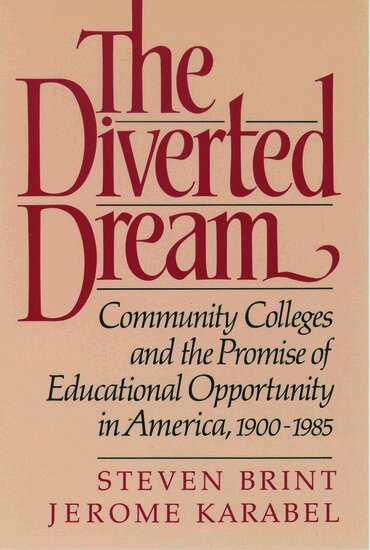
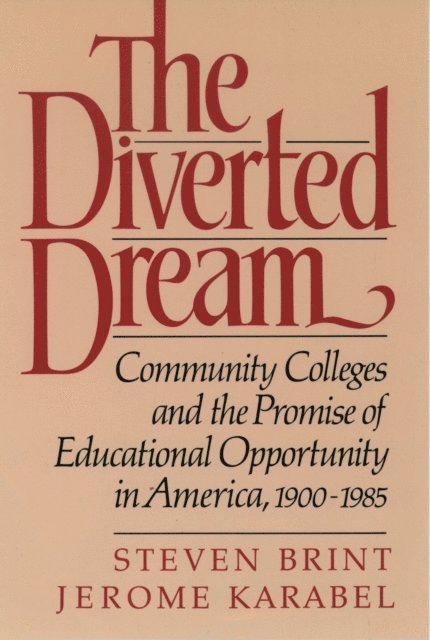
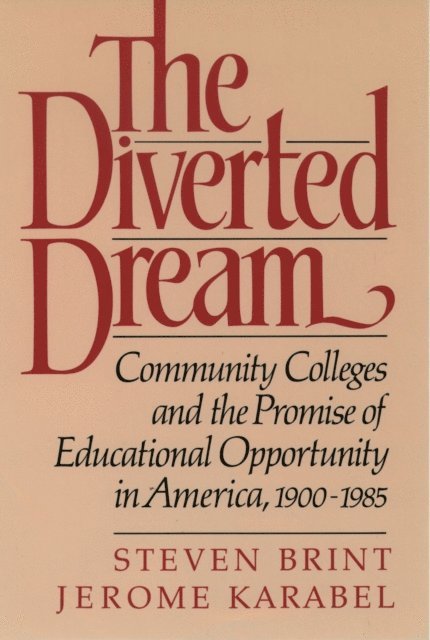
The Diverted Dream
Community Colleges and the Promise of Educational Opportunity in America, 1900-1985
Häftad, Engelska, 1991
428 kr
Skickas inom 5-8 vardagar
In the twentieth century, Americans have increasingly looked to the schools--and, in particular, to the nation's colleges and universities--as guardians of the cherished national ideal of equality of opportunity. With the best jobs increasingly monopolized by those with higher education, the opportunity to attend college has become an integral part of the American dream of upward mobility. The two-year college--which now enrolls more than four million students in over 900 institutions--is a central expression of this dream, and its invention at the turn of the century constituted one of the great innovations in the history of American education. By offering students of limited means the opportunity to start higher education at home and to later transfer to a four-year institution, the two-year school provided a major new pathway to a college diploma--and to the nation's growing professional and managerial classes.But in the past two decades, the community college has undergone a profound change, shifting its emphasis from liberal-arts transfer courses to terminal vocational programs. Drawing on developments nationwide as well as in the specific case of Massachusetts, Steven Brint and Jerome Karabel offer a history of community colleges in America, explaining why this shift has occurred after years of student resistance and examining its implications for upward mobility. As the authors argue in this exhaustively researched and pioneering study, the junior college has always faced the contradictory task of extending a college education to the hitherto excluded, while diverting the majority of them from the nation's four-year colleges and universities. Very early on, two-year college administrators perceived vocational training for "semi-professional" work as their and their students' most secure long-term niche in the educational hierarchy. With two thirds of all community college students enrolled in vocational programs, the authors contend that the dream of education as a route to upward mobility, as well as the ideal of equal educational opportunity for all, are seriously threatened.With the growing public debate about the state of American higher education and with more than half of all first-time degree-credit students now enrolled in community colleges, a full-scale, historically grounded examination of their place in American life is long overdue. This landmark study provides such an examination, and in so doing, casts critical light on what is distinctive not only about American education, but American society itself.
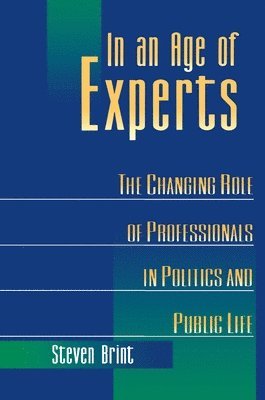
In an Age of Experts
The Changing Roles of Professionals in Politics and Public Life
Häftad, Engelska, 1996
463 kr
Skickas inom 7-10 vardagar
Since the 1960s the number of highly educated professionals in America has grown dramatically. During this time scholars and journalists have described the group as exercising increasing influence over cultural values and public affairs. The rise of this putative "new class" has been greeted with idealistic hope or ideological suspicion on both the right and the left. In an Age of Experts challenges these characterizations, showing that claims about the distinctive politics and values of the professional stratum have been overstated, and that the political preferences of professionals are much more closely linked to those of business owners and executives than has been commonly assumed.
Two Cheers for Higher Education
Why American Universities Are Stronger Than Ever—and How to Meet the Challenges They Face
Inbunden, Engelska, 2019
373 kr
Skickas inom 7-10 vardagar
A leading expert challenges the prevailing gloomy outlook on higher education with solid evidence of its successesCrushing student debt, rapidly eroding state funding, faculty embroiled in speech controversies, a higher-education market disrupted by online competition—today’s headlines suggest that universities’ power to advance knowledge and shape American society is rapidly declining. But Steven Brint, a renowned analyst of academic institutions, has tracked numerous trends demonstrating their vitality. After a recent period that witnessed soaring student enrollment and ample research funding, universities, he argues, are in a better position than ever before.Focusing on the years 1980–2015, Brint details the trajectory of American universities, which was influenced by evolving standards of disciplinary professionalism, market-driven partnerships (especially with scientific and technological innovators outside the academy), and the goal of social inclusion. Conflicts arose: academic entrepreneurs, for example, flouted their campus responsibilities, and departments faced backlash over the hiring of scholars with nontraditional research agendas. Nevertheless, educators’ commitments to technological innovation and social diversity prevailed and created a new dynamism.Brint documents these successes along with the challenges that result from rapid change. Today, knowledge-driven industries generate almost half of U.S. GDP, but divisions by educational level split the American political order. Students flock increasingly to fields connected to the power centers of American life and steer away from the liberal arts. And opportunities for economic mobility are expanding even as academic expectations decline.In describing how universities can meet such challenges head on, especially in improving classroom learning, Brint offers not only a clear-eyed perspective on the current state of American higher education but also a pragmatically optimistic vision for the future.
Two Cheers for Higher Education
Why American Universities Are Stronger Than Ever—and How to Meet the Challenges They Face
Häftad, Engelska, 2020
236 kr
Skickas inom 7-10 vardagar
A leading expert challenges the prevailing gloomy outlook on higher education with solid evidence of its successesCrushing student debt, rapidly eroding state funding, faculty embroiled in speech controversies, a higher-education market disrupted by online competition—today’s headlines suggest that universities’ power to advance knowledge and shape American society is rapidly declining. But Steven Brint, a renowned analyst of academic institutions, has tracked numerous trends demonstrating their vitality. After a recent period that witnessed soaring student enrollment and ample research funding, universities, he argues, are in a better position than ever before.Focusing on the years 1980–2015, Brint details the trajectory of American universities, which was influenced by evolving standards of disciplinary professionalism, market-driven partnerships (especially with scientific and technological innovators outside the academy), and the goal of social inclusion. Conflicts arose: academic entrepreneurs, for example, flouted their campus responsibilities, and departments faced backlash over the hiring of scholars with nontraditional research agendas. Nevertheless, educators’ commitments to technological innovation and social diversity prevailed and created a new dynamism.Brint documents these successes along with the challenges that result from rapid change. Today, knowledge-driven industries generate almost half of U.S. GDP, but divisions by educational level split the American political order. Students flock increasingly to fields connected to the power centers of American life and steer away from the liberal arts. And opportunities for economic mobility are expanding even as academic expectations decline.In describing how universities can meet such challenges head on, especially in improving classroom learning, Brint offers not only a clear-eyed perspective on the current state of American higher education but also a pragmatically optimistic vision for the future.
2 304 kr
Skickas inom 3-6 vardagar
For use as the core text for Sociology of Education courses offered in Sociology Departments and Social Foundations of Education courses offered in Schools of Education. ""Schools and Societies is a gem of volume that combines in one comprehensive text superb theoretical acuity and scholarly judgment, a keen sense of the connection of research to policy, and a breadth of coverage that reflects the multidimensionality of education as an institution in a manner rare in social-scientific treatments of education. It deserves to be the leading survey of this field for a long time to come." Paul DiMaggio, Princeton University
1 534 kr
Skickas inom 7-10 vardagar
Based on new data and new analytical frameworks, this book assesses the forces of change at play in the development of American universities and their prospects for the future. The book begins with a lengthy introduction by Clark Kerr that not only provides an overview of change since the time he coined the phrase "the city of intellect" but also discusses the major changes that will affect American universities over the next thirty years.Part One examines demographic and economic changes, such as the rise of nearly universal higher education, private gift and corporate sponsorship of research, new labor market opportunities, and increasing inequality among institutions and disciplines. Part Two assesses the profound influence of the Internet and other technologies on teaching and learning. Part Three describes how the various forces of change affect the nature of academic research and the organization of disciplines and the curriculum. Part Four analyzes the consequences of change for university governance and the means by which universities in the future can maintain high levels of achievement while maintaining high levels of autonomy. The contributors include many of today's leading scholars of higher education. They are Andrew Abbott, Steven Brint, Richard Chait, Burton R. Clark, Randall Collins, David J. Collis, Roger L. Geiger, Patricia J. Gumport, Clark Kerr, Richard A. Lanham, Jason Owen-Smith, Walter W. Powell, Sheila Slaughter, and Carol Tomlinson-Keasey.
376 kr
Skickas inom 7-10 vardagar
Based on new data and new analytical frameworks, this book assesses the forces of change at play in the development of American universities and their prospects for the future. The book begins with a lengthy introduction by Clark Kerr that not only provides an overview of change since the time he coined the phrase "the city of intellect" but also discusses the major changes that will affect American universities over the next thirty years.Part One examines demographic and economic changes, such as the rise of nearly universal higher education, private gift and corporate sponsorship of research, new labor market opportunities, and increasing inequality among institutions and disciplines. Part Two assesses the profound influence of the Internet and other technologies on teaching and learning. Part Three describes how the various forces of change affect the nature of academic research and the organization of disciplines and the curriculum. Part Four analyzes the consequences of change for university governance and the means by which universities in the future can maintain high levels of achievement while maintaining high levels of autonomy. The contributors include many of today's leading scholars of higher education. They are Andrew Abbott, Steven Brint, Richard Chait, Burton R. Clark, Randall Collins, David J. Collis, Roger L. Geiger, Patricia J. Gumport, Clark Kerr, Richard A. Lanham, Jason Owen-Smith, Walter W. Powell, Sheila Slaughter, and Carol Tomlinson-Keasey.
452 kr
Skickas inom 7-10 vardagar
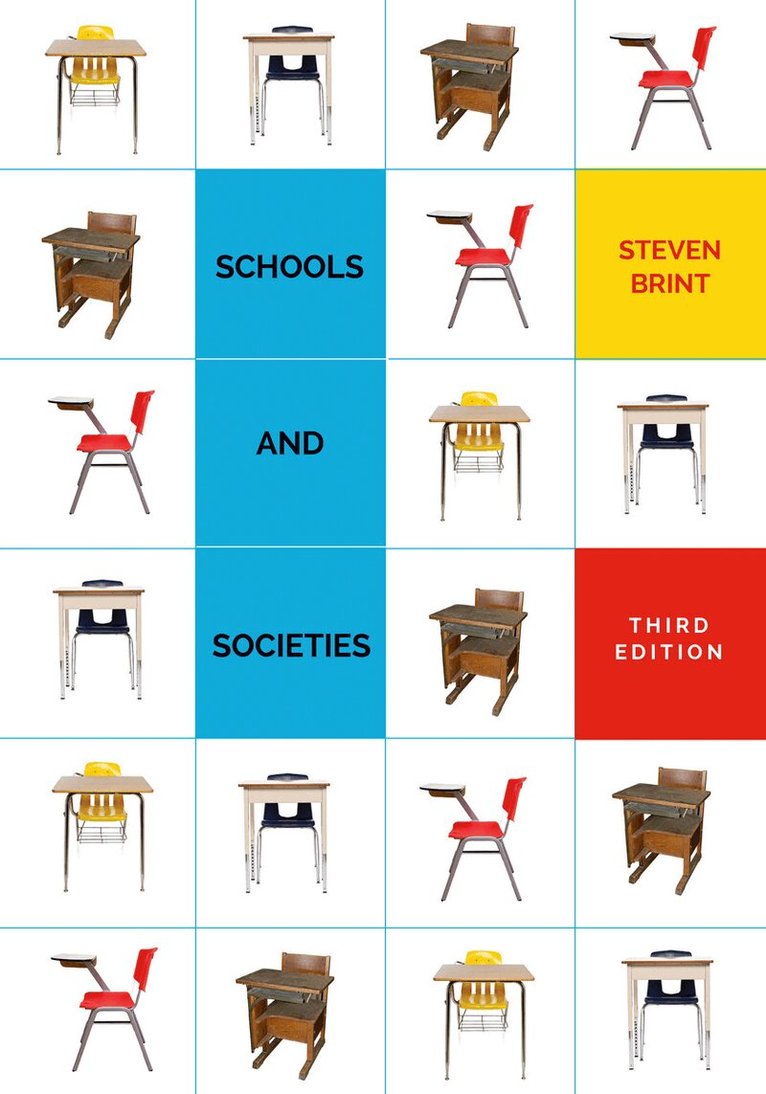
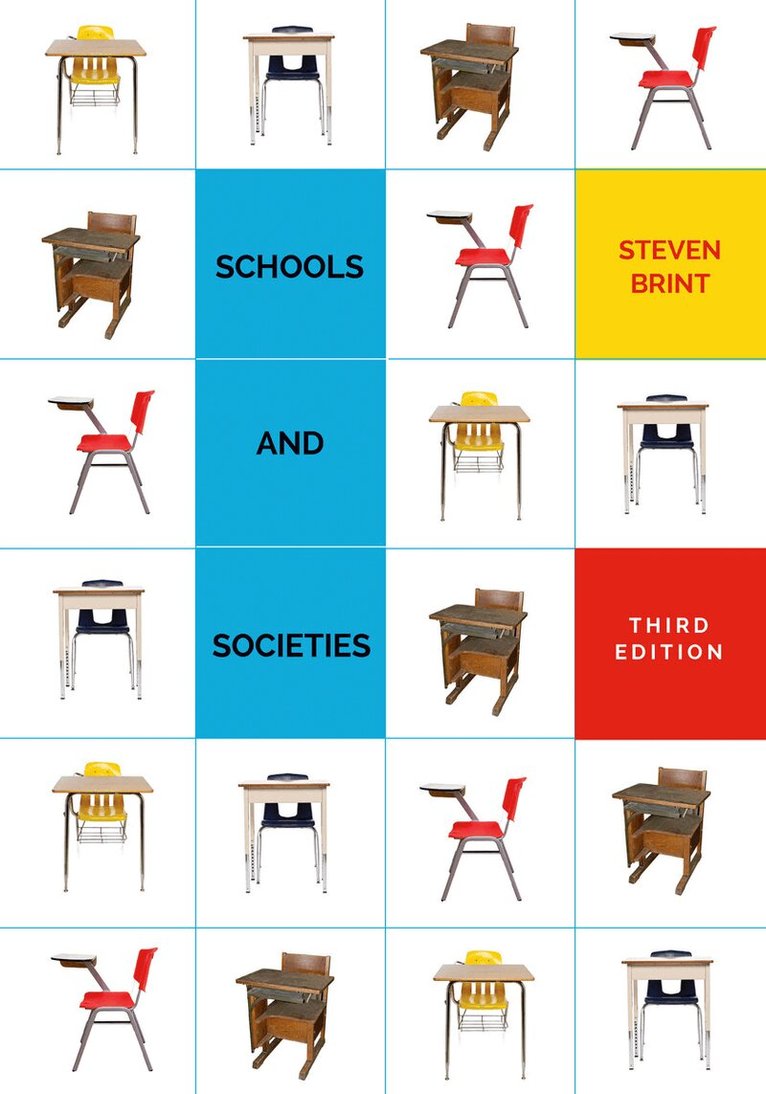
Schools and Societies provides a synthesis of key issues in the sociology of education, focusing on American schools while offering a global, comparative context. Acknowledged as a standard text in its first two editions, this fully revised and updated third edition offers a broader sweep, stronger theoretical foundation, and a new concluding chapter on the possibilities of schooling. Instructors, students, and policymakers interested in education and society will find all quantitative data up to date and twenty percent more material covering advances in research since the last edition.This book is distinguished from others in the field by its breadth of coverage, compelling institutional history, and lively prose style. It opens with a chapter on schooling as a social institution. Subsequent chapters compare schooling in industrialized and developing countries, and discuss the major purposes of schooling: transmitting culture, socializing young people, and sorting youth for class locations and occupations. The penultimate chapter looks at school reform efforts, drawing for the first time on comparative studies. A new coda ends the book by considering the educational ideals schools should strive for and how they might be attained. This third edition of Schools and Societies delivers the accessible explanations instructors rely on with updated, expanded information that's even more relevant for students.