Steven C. Bullock – författare
Visar alla böcker från författaren Steven C. Bullock. Handla med fri frakt och snabb leverans.
2 produkter
2 produkter
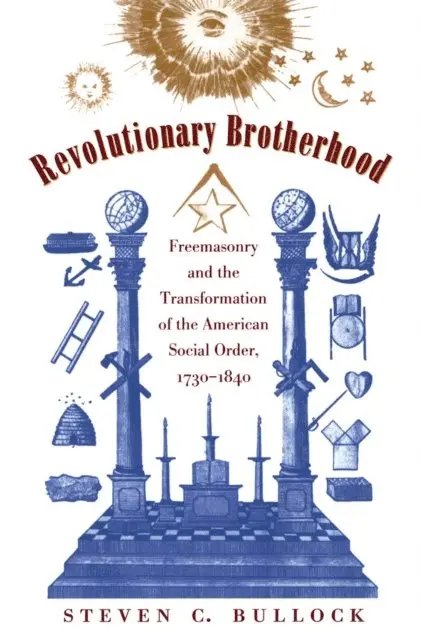
Revolutionary Brotherhood
Freemasonry and the Transformation of the American Social Order, 1730-1840
Häftad, Engelska, 1998
589 kr
Skickas inom 10-15 vardagar
In the first comprehensive history of the fraternity known to outsiders primarily for its secrecy and rituals, Steven Bullock traces Freemasonry through its first century in America. He follows the order from its origins in Britain and its introduction into North America in the 1730s to its near-destruction by a massive anti-Masonic movement almost a century later and its subsequent reconfiguration into the brotherhood we know today. With a membership that included Benjamin Franklin, George Washington, Paul Revere, and Andrew Jackson, Freemasonry is fascinating in its own right, but Bullock also places the movement at the center of the transformation of American society and culture from the colonial era to the rise of Jacksonian democracy. Using lodge records, members' reminiscences and correspondence, and local and Masonic histories, Bullock links Freemasonry with the changing ideals of early American society. Although the fraternity began among colonial elites, its spread during the Revolution and afterward allowed it to play an important role in shaping the new nation's ideas of liberty and equality. Ironically, however, the more inclusive and universalist Masonic ideas became, the more threatening its members' economic and emotional bonds seemed to outsiders, sparking an explosive attack on the fraternity after 1826. American History |A comprehensive history of the first century of Freemasonry in America.
616 kr
Skickas inom 10-15 vardagar
Even as eighteenth-century thinkers from John Locke to Thomas Jefferson struggled to find effective means to restrain power, contemporary discussions of society gave increasing attention to ideals of refinement, moderation, and polished self-presentation. These two sets of ideas have long seemed separate, one dignified as political theory, the other primarily concerned with manners and material culture. Tea Sets and Tyranny challenges that division. In its original context, Steven C. Bullock suggests, politeness also raised important issues of power, leadership, and human relationships. This politics of politeness helped make opposition to overbearing power central to early American thought and practice.Although these views spanned the English Atlantic world, they were particularly significant in America, most notably in helping shape its Revolution. By the end of the eighteenth century, the politics of politeness was already breaking apart, however its ideals continued to be important. Opposition to arbitrary governing became central to American political culture; self-control became a major part of nineteenth-century values, but these ideals increasingly seemed to belong in separate spheres. This division between public power and personal life continues to shape thinking about liberty so fully that it has been difficult to recognize its origins in the eighteenth-century politics of politeness.Tea Sets and Tyranny follows the experiences of six extraordinary individuals, each seeking to establish public authority and personal standing: a cast of characters that includes a Virginia governor consumed by fits of towering rage; a Carolina woman who befriended a British princess; and a former Harvard student who became America's first confidence man.