Steven F. Railsback – författare
Visar alla böcker från författaren Steven F. Railsback. Handla med fri frakt och snabb leverans.
8 produkter
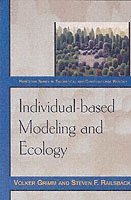
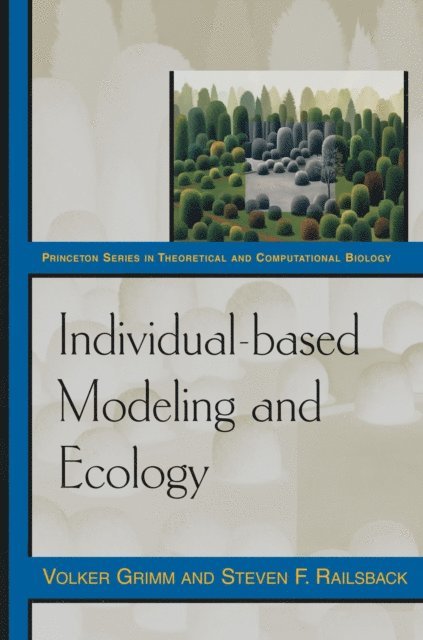
Individual-based Modeling and Ecology
Av Volker Grimm, Steven F. Railsback
Häftad, 2005
948 kr
Lägg i varukorg
Individual-based models are an exciting and widely used new tool for ecology. These computational models allow scientists to explore the mechanisms through which population and ecosystem ecology arises from how individuals interact with each other and their environment. This book provides the first …
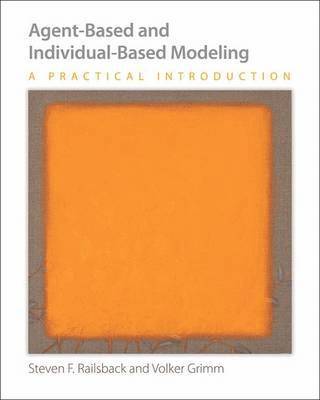
Agent-Based and Individual-Based Modeling
A Practical Introduction
Av Steven F. Railsback, Volker Grimm
Häftad, 2011
520 kr
Lägg i varukorg
Agent-based modeling is a new technique for understanding how the dynamics of biological, social, and other complex systems arise from the characteristics and behaviors of the agents making up these systems. This book gives students and scientists the skills to design, implement, and analyze …
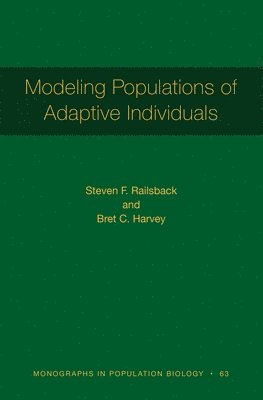
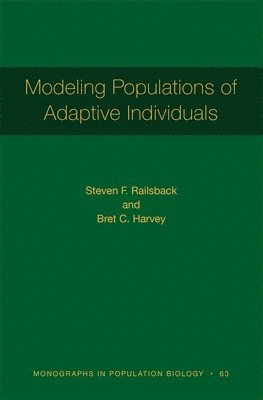
Modeling Populations of Adaptive Individuals
Av Steven F. Railsback, Bret C. Harvey
Inbunden, 2020
1221 kr
Lägg i varukorg
Ecologists now recognize that the dynamics of populations, communities, and ecosystems are strongly affected by adaptive individual behaviors. Yet until now, we have lacked effective and flexible methods for modeling such dynamics. Traditional ecological models become impractical with the inclusion …
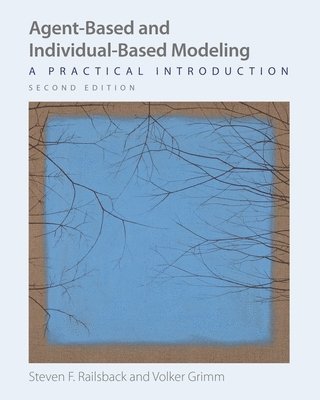
Agent-Based and Individual-Based Modeling
A Practical Introduction, Second Edition
Av Steven F. Railsback, Volker Grimm
Inbunden, 2019
1161 kr
Lägg i varukorg
The essential textbook on agent-based modeling—now fully updated and expandedAgent-Based and Individual-Based Modeling has become the standard textbook on the subject for classroom use and self-instruction. Drawing on the latest version of NetLogo and fully updated with new examples, exercises, and …
Agent-Based and Individual-Based Modeling
A Practical Introduction, Second Edition
Av Steven F. Railsback, Volker Grimm
Häftad, 2019
691 kr
Lägg i varukorg
The essential textbook on agent-based modeling—now fully updated and expandedAgent-Based and Individual-Based Modeling has become the standard textbook on the subject for classroom use and self-instruction. Drawing on the latest version of NetLogo and fully updated with new examples, exercises, and …
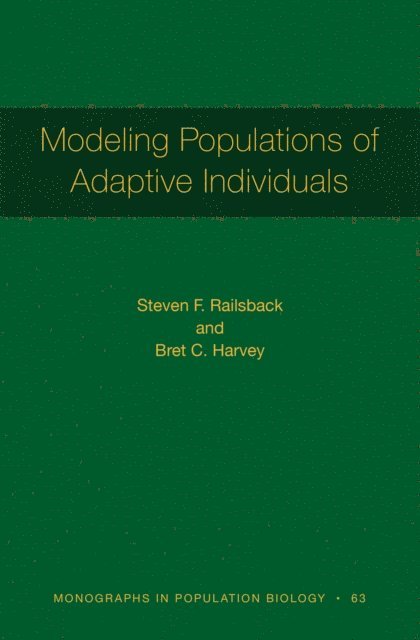
Modeling Populations of Adaptive Individuals
Av Steven F. Railsback, Bret C. Harvey
Häftad, 2020
755 kr
Lägg i varukorg
Ecologists now recognize that the dynamics of populations, communities, and ecosystems are strongly affected by adaptive individual behaviors. Yet until now, we have lacked effective and flexible methods for modeling such dynamics. Traditional ecological models become impractical with the inclusion …
Modeling Populations of Adaptive Individuals
Av Bret C. Harvey, Steven F. Railsback
E-bok, 2020
642 kr
Lägg i varukorg
Ecologists now recognize that the dynamics of populations, communities, and ecosystems are strongly affected by adaptive individual behaviors. Yet until now, we have lacked effective and flexible methods for modeling such dynamics. Traditional ecological models become impractical with the inclusion …
Individual-based Modeling and Ecology
Av Steven F. Railsback, Volker Grimm
E-bok, 2013
1312 kr
Lägg i varukorg
Individual-based models are an exciting and widely used new tool for ecology. These computational models allow scientists to explore the mechanisms through which population and ecosystem ecology arises from how individuals interact with each other and their environment. This book provides the first …