Steven Lloyd Wilson - Böcker
Visar alla böcker från författaren Steven Lloyd Wilson. Handla med fri frakt och snabb leverans.
5 produkter
5 produkter
403 kr
Skickas inom 7-10 vardagar
Among the most common features of the modern US Congress is its partisanship, a deeply felt political divide that sometimes seems to be each side’s primary motivator. In Congress we have seen heated disagreements, a tendency to blame the opposing party for any bad outcome, and attempts to undermine the other side’s successes. For those watching Congress, it is easy to assume everyone on Capitol Hill participates equally in framing issues as pitting Democrats versus Republicans. Yet in Posting for Power, Jeremy Gelman and Steven Wilson show that partisanship varies a great deal among legislators: it is motivated by reelection and promotion-seeking considerations, and it comes with no substantial legislative or electoral consequences. In the US Congress, lawmakers regularly choose to bicker for political gain, whether or not they disagree on issues. By classifying millions of social media posts as partisan or not, Gelman and Wilson quantify a legislator’s partisan intensity through the time and effort they spend supporting their party and bickering with the opposition. The authors argue that the partisan personas politicians create are both a home style, to help them win reelection, and hill style, to help them become politically influential by showing off as good team players. Bringing together a wide range of data on leadership races, elections, voting records, cosponsorship patterns, and lawmaking outcomes, they demonstrate the nearly consequence-free way that legislators strategically deploy partisanship to impress their copartisans and voters. Gelman and Wilson closely examine what motivates members to differ so much in developing this part of their public personas and offer clear recommendations for how to turn down the partisan heat on Capitol Hill.
1 285 kr
Skickas inom 7-10 vardagar
Among the most common features of the modern US Congress is its partisanship, a deeply felt political divide that sometimes seems to be each side’s primary motivator. In Congress we have seen heated disagreements, a tendency to blame the opposing party for any bad outcome, and attempts to undermine the other side’s successes. For those watching Congress, it is easy to assume everyone on Capitol Hill participates equally in framing issues as pitting Democrats versus Republicans. Yet in Posting for Power, Jeremy Gelman and Steven Wilson show that partisanship varies a great deal among legislators: it is motivated by reelection and promotion-seeking considerations, and it comes with no substantial legislative or electoral consequences. In the US Congress, lawmakers regularly choose to bicker for political gain, whether or not they disagree on issues. By classifying millions of social media posts as partisan or not, Gelman and Wilson quantify a legislator’s partisan intensity through the time and effort they spend supporting their party and bickering with the opposition. The authors argue that the partisan personas politicians create are both a home style, to help them win reelection, and hill style, to help them become politically influential by showing off as good team players. Bringing together a wide range of data on leadership races, elections, voting records, cosponsorship patterns, and lawmaking outcomes, they demonstrate the nearly consequence-free way that legislators strategically deploy partisanship to impress their copartisans and voters. Gelman and Wilson closely examine what motivates members to differ so much in developing this part of their public personas and offer clear recommendations for how to turn down the partisan heat on Capitol Hill.
926 kr
Skickas inom 7-10 vardagar
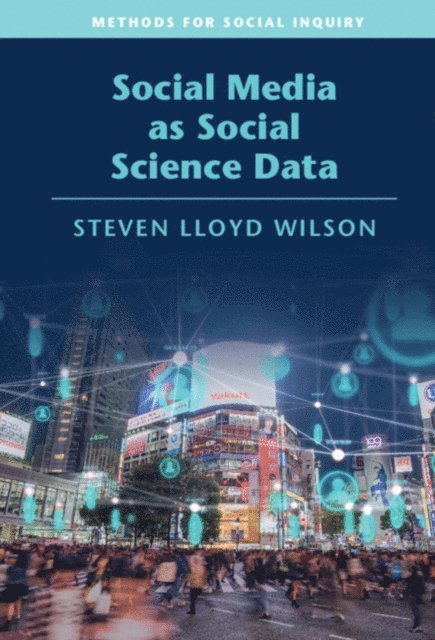
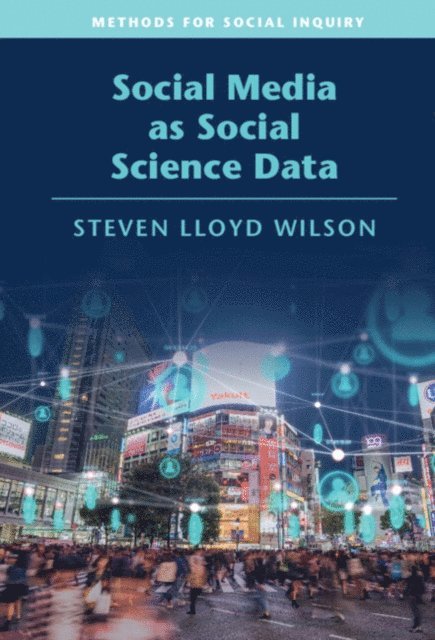
Social media has put mass communication in the hands of normal people on an unprecedented scale, and has also given social scientists the tools necessary to listen to the voices of everyday people around the world. This book gives social scientists the skills necessary to leverage that opportunity, and transform social media's vast stream of information into social science data. The book combines the big data techniques of computer science with social science methodology. Intended as a text for advanced undergraduates, graduate students, and researchers in the social sciences, this book provides a methodological pathway for scholars who want to make use of this new and evolving source of data. It provides a framework for building one's own data collection and analysis infrastructure, a toolkit of content analysis, geographic analysis, and network analysis, and meditations on the ethical implications of social media data.
309 kr
Skickas inom 7-10 vardagar
Social media has put mass communication in the hands of normal people on an unprecedented scale, and has also given social scientists the tools necessary to listen to the voices of everyday people around the world. This book gives social scientists the skills necessary to leverage that opportunity, and transform social media's vast stream of information into social science data. The book combines the big data techniques of computer science with social science methodology. Intended as a text for advanced undergraduates, graduate students, and researchers in the social sciences, this book provides a methodological pathway for scholars who want to make use of this new and evolving source of data. It provides a framework for building one's own data collection and analysis infrastructure, a toolkit of content analysis, geographic analysis, and network analysis, and meditations on the ethical implications of social media data.
282 kr
Skickas inom 3-6 vardagar