
Steven M. Dworetz – författare
Visar alla böcker från författaren Steven M. Dworetz. Handla med fri frakt och snabb leverans.
2 produkter
2 produkter
Häftad, Engelska, 1994
374 kr
Skickas inom 5-8 vardagar
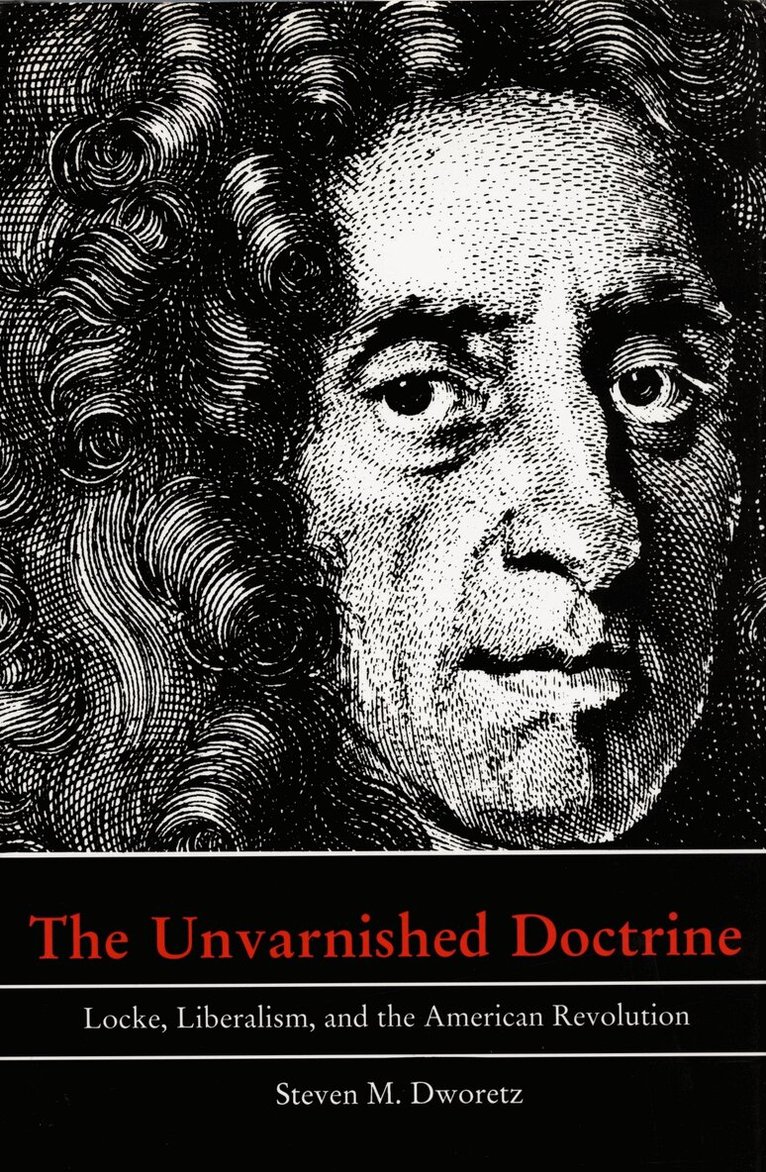
In The Unvarnished Doctrine, Steven M. Dworetz addresses two critical issues in contemporary thinking on the American Revolution-the ideological character of this event, and, more specifically, the relevance of "America’s Philosopher, the Great Mr. Locke," in this experience. Recent interpretations of the American revolution, particularly those of Bailyn and Pocock, have incorporated an understanding of Locke as the moral apologist of unlimited accumulation and the original ideological crusader for the "spirit of capitalism," a view based largely on the work of theorists Leo Strauss and C. B. Macpherson. Drawing on an examination of sermons and tracts of the New England clergy, Dworetz argues that the colonists themselves did not hold this conception of Locke. Moreover, these ministers found an affinity with the principles of Locke’s theistic liberalism and derived a moral justification for revolution from those principles. The connection between Locke and colonial clergy, Dworetz maintains, constitutes a significant, radicalizing force in American revolutionary thought.
E-bok
PDF, Engelska, 1989534 kr
Läs direkt efter köp
In The Unvarnished Doctrine, Steven M. Dworetz addresses two critical issues in contemporary thinking on the American Revolution—the ideological character of this event, and, more specifically, the relevance of "America’s Philosopher, the Great Mr. Locke," in this experience. Recent interpretations of the American revolution, particularly those of Bailyn and Pocock, have incorporated an understanding of Locke as the moral apologist of unlimited accumulation and the original ideological crusader for the "spirit of capitalism," a view based largely on the work of theorists Leo Strauss and C. B. Macpherson. Drawing on an examination of sermons and tracts of the New England clergy, Dworetz argues that the colonists themselves did not hold this conception of Locke. Moreover, these ministers found an affinity with the principles of Locke’s theistic liberalism and derived a moral justification for revolution from those principles. The connection between Locke and colonial clergy, Dworetz maintains, constitutes a significant, radicalizing force in American revolutionary thought.