Steven Renzetti - Böcker
Visar alla böcker från författaren Steven Renzetti. Handla med fri frakt och snabb leverans.
6 produkter
6 produkter
723 kr
Skickas inom 7-10 vardagar
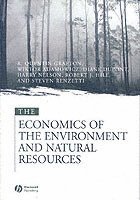
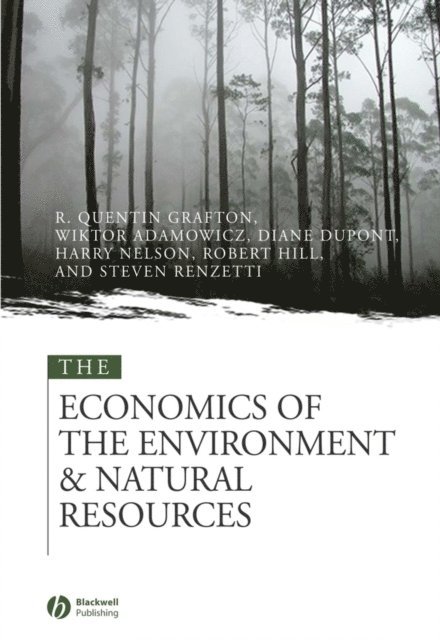
The Economics of the Environment and Natural Resources covers the essential topics students need to understand environmental and resource problems and their possible solutions. Its unique lecture format provides an in-depth exploration of discrete topics, ideal for upper-level undergraduate, graduate or doctoral study. Each chapter depicts the key theoretical insights, major issues, and real-life problems that motivate the subject. In addition, the chapters feature practical applications and case studies, a list of annotated further reading, and extensive references. Offers broad treatment of issues in Environmental and Resource Economics. Provides in-depth exploration of a wide range of topics with its unique lecture format. Depicts key theoretical insights, major issues, and real-life problems for each subject. Features case studies, annotated further reading, extensive references, and a detailed glossary.
1 064 kr
Skickas inom 10-15 vardagar
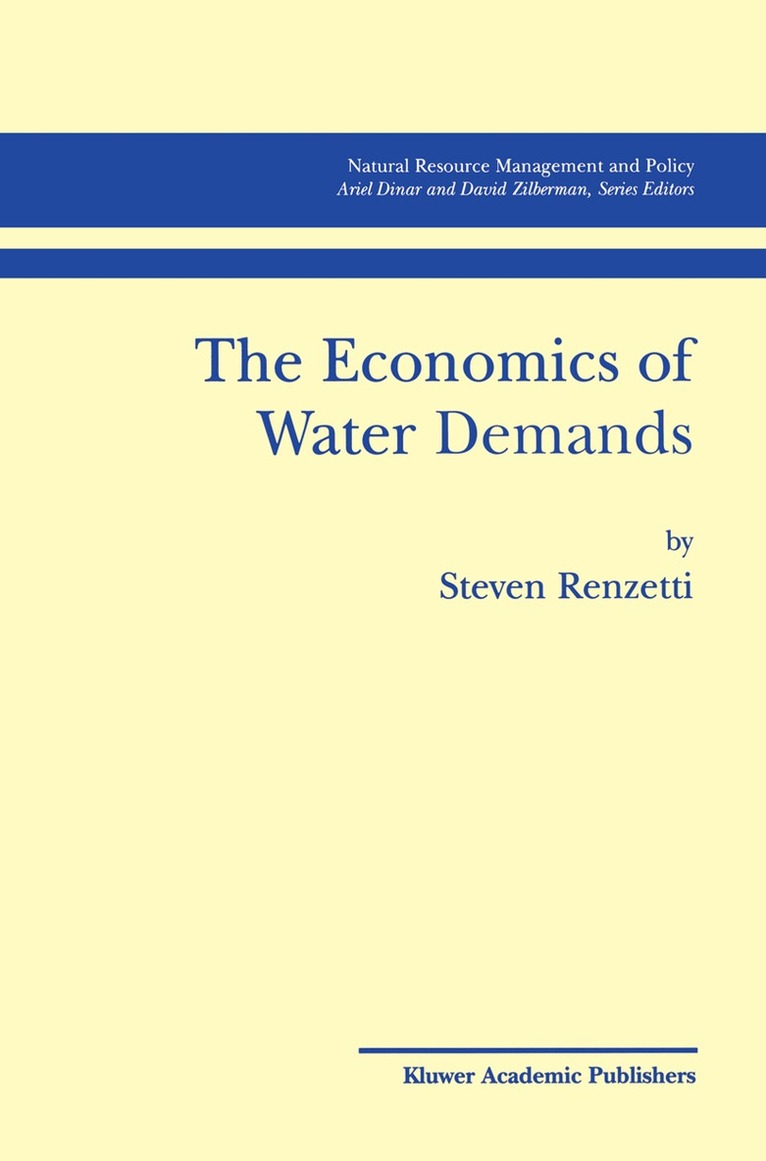
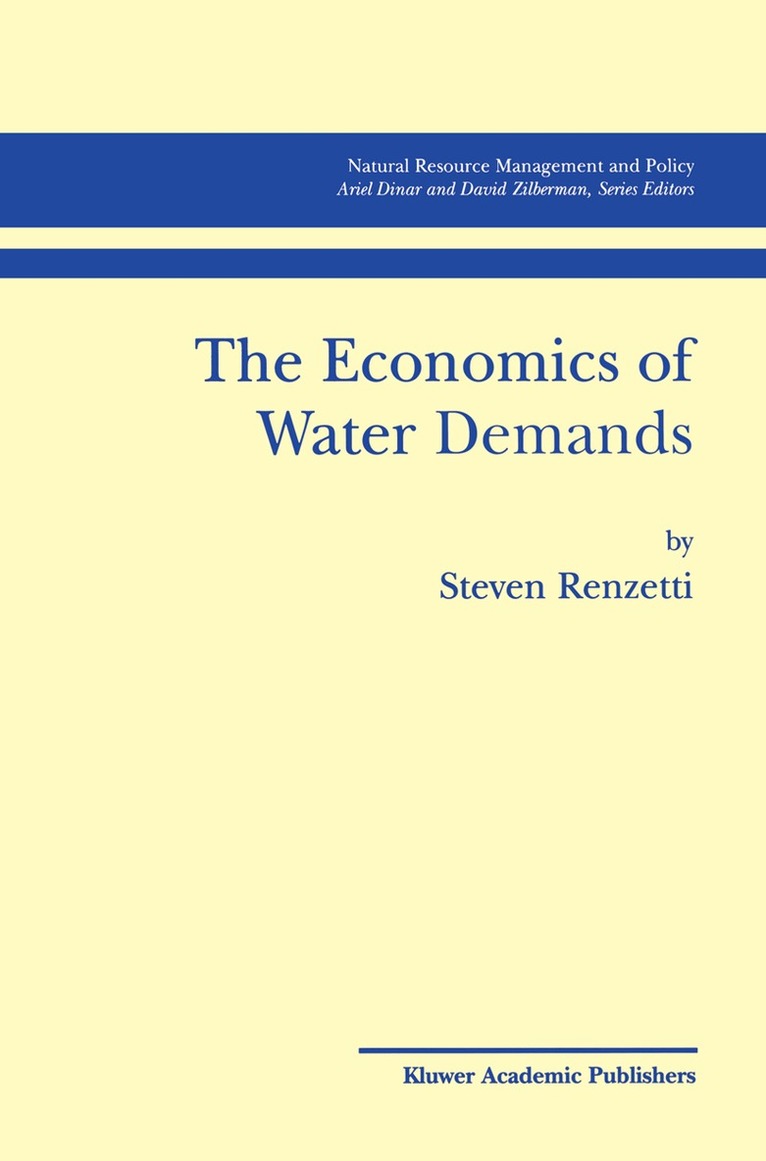
Freshwater resources are growing increasingly scarce and conflicts over potable water are becoming more common. In order to deal with these problems and to allocate water, managers and water resource planners must have information regarding the nature of competing water demands. This is a comprehensive treatment of economic research directed at understanding the structure of water demands in over a decade. It includes discussions of many facets of water demands, including the economic theory of water demands, econometric and programming models of water demands, the results of empirical models, and the application of water demand information in the design of water management policies. The first section of the book critically assesses the state of knowledge regarding water demands in each of the major water-using sectors: residential, industrial, and agricultural. The second section examines the demand for sewage treatment and wastewater disposal, as well as water demands in low-income countries. The third section of the book considers the valuation of water use.The final section is concerned with the application of water demand information in the management of water and the forecasting of water demands. The book traces the historical development of economic research in each of the sections. At the same time, the book also covers contemporary developments in the literature, including the role of risk in agricultural water demands, the estimation of discrete choice models of supply source choice by households in low-income countries, and use of ecological models to assess in-stream water demands. The text demonstrates the value of applying economic theory and measurement techniques to water demands. The empirical evidence summarized here clearly shows the influential role played by water prices, other commodity prices, incomes, and other economic factors in determining the demand for, and the valuation of, water resources.
1 064 kr
Skickas inom 10-15 vardagar
This book arose out of a paper that I wrote for the World Bank at the request of Ariel Dinar, the editor for the series in which this volume appears. I began that paper by pointing to the growing importance of demand-side considerations in water resources: "The provision of potable water is one of government's oldest functions with evidence of this activity stretching back thousands of years. During much of that time, water demands were taken as exogenously given and the principle task of authorities was defined as an engineering one: how to supply a given quantity of water at least cost. In recent years, however, concerns have arisen from observations of excessive water use, degraded water quality and continued inadequate service for many, especially the very poor. As a result of these and other concerns, there is a growing effort to view water resource allocation from a perspective that incorporates consumers' preferences along with supply constraints into management plans. " (Renzetti, 2000, p. 123). The purpose of this volume is to examine, in greater detail than was possible in that article, what is known regarding the economic characteristics of the demand for water. Thus, this book is meant to be an extended critical review of the state of the art.
Del 4 - The Management of Water Resources series
Economics of Industrial Water Use
Inbunden, Engelska, 2002
4 189 kr
Skickas inom 7-10 vardagar
The Economics of Industrial Water Use presents an authoritative collection of the most important articles to have applied economic models and measurement techniques to the topic of industrial water use over the last thirty years. It includes an original introductory chapter which summarizes and critically assesses the literature on this important subject.These papers employ a range of modelling approaches including econometric estimation, linear programming, input-output models, non-market valuation and integrated river basin planning models. They also provide empirical evidence of the significant role played by economic forces in determining industrial water intake, discharge and recirculation.This comprehensive volume will be an indispensable reference source for those with an interest in water's role in industrial applications.
1 593 kr
Skickas inom 10-15 vardagar
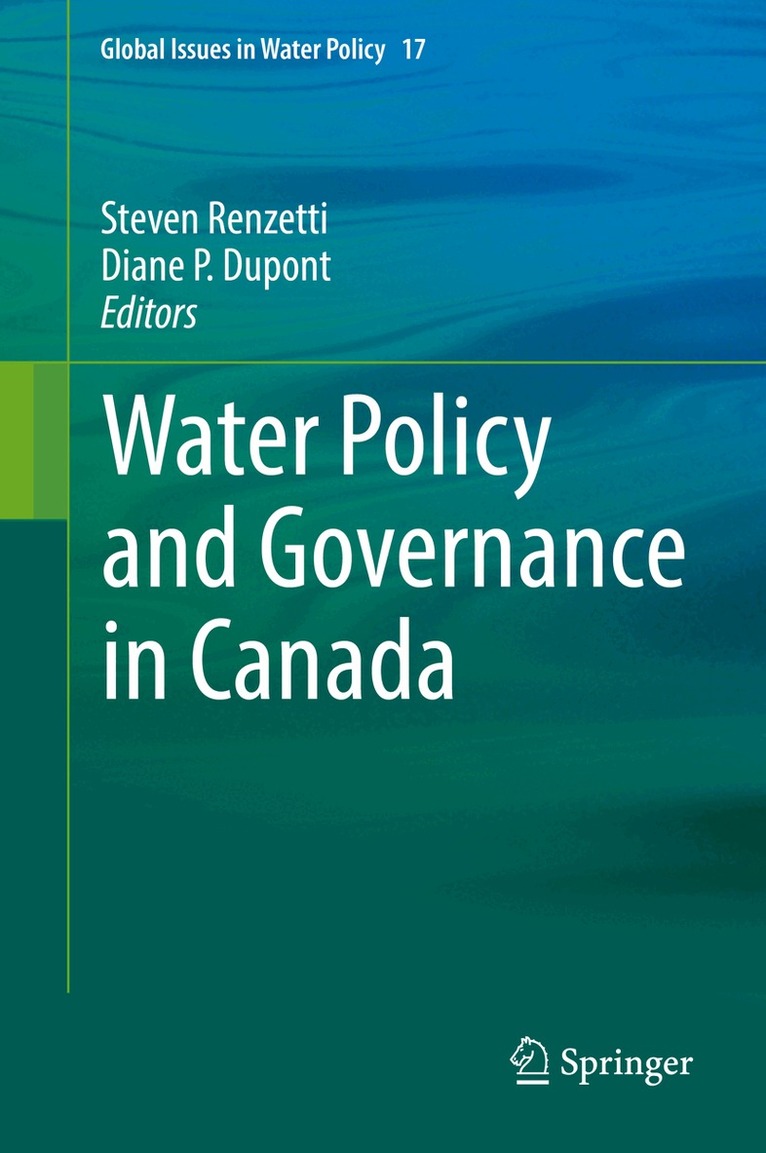
This book provides an insightful and critical assessment of the state of Canadian water governance and policy. It adopts a multidisciplinary variety of perspectives and considers local, basin, provincial and national scales. Canada’s leading authorities from the social sciences, life and natural sciences address pressing water issues in a non-technical language, making them accessible to a wide audience. Even though Canada is seen as a water-rich country, with 7% of the world’s reliable flow of freshwater and many of the world’s largest rivers, the country nevertheless faces a number of significant water-related challenges, stemming in part from supply-demand imbalances but also a range of water quality issues. Against the backdrop of a water policy landscape that has changed significantly in recent years, this book therefore seeks to examine water-related issues that are not only important for the future of Canadian water management but also provide insights into transboundary management, non-market valuation of water, decentralized governance methods, the growing importance of the role of First Nations peoples, and other topics in water management that are vital to many jurisdictions globally. The book also presents forward-looking approaches such as resilience theory and geomatics to shed light on emerging water issues.Researchers, students and those directly involved in the management of Canadian waters will find this book a valuable source of insight. In addition, this book will appeal to policy analysts, people concerned about Canadian water resources specifically as well as global water issues.
1 465 kr
Skickas inom 10-15 vardagar
This book provides an insightful and critical assessment of the state of Canadian water governance and policy. It adopts a multidisciplinary variety of perspectives and considers local, basin, provincial and national scales. Canada’s leading authorities from the social sciences, life and natural sciences address pressing water issues in a non-technical language, making them accessible to a wide audience. Even though Canada is seen as a water-rich country, with 7% of the world’s reliable flow of freshwater and many of the world’s largest rivers, the country nevertheless faces a number of significant water-related challenges, stemming in part from supply-demand imbalances but also a range of water quality issues. Against the backdrop of a water policy landscape that has changed significantly in recent years, this book therefore seeks to examine water-related issues that are not only important for the future of Canadian water management but also provide insights into transboundary management, non-market valuation of water, decentralized governance methods, the growing importance of the role of First Nations peoples, and other topics in water management that are vital to many jurisdictions globally. The book also presents forward-looking approaches such as resilience theory and geomatics to shed light on emerging water issues.Researchers, students and those directly involved in the management of Canadian waters will find this book a valuable source of insight. In addition, this book will appeal to policy analysts, people concerned about Canadian water resources specifically as well as global water issues.