Steven Shapin - Böcker
Visar alla böcker från författaren Steven Shapin. Handla med fri frakt och snabb leverans.
9 produkter
9 produkter
221 kr
Skickas inom 7-10 vardagar
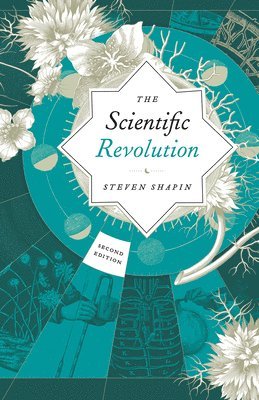
“There was no such thing as the Scientific Revolution, and this is a book about it.” With this provocative and apparently paradoxical claim, Steven Shapin begins his bold vibrant exploration of early modern science. In this classic of science history, Shapin takes into account the culture – the variety of beliefs, practices, and influences – that in the 1600s shaped the origins of the modern scientific worldview.
243 kr
Skickas inom 7-10 vardagar
Since antiquity, "disembodied knowledge" has often been taken as synonomous with "objective truth". Yet we also have very specific mental images of the kinds of bodies that house great minds - the ascetic philosopher versus the hearty surgeon, for example. Does truth have anything to do with the belly? What difference does it make to the persuit of knowledge whether Einstein rode a bicycle, Russell was randy, or Darwin was flatulent? Bringing together body and knowledge, this text offers historical answers to such skeptical questions about the relationships between body, mind and knowledge. Focusing on the 17th century to the present, the book explores how intellectuals sought to establish the value and authority of their ideas through public displays of their private ways of life. Patterns of eating, sleeping, exercising, being ill and having or avoiding sex, as well as the marks of gender and bodily form, were proof of the presence or absence of intellectual virtue, integrity, skill and authority. Intellectuals examined in detail include Rene Descartes, Isaac Newton, Charles Darwin and Ada Lovelace.The book addresses issues central to modern discussions about the nature of knowledge and how it is produced and incorporates history, philosophy, sociology and anthropology.
464 kr
Skickas inom 7-10 vardagar
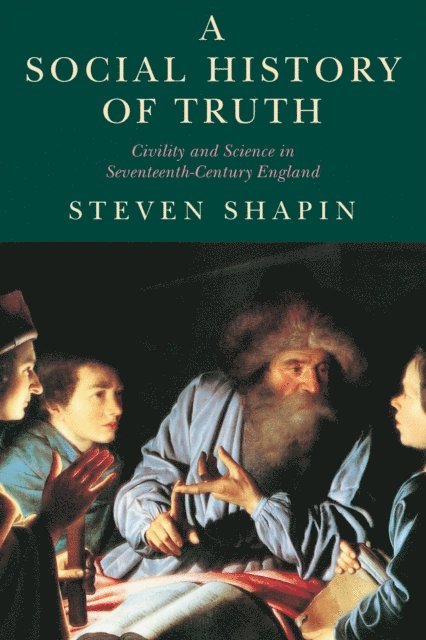
How do we come to trust our knowledge of the world? What are the means by which we distinguish true from false accounts? Why do we credit one observational statement over another? This study engages these universal questions through a recreation of a crucial period in the history of early modern science: the social world of gentlemen-philosophers in 17th-century England. The author paints a picture of the relations between gentlemanly culture and scientific practice. He argues that problems of credibility in science were practically solved through the codes and conventions of genteel conduct: trust, civility, honour, and integrity. These codes formed, and arguably still form, an important basis for securing reliable knowledge about the natural world. Shapin uses detailed historical narrative to argue about the establishment of factual knowledge both in science and in everyday practice. Accounts of the mores and manners of gentlemen-philosophers are used to illustrate Shapin's broad claim that trust is imperative for constituting every kind of knowledge.Knowledge-making is always a collective enterprise: people have to know whom to trust in order to know something about the natural world.
267 kr
Skickas inom 7-10 vardagar
Who are scientists? What kind of people are they? What capacities and virtues are thought to stand behind their considerable authority? "The Scientific Life" is historian Steven Shapin's story about who scientists are, who we think they are, and why our sensibilities about such things matter. From the early twentieth-century origins of corporate research laboratories to the high-flying scientific entrepreneurship of the present, Shapin argues that the radical uncertainties of much contemporary science have made personal virtues more central to its practice than ever before, and he also reveals how radically novel aspects of late modern science have unexpectedly deep historical roots. His elegantly conceived history of the scientific career and character ultimately encourages us to reconsider the very nature of the technical and moral worlds in which we now live.
188 kr
Skickas inom 7-10 vardagar
Who are scientists? What kind of people are they? What capacities and virtues are thought to stand behind their considerable authority? "The Scientific Life" is historian Steven Shapin's story about who scientists are, who we think they are, and why our sensibilities about such things matter. From the early twentieth-century origins of corporate research laboratories to the high-flying scientific entrepreneurship of the present, Shapin argues that the radical uncertainties of much contemporary science have made personal virtues more central to its practice than ever before, and he also reveals how radically novel aspects of late modern science have unexpectedly deep historical roots. His elegantly conceived history of the scientific career and character ultimately encourages us to reconsider the very nature of the technical and moral worlds in which we now live.
282 kr
Skickas inom 7-10 vardagar
What we eat, who we are, and the relationship between the two. Eating and Being is a history of Western thinking about food, eating, knowledge, and ourselves. In modern thought, eating is about what is good for you, not about what is good. Eating is about health, not about virtue. Yet this has not always been the case. For a great span of the past—from antiquity through about the middle of the eighteenth century—one of the most pervasive branches of medicine was known as dietetics, prescribing not only what people should eat but also how they should order many aspects of their lives, including sleep, exercise, and emotional management. Dietetics did not distinguish between the medical and the moral, nor did it acknowledge the difference between what was good for you and what was good. Dietetics counseled moderation in all things, where moderation was counted as a virtue as well as the way to health. But during the nineteenth century, nutrition science began to replace the language of traditional dietetics with the vocabulary of proteins, fats, carbohydrates, and calories, and the medical and the moral went their separate ways. Steven Shapin shows how much depended upon that shift, and he also explores the extent to which the sensibilities of dietetics have been lost.Throughout this rich history, he evokes what it felt like to eat during another historical period and invites us to reflect on what it means to feel about food as we now do. Shapin shows how the change from dietetics to nutrition science fundamentally altered how we think about our food and its powers, our bodies, and our minds.
219 kr
Skickas inom 7-10 vardagar
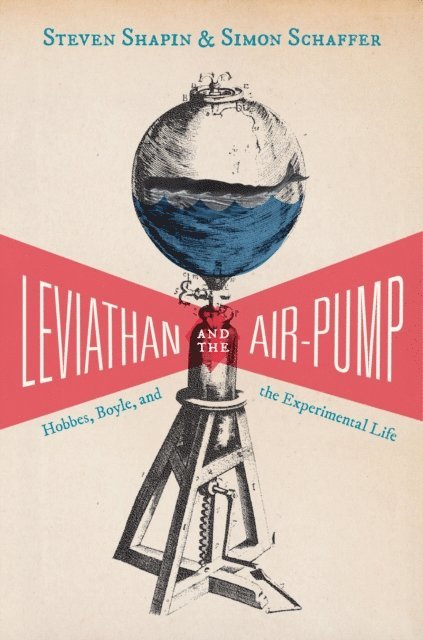
Leviathan and the Air-Pump examines the conflicts over the value and propriety of experimental methods between two major seventeenth-century thinkers: Thomas Hobbes, author of the political treatise Leviathan and vehement critic of systematic experimentation in natural philosophy, and Robert Boyle, mechanical philosopher and owner of the newly invented air-pump. The issues at stake in their disputes ranged from the physical integrity of the air-pump to the intellectual integrity of the knowledge it might yield. Both Boyle and Hobbes were looking for ways of establishing knowledge that did not decay into ad hominem attacks and political division. Boyle proposed the experiment as cure. He argued that facts should be manufactured by machines like the air-pump so that gentlemen could witness the experiments and produce knowledge that everyone agreed on. Hobbes, by contrast, looked for natural law and viewed experiments as the artificial, unreliable products of an exclusive guild. The new approaches taken in Leviathan and the Air-Pump have been enormously influential on historical studies of science.Shapin and Schaffer found a moment of scientific revolution and showed how key scientific givens--facts, interpretations, experiment, truth--were fundamental to a new political order. Shapin and Schaffer were also innovative in their ethnographic approach. Attempting to understand the work habits, rituals, and social structures of a remote, unfamiliar group, they argued that politics were tied up in what scientists did, rather than what they said. Steven Shapin and Simon Schaffer use the confrontation between Hobbes and Boyle as a way of understanding what was at stake in the early history of scientific experimentation. They describe the protagonists' divergent views of natural knowledge, and situate the Hobbes-Boyle disputes within contemporary debates over the role of intellectuals in public life and the problems of social order and assent in Restoration England. In a new introduction, the authors describe how science and its social context were understood when this book was first published, and how the study of the history of science has changed since then.
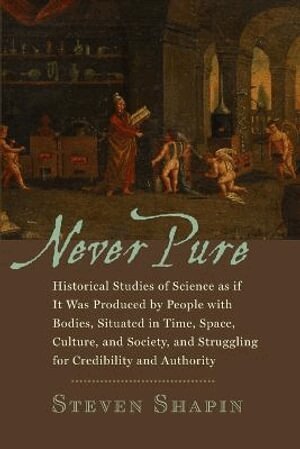
Never Pure
Historical Studies of Science as if It Was Produced by People with Bodies, Situated in Time, Space, Culture, and Society, and Struggling for Credibility and Authority
Inbunden, Engelska, 2010
731 kr
Tillfälligt slut
Steven Shapin argues that science, for all its immense authority and power, is and always has been a human endeavor, subject to human capacities and limits. Put simply, science has never been pure. To be human is to err, and we understand science better when we recognize it as the laborious achievement of fallible, imperfect, and historically situated human beings. Shapin's essays collected here include reflections on the historical relationships between science and common sense, between science and modernity, and between science and the moral order. They explore the relevance of physical and social settings in the making of scientific knowledge, the methods appropriate to understanding science historically, dietetics as a compelling site for historical inquiry, the identity of those who have made scientific knowledge, and the means by which science has acquired credibility and authority. This wide-ranging and intensely interdisciplinary collection by one of the most distinguished historians and sociologists of science represents some of the leading edges of change in the scholarly understanding of science over the past several decades.
Never Pure
Historical Studies of Science as if It Was Produced by People with Bodies, Situated in Time, Space, Culture, and Society, and Struggling for Credibility and Authority
Häftad, Engelska, 2010
407 kr
Skickas inom 7-10 vardagar
Steven Shapin argues that science, for all its immense authority and power, is and always has been a human endeavor, subject to human capacities and limits. Put simply, science has never been pure. To be human is to err, and we understand science better when we recognize it as the laborious achievement of fallible, imperfect, and historically situated human beings. Shapin's essays collected here include reflections on the historical relationships between science and common sense, between science and modernity, and between science and the moral order. They explore the relevance of physical and social settings in the making of scientific knowledge, the methods appropriate to understanding science historically, dietetics as a compelling site for historical inquiry, the identity of those who have made scientific knowledge, and the means by which science has acquired credibility and authority. This wide-ranging and intensely interdisciplinary collection by one of the most distinguished historians and sociologists of science represents some of the leading edges of change in the scholarly understanding of science over the past several decades.