Steven Sora – författare
Visar alla böcker från författaren Steven Sora. Handla med fri frakt och snabb leverans.
6 produkter
6 produkter
E-bok
Engelska, 2007156 kr
Läs direkt efter köp
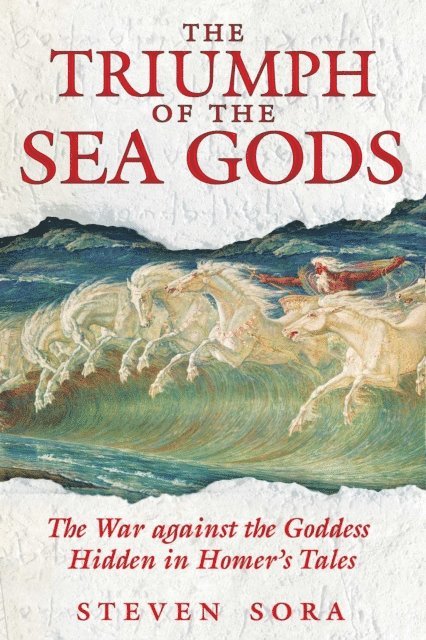
An investigation of the geographical incongruities in Homer’s epics locates Troy on the coast of Iberia, in a conflict that changed history • Cites the rise in sea level in 1200 B.C. as leading to the invasion and victory of the Atlantean sea people over the goddess-worshipping Trojans who ruled the coasts • Identifies Troia (Troy) as part of a tri-city area that later became Lisbon, Portugal In The Triumph of the Sea Gods, Steven Sora argues compellingly that Homer’s tales do not describe adventures in the Mediterranean, but are adaptations of Celtic myths that chronicle an Atlantic coastal war that took place off the Iberian Peninsula around 1200 B.C. It was a war between the pro-goddess Celtic culture that presided over what is now Portugal and the patriarchal culture of the sea-faring Atlanteans. The invasion of the Atlantean sea peoples brought destruction to the entire region stretching from Western Europe’s Atlantic border to Egypt, Syria, and Turkey. This was a turning point not only politically but also spiritually. The goddess became demonized, as seen in myths such as Pandora’s Box in which woman was seen as the source of evil, not the origin of life, and Homer’s tale of the epic Greek and Trojan war, which was triggered by the abduction of a woman. The actual historical struggle described in Homer’s stories, Sora explains, occurred during what was the last in a series of rises in sea level that inundated various land masses (Atlantis) and permitted sea passage to areas previously accessible only by land. The “Sea Gods” (Atlanteans) attacked the tri-city region of Troia (Troy), near present-day Lisbon, which, shortly thereafter, fell victim to a devastating series of seaquakes and tsunamis. The war and the subsequent destructive weather broke the power of this seaboard civilization, leading to a wholesale invasion by the sea peoples and the rapid decline of the region’s goddess-worshipping culture that had reigned there since Neolithic times. Sora shows how Homer’s tales allow the modern world to glimpse this ancient conflict, which has been obscured for centuries.
E-bok
Engelska, 1999156 kr
Läs direkt efter köp
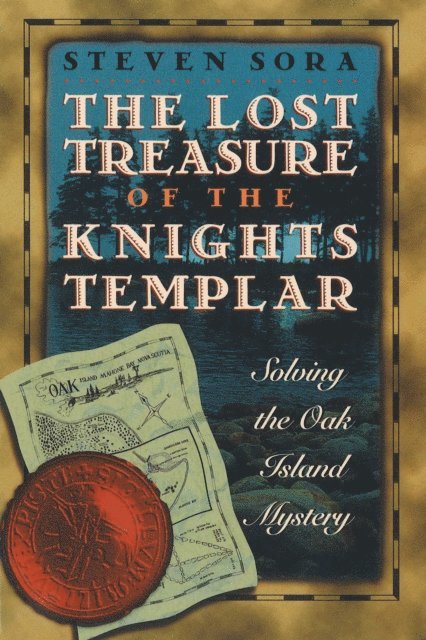
A compelling argument that connects the lost treasure of the Knights Templar to the mysterious money pit on Oak Island, Nova Scotia, that has baffled treasure hunters for two centuries • Fascinating occult detective work linking the Cathars, the Scottish Masons, and Renne-le-Chateau to the elusive treasure pit on Oak Island • Draws on new evidence recently unearthed in Italy, France, and Scotland to provide a compelling solution to one of the world''s most enduring mysteries When the Order of Knights Templar was ruthlessly dissolved in 1307 by King Philip the Fair of France it possessed immense wealth and political power, yet none of the treasure the Templars amassed has ever been found. Their treasure is rumored to contain artifacts of spiritual significance retrieved by the order during the Crusades, including the genealogies of David and Jesus and documents that trace these bloodlines into the royal bloodlines of Merovingian France. Placing a Scottish presence in the New World a century before Columbus, Steven Sora paints a credible scenario that the Sinclair clan of Scotland transported the wealth of the Templars--entrusted to them as the Masonic heirs of the order--to a remote island off the shores of present-day Nova Scotia. The mysterious money pit there is commonly believed to have been built before 1497 and has guarded its secret contents tenaciously despite two centuries of determined efforts to unearth it. All of these efforts (one even financed by American president Franklin Delano Roosevelt) have failed, thanks to an elaborate system of booby traps, false beaches, hidden drains, and other hazards of remarkable ingenuity and technological complexity.
127 kr
Läs direkt efter köp
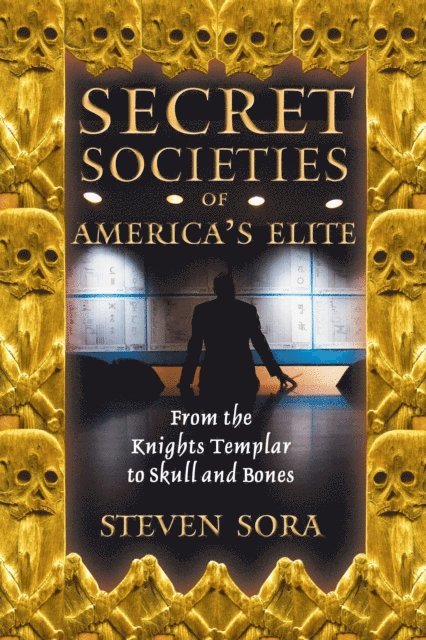
An expose of the dark and critical role secret societies play within the ruling families in America and their influence on American democracy, current events, and world history. • Reveals the enormous influence secret societies still have on contemporary American life. • Shows how the secret Masonic cells that smuggled in the democratic ideals inspiring the American Revolution also enabled the future elite of the new society to build huge fortunes. Elite and secret societies have always been a major force in the history of Western civilization. The alliances formed in secret societies such as the Knights Templar, the Knights of Christ, and the Freemasons transcended patriotism and religious beliefs and had a powerful influence on the establishment of the United States of America. While these secret associations of merchants, smugglers, occultists, gamblers, spies, and slavers succeeded in freeing the United States from foreign domination, the dark side is that the elite used their secret connections to further their own wealth and power. These secret cells did not hesitate to sponsor the assassination of a president and even attempted to break up the union on several occasions when it was deemed expedient. From the Sons of Liberty and the Essex Junto to the Ku Klux Klan, secret societies have played critical roles in building the fortunes of America''s elite. Now Steven Sora reveals in alarming detail how secretive societies continue to wield power even today as organizations such as Yale''s Skull & Bones unite America''s modern ruling families as strongly as Masonic Lodges once connected the Astors, Livingstons, and Roosevelts. Their immense power and wealth allow this elite to control America to an even greater degree than the Templars once dominated Europe.
E-bok
Engelska, 2004156 kr
Läs direkt efter köp
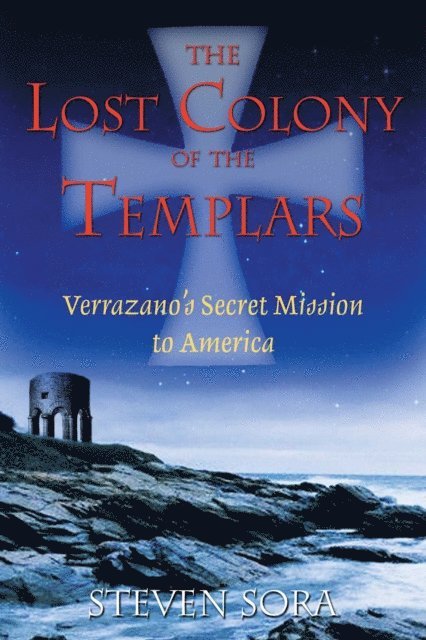
Reveals the existence of a Templar colony in the New World and how the explorer Verrazano, also a member of a secret society, attempted to reestablish contact with it • Explores Columbus’s connection to Henry Sinclair’s maps of the New World • Examines the secret alliance of Catholic Sulpicians and French Huguenots to preserve the Templar legacy • Reveals the hidden knowledge preserved in the Templar baptisteries found throughout Europe and in Newport, Rhode Island In 1524 the Italian explorer Giovanni da Verrazano was sent by the French king Francis I on an expedition ostensibly to find a shorter route to China. However, his true mission, Steven Sora suggests, was to contact a Templar colony that might have been established in Newport, Rhode Island, by Henry Sinclair at the end of the 14th century. In his expedition log Verrazano recorded that his only stay on this journey was at Newport Harbor, the site of a tower built to the exact measurements of a Templar baptistery, a sacred sanctuary representing baptism and eternal life. This tower is a remnant of Sinclair’s voyage to America nearly a century before that of Columbus (who had access to Sinclair’s maps thanks to his wife, who was Sinclair’s great-granddaughter). While Verrazano’s mission succeeded in finding the tower, the colony itself eluded him. His backers then decided to resurrect the dream of Acadia--a place where they could aspire to higher knowledge without fear of Church or state--by creating a new Secret Society that included Huguenots and Catholic Sulpicians. This Company of the Holy Sacrament would lay the foundations for Montreal in an attempt to realize the ambitions of Sinclair and his Templar companions, as well as to stave off efforts by the Jesuits to transform Quebec into a fiefdom of the orthodox Church. Quebec’s motto, “Je me souviens” (I remember), is a reference to this secret history.
E-bok
Engelska, 2019113 kr
Läs direkt efter köp
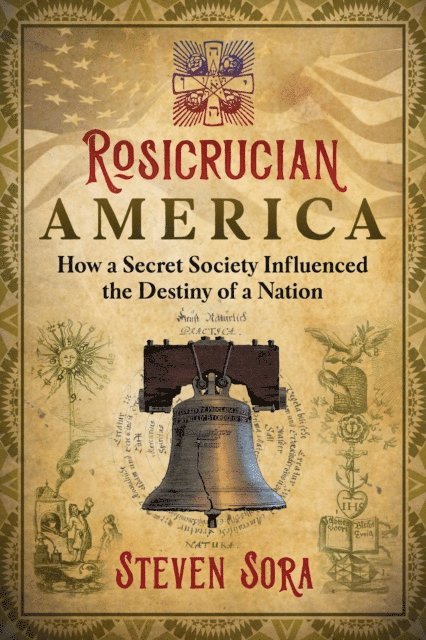
An in-depth history of Rosicrucianism, its key members, and their roles in the formation and settling of America • Explores Sir Francis Bacon and Dr. John Dee’s deep influence on England’s colonization of America as well as the Rosicrucian influence on the Founding Fathers and on cities such as Philadelphia and Williamsburg • Explains how Bacon was the author of many anonymous Rosicrucian texts and how he envisioned America as the “New Atlantis” • Reveals the connections of the Order of the Rosy Cross to the Knights of the Golden Circle and to the Georgia Guidestones Dr. John Dee and his polymath protégé Sir Francis Bacon were the most influential men in the court of Queen Elizabeth I, part of an elite group with invisible control throughout Europe. And, as Steven Sora reveals, not only were they key members of the Rosicrucians, they were the driving force behind England’s colonization of the New World and the eventual establishment of the United States. From Avalon in Newfoundland to New England to Pennsylvania and Virginia, Sora shows how Bacon and Dee’s Rosicrucian impact is felt throughout North America. He details Bacon’s possible authorship of the anonymous Rosicrucian texts of the early 1600s, his connections with Sir Walter Raleigh’s School of Night, and the origins of Rosicrucianism in Bacon’s Order of the Helmet. He explains how Bacon envisioned America as the New Atlantis, a utopia where liberty and freedom of learning prevailed--a key tenet of the “Invisible College” of the Rosicrucian Order--and how Dee convinced the Queen that England had rightful claims in the New World by drawing on legends of both King Arthur and Welsh Prince Madoc voyaging West to America. Sora looks at Rosicrucian influences on the Founding Fathers and earliest settlers of America, such as Washington, Franklin, and William Penn of Pennsylvania, on the American Revolution, and on American colonies, such as the Williamsburg colony. He details how Penn invited Rosicrucians to Philadelphia and how the city’s layout follows esoteric principles, including a direct reference to Bacon’s New Atlantis. Moving into the 1800s and beyond, he reveals how a handful of Rosicrucians served as the Inner Sanctum of the Knights of the Golden Circle and how Rosicrucians are behind the Georgia Guidestones, carved granite monoliths with messages in ancient languages. Providing a thorough and expansive view of Rosicrucianism, its occult origins, and its deep imprint on America, Sora shows how this secret society still continues to exert invisible influence on the modern world.
Ljudbok
Engelska, 2019297 kr
Lyssna direkt efter köp
An in-depth history of Rosicrucianism, its key members, and their roles in the formation and settling of America • Explores Sir Francis Bacon and Dr. John Dee’s deep influence on England’s colonization of America as well as the Rosicrucian influence on the Founding Fathers and on cities such as Philadelphia and Williamsburg • Explains how Bacon was the author of many anonymous Rosicrucian texts and how he envisioned America as the “New Atlantis” • Reveals the connections of the Order of the Rosy Cross to the Knights of the Golden Circle and to the Georgia Guidestones Dr. John Dee and his polymath protégé Sir Francis Bacon were the most influential men in the court of Queen Elizabeth I, part of an elite group with invisible control throughout Europe. And, as Steven Sora reveals, not only were they key members of the Rosicrucians, they were the driving force behind England’s colonization of the New World and the eventual establishment of the United States. From Avalon in Newfoundland to New England to Pennsylvania and Virginia, Sora shows how Bacon and Dee’s Rosicrucian impact is felt throughout North America. He details Bacon’s possible authorship of the anonymous Rosicrucian texts of the early 1600s, his connections with Sir Walter Raleigh’s School of Night, and the origins of Rosicrucianism in Bacon’s Order of the Helmet. He explains how Bacon envisioned America as the New Atlantis, a utopia where liberty and freedom of learning prevailed--a key tenet of the “Invisible College” of the Rosicrucian Order--and how Dee convinced the Queen that England had rightful claims in the New World by drawing on legends of both King Arthur and Welsh Prince Madoc voyaging West to America. Sora looks at Rosicrucian influences on the Founding Fathers and earliest settlers of America, such as Washington, Franklin, and William Penn of Pennsylvania, on the American Revolution, and on American colonies, such as the Williamsburg colony. He details how Penn invited Rosicrucians to Philadelphia and how the city’s layout follows esoteric principles, including a direct reference to Bacon’s New Atlantis. Moving into the 1800s and beyond, he reveals how a handful of Rosicrucians served as the Inner Sanctum of the Knights of the Golden Circle and how Rosicrucians are behind the Georgia Guidestones, carved granite monoliths with messages in ancient languages. Providing a thorough and expansive view of Rosicrucianism, its occult origins, and its deep imprint on America, Sora shows how this secret society still continues to exert invisible influence on the modern world.