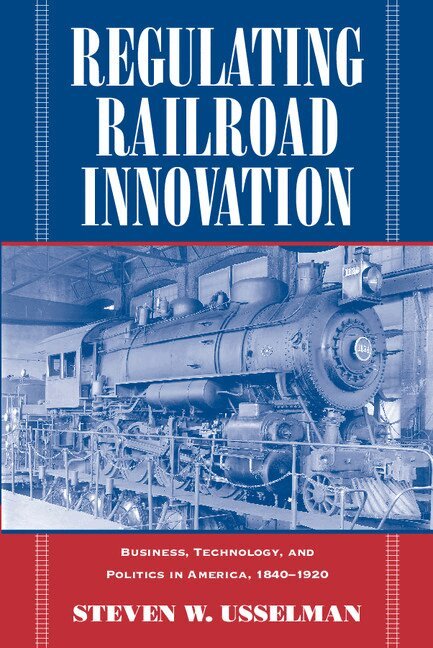
Efforts to create and mould new technologies have been a central, recurrent feature of the American experience since at least the time of the Revolution. In Regulating Railroad Innovation, historian Steven Usselman brings this neglected aspect of American history to light. For nearly a century, railroad technology persistently posed novel challenges for Americans, prompting them to re-examine their most cherished institutions and beliefs. Business managers, inventors, consumers, and politicians all strained to contain the forces of innovation and to channel technical change toward the ends they desired. Moving through time from the first experimental lines through the polished but troubled railroad machines of the early twentieth century, Usselman examines diverse forums ranging from legislatures, and evolving corporate bureaucracies to laboratories, engineering societies, and world's fairs. In the process, his book situates technology within the dynamic history of an emergent industrial nation and elucidates its enduring place in American society.
The Challenge of Remaining Innovative explores innovation as a complex phenomenon that may be organizational as well as technological, that operates both within firms and across the broader economy, and that involves matters not only of research and development, but also of marketing, design, and government relations. The contributors explore two main themes: the challenge of remaining innovative and the necessity of managing institutional boundaries in doing so.The collection is organized into four parts, which move outward from individual firms; to networks or clusters of firms; to consultants and other intermediaries in the private economy who operate outside of the firms themselves; and finally to government institutions and politics. This scheme delineates a variety of ways in which entrepreneurship has persisted across the 20th century—and accentuates how ongoing organizational re-arrangement has contributed mightily to its sustained vitality.
Efforts to create and mould new technologies have been a central, recurrent feature of the American experience since at least the time of the Revolution. In Regulating Railroad Innovation, historian Steven Usselman brings this neglected aspect of American history to light. For nearly a century, railroad technology persistently posed novel challenges for Americans, prompting them to re-examine their most cherished institutions and beliefs. Business managers, inventors, consumers, and politicians all strained to contain the forces of innovation and to channel technical change toward the ends they desired. Moving through time from the first experimental lines through the polished but troubled railroad machines of the early twentieth century, Usselman examines diverse forums ranging from legislatures, and evolving corporate bureaucracies to laboratories, engineering societies, and world's fairs. In the process, his book situates technology within the dynamic history of an emergent industrial nation and elucidates its enduring place in American society.
The Challenge of Remaining Innovative explores innovation as a complex phenomenon that may be organizational as well as technological, that operates both within firms and across the broader economy, and that involves matters not only of research and development, but also of marketing, design, and government relations. The contributors explore two main themes: the challenge of remaining innovative and the necessity of managing institutional boundaries in doing so.The collection is organized into four parts, which move outward from individual firms; to networks or clusters of firms; to consultants and other intermediaries in the private economy who operate outside of the firms themselves; and finally to government institutions and politics. This scheme delineates a variety of ways in which entrepreneurship has persisted across the 20th century—and accentuates how ongoing organizational re-arrangement has contributed mightily to its sustained vitality.