Stewart A. Weaver – författare
Visar alla böcker från författaren . Handla med fri frakt och snabb leverans.
6 produkter
6 produkter
Häftad, Engelska, 2015
113 kr
Skickas inom 5-8 vardagar
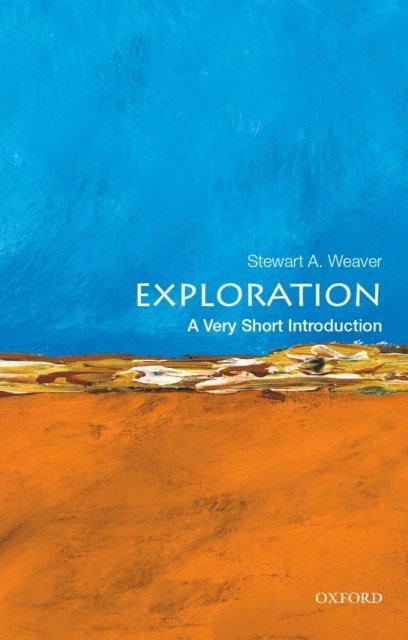
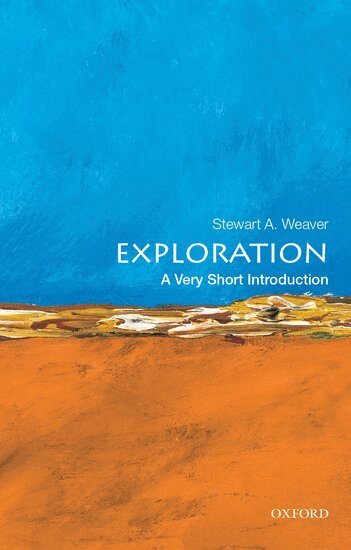
For as long as there have been civilizations, there has been the urge to venture outside of them, either in search of other civilizations or in search of novelty. Exploration: A Very Short Introduction surveys this quintessential human impulse, tracing it from pre-history to the present, from east to west around the globe, and from the depths of volcanoes to the expanses of space. Stewart Weaver arranges the history of world explorations into thematic chapters, each of which isolates the distinctive qualities and characteristics of exploration in a particular era, period, or place. He introduces the reader to the definition of exploration; to the Polynesians crossing vast seas on their canoes and other early explorers; through Columbus and the European discovery of the Americas. James Cook and the place of exploration in the Enlightenment form the subject of a chapter. So too do the natural histories and explorations of Alexander von Humboldt in South America and Lewis and Clark in North America. The book's final chapters chart exploration through imperial expansion and into new frontiers, guiding the reader through exploration in Africa and Central Asia, the race to the North and South Poles, and today's efforts in space and deep sea exploration.But what accounts for this urge? Through this unique survey of the history of exploration, Weaver clearly shows how the impulse to explore is also the foundation of the globalized world we inhabit today. Exploration combines a narration of explorers' daring feats with a wide-lens examination of what it fundamentally means to explore. As Weaver shows us, the act of exploration in the largest possible global context is the natural history of the earth itself.ABOUT THE SERIES: The Very Short Introductions series from Oxford University Press contains hundreds of titles in almost every subject area. These pocket-sized books are the perfect way to get ahead in a new subject quickly. Our expert authors combine facts, analysis, perspective, new ideas, and enthusiasm to make interesting and challenging topics highly readable.
E-bok
PDF, Engelska, 201492 kr
Läs direkt efter köp
We live in an age of globalization on every conceivable level, but globalization has a deeper history than politicians and pundits often allow, and nothing is more significant to its history than exploration. Wherever trade or faith or empire followed, explorers usually led. Their motives were as many-sided and various as their actions; their legacies are contested and mixed. But none can doubt the significance of explorers to the making of the modern world. For as long as human societies have existed, people have felt the urge to venture outside of them, either in search of other societies or in search of new land or adventure. Exploration: A Very Short Introduction surveys this quintessential human impulse, tracing it from pre-history to the present, from east to west around the globe, and from the depths of volcanoes to the expanses of space. Focusing on the theme of exploration as encounter, Stewart Weaver discusses the Polynesians in the Pacific, the Norse in the Atlantic, and other early explorers. He reflects on the Columbian "discovery" of the Americas, James Cook and the place of exploration in the Enlightenment, and Alexander von Humboldt''s epochal encounter with tropical South America. The book''s final chapters relate exploration to imperial expansion in Africa and Central Asia, assess the meaning of the race to the North and South Poles, and consider the significance of today''s efforts in space and deep sea exploration.But what accounts for this urge? Through this brief study of the history of exploration, Weaver clearly shows how the impulse to explore is also the foundation of the globalized world we inhabit today. Exploration combines a narration of explorers'' daring feats with a wide-lens examination of what it fundamentally means to explore. ABOUT THE SERIES: The Very Short Introductions series from Oxford University Press contains hundreds of titles in almost every subject area. These pocket-sized books are the perfect way to get ahead in a new subject quickly. Our expert authors combine facts, analysis, perspective, new ideas, and enthusiasm to make interesting and challenging topics highly readable.
E-bok
Engelska, 201492 kr
Läs direkt efter köp
We live in an age of globalization on every conceivable level, but globalization has a deeper history than politicians and pundits often allow, and nothing is more significant to its history than exploration. Wherever trade or faith or empire followed, explorers usually led. Their motives were as many-sided and various as their actions; their legacies are contested and mixed. But none can doubt the significance of explorers to the making of the modern world. For as long as human societies have existed, people have felt the urge to venture outside of them, either in search of other societies or in search of new land or adventure. Exploration: A Very Short Introduction surveys this quintessential human impulse, tracing it from pre-history to the present, from east to west around the globe, and from the depths of volcanoes to the expanses of space. Focusing on the theme of exploration as encounter, Stewart Weaver discusses the Polynesians in the Pacific, the Norse in the Atlantic, and other early explorers. He reflects on the Columbian "discovery" of the Americas, James Cook and the place of exploration in the Enlightenment, and Alexander von Humboldt''s epochal encounter with tropical South America. The book''s final chapters relate exploration to imperial expansion in Africa and Central Asia, assess the meaning of the race to the North and South Poles, and consider the significance of today''s efforts in space and deep sea exploration.But what accounts for this urge? Through this brief study of the history of exploration, Weaver clearly shows how the impulse to explore is also the foundation of the globalized world we inhabit today. Exploration combines a narration of explorers'' daring feats with a wide-lens examination of what it fundamentally means to explore. ABOUT THE SERIES: The Very Short Introductions series from Oxford University Press contains hundreds of titles in almost every subject area. These pocket-sized books are the perfect way to get ahead in a new subject quickly. Our expert authors combine facts, analysis, perspective, new ideas, and enthusiasm to make interesting and challenging topics highly readable.
Häftad, Engelska, 2010
1 244 kr
Skickas inom 5-8 vardagar
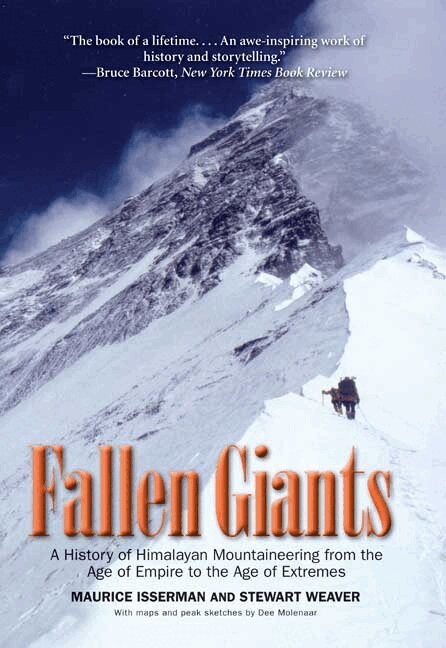
The story of the world’s highest peaks and the remarkable people who have sought to climb themThe first successful ascent of Mount Everest in 1953 by Sir Edmund Hillary and his Sherpa teammate Tenzing Norgay is a familiar saga, but less well known are the tales of many other adventurers who also came to test their skills and courage against the world’s highest and most dangerous mountains. In this lively and generously illustrated book, historians Maurice Isserman and Stewart Weaver present the first comprehensive history of Himalayan mountaineering in fifty years. They offer detailed, original accounts of the most significant climbs since the 1890s, and they compellingly evoke the social and cultural worlds that gave rise to those expeditions.The book recounts the adventures of such figures as Martin Conway, who led the first authentic Himalayan climbing expedition in 1892; Fanny Bullock Workman, the pioneer explorer of the Karakoram range; George Mallory, the romantic martyr of Mount Everest fame; Charlie Houston, who led American expeditions to K2 in the 1930s and 1950s; Ang Tharkay, the legendary Sherpa, and many others. Throughout, the authors discuss the effects of political and social change on the world of mountaineering, and they offer a penetrating analysis of a culture that once emphasized teamwork and fellowship among climbers, but now has been eclipsed by a scramble for individual fame and glory.
Inbunden, Engelska, 2027
389 kr
Kommande
The compelling story of the James Clark Ross expedition to the AntarcticIn 1839 James Clark Ross set out to unravel the mysteries of the Earth’s magnetic field and disclose the secrets of the Antarctic. In command of two former warships, HMS Erebus and HMS Terror, he traversed the south polar regions for four years. By the expedition’s end, he and his crews had seen for the first time some of the most astounding sights this world has to offer. Stewart Weaver traces the story of the last long voyage of discovery under sail. He shows how Ross and other nineteenth century thinkers strove to understand why compass needles pointed north, why the magnetic poles were constantly moving and what lay at the southernmost latitudes of the earth. Weaver shows how efforts to answer longstanding scientific questions led to an unexpected encounter with a whole new continent: Antarctica.This is the fascinating story of explorer-scientists striving to make their mark at the end of the Age of Sail, at the very moment of transition between the old world and the new.
Inbunden, Engelska, 1997
944 kr
Skickas inom 10-15 vardagar
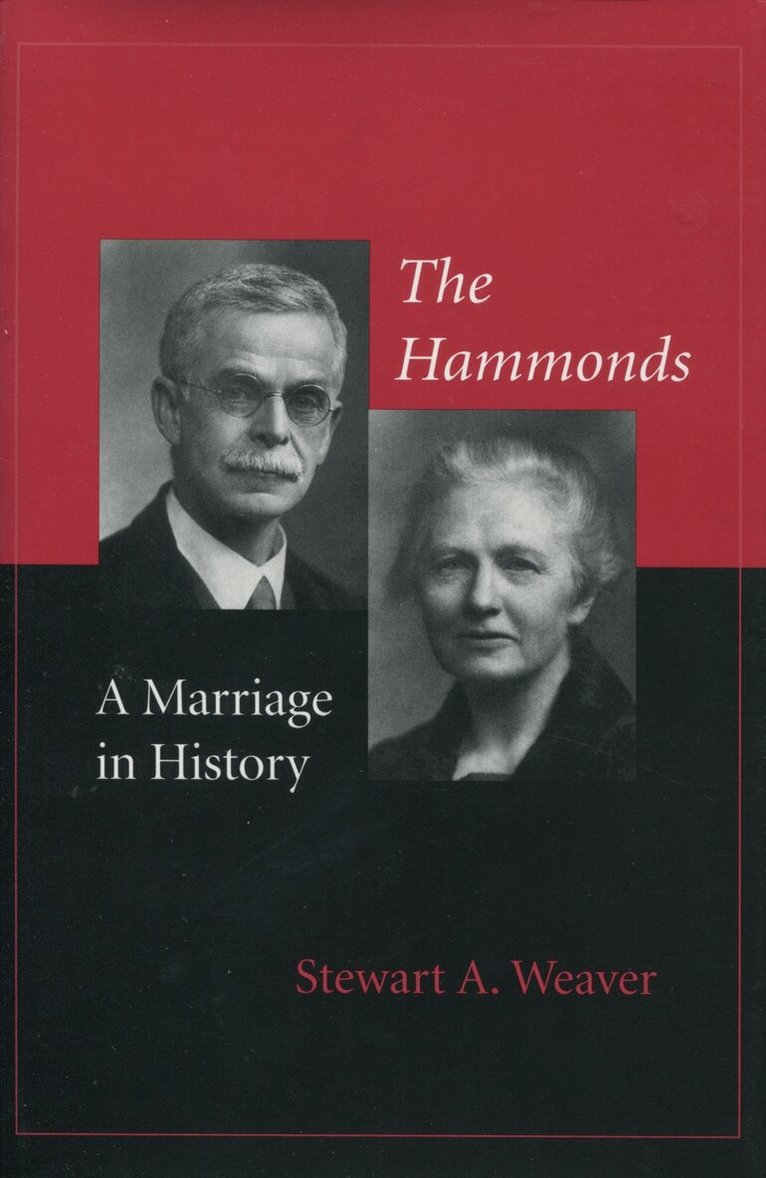
Here for the first time is the story of one of history's great scholarly and marital collaborations. J. L. and Barbara Hammond were among the most innovative and influential historians of the twentieth century. Between 1911 and 1934, they wrote eight books together that amount, in effect, to the first sustained social history of modern England. Three of their books in particular—The Village Labourer (1911), The Town Labourer (1917), and The Skilled Labourer (1919)—not only anticipated what came to be known as "history from below," but also permanently changed the way most people think about the Industrial Revolution, which they defined in the apocalyptic terms to which we have become accustomed.The Hammonds were also public figures prominently involved, along with L. T. Hobhouse, J. A. Hobson, C. P. Scott, and others, in the definition and dissemination of "the new liberalism." From the point of involvement in the politics of one century, they helped give enduring historical shape to another, and thus exercise, like their friends Sidney and Beatrice Webb, a dual fascination.Of the two Hammonds, J. L. was the more prolific, writing six books on his own and serving as a political journalist for virtually his entire professional life, which saw him intervene editorially in every public crisis from the Boer War to the Second World War. Ireland was (after the Industrial Revolution) arguably his greatest passion, one to which he devoted much of his editorial life and his supreme literary effort, Gladstone and the Irish Nation (1938).Barbara Hammond was an accomplished classicist, the first woman to earn a First Class degree in Greats at Oxford. She is shown here to have done much more work on the labourer books than has been previously recognized, and to sustain through her letters an artful running commentary on the foibles of her age. Through her, especially, the author evokes a radical but also doggedly Victorian sensibility that survived uneasily into the age of Bloomsbury and beyond.The Hammonds were unique in the extent of their fused identity, in the extent to which they became, as G. M. Trevelyan once put it, "one flesh and one author." The Hammonds is part dual-biography, part evocation of an age, but it is also a study of marriage, a marriage at a particular moment in history, a marriage in the art and craft of history.