Stijn Claessens – författare
Visar alla böcker från författaren Stijn Claessens. Handla med fri frakt och snabb leverans.
11 produkter
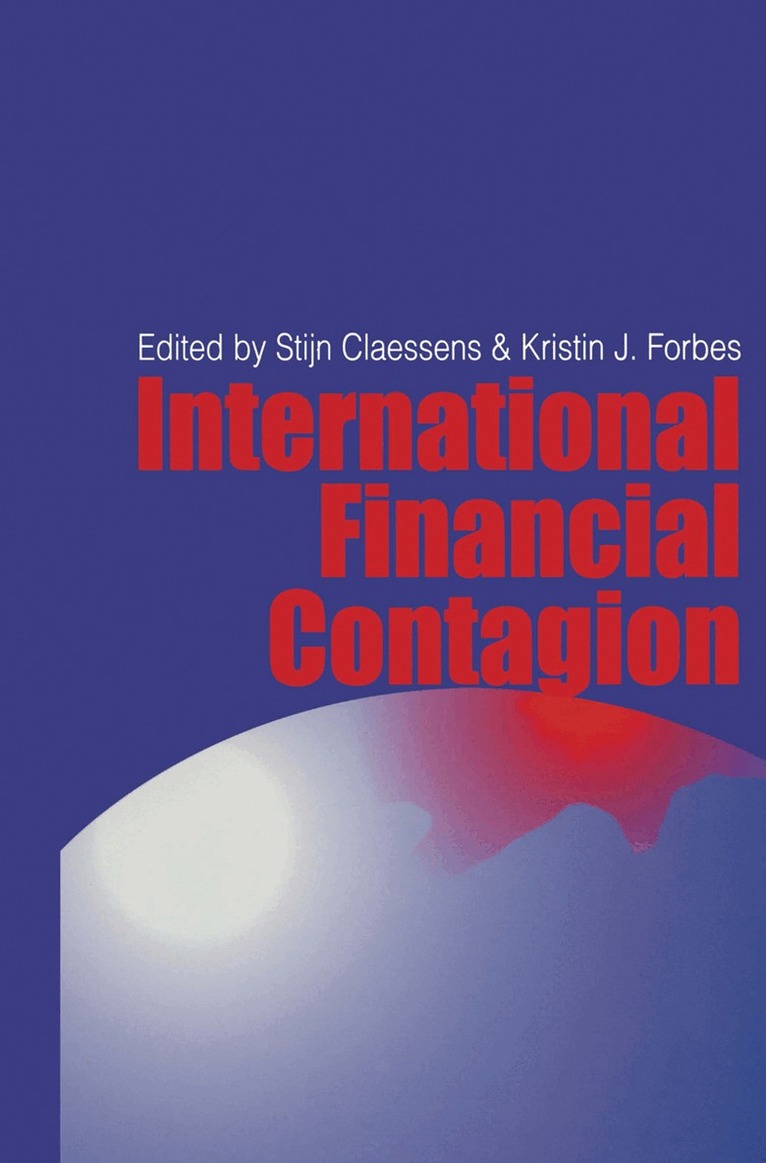
International Financial Contagion
Av Stijn Claessens, Kristin Forbes m. fl.
Inbunden, 2001
1692 kr
Lägg i varukorg
Within less than two years, a currency crisis that began in Thailand had spread throughout East Asia, Russia, and Brazil, affecting developed economies as well as emerging markets around the world. The scope and virulence of this international financial contagion was completely unexpected. In an …
Electronic Finance
A New Approach to Financial Sector Development?
Av Thomas Glaessner, Stijn Claessens m. fl.
Häftad, 2002
297 kr
Lägg i varukorg
In recent years, the delivery of financial services has changed consistent with technological advances that have occurred. On-line banking, on-line trading and brokerage services, and capital markets are available and utilized in varying degrees in the industrialized nations of the world. Beyond …
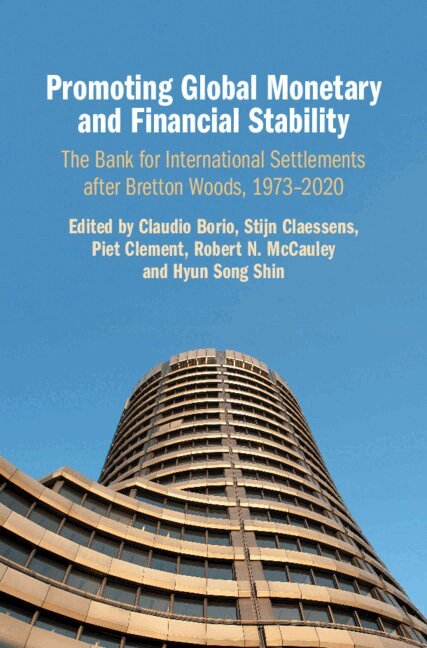
Promoting Global Monetary and Financial Stability
The Bank for International Settlements after Bretton Woods, 1973-2020
Av Claudio Borio, Stijn Claessens m. fl.
Inbunden, 2020
1844 kr
Lägg i varukorg
As the global organisation of central banks, the Bank for International Settlements (BIS) has played a significant role in the momentous changes the international monetary and financial system has undergone over the past half century. This book offers a key contribution to understanding these …
Promoting Global Monetary and Financial Stability
The Bank for International Settlements after Bretton Woods, 1973–2020
Av Hyun Song Shin, Robert N. McCauley m. fl.
E-bok, 2020
1830 kr
Lägg i varukorg
As the global organisation of central banks, the Bank for International Settlements (BIS) has played a significant role in the momentous changes the international monetary and financial system has undergone over the past half century. This book offers a key contribution to understanding these …
Promoting Global Monetary and Financial Stability
The Bank for International Settlements after Bretton Woods, 1973–2020
Av Hyun Song Shin, Robert N. McCauley m. fl.
E-bok, 2020
1830 kr
Lägg i varukorg
As the global organisation of central banks, the Bank for International Settlements (BIS) has played a significant role in the momentous changes the international monetary and financial system has undergone over the past half century. This book offers a key contribution to understanding these …
International Financial Contagion
Av Stijn Claessens, Kirsten Forbes
Häftad, 2011
1692 kr
Lägg i varukorg
No sooner had the Asian crisis broken out in 1997 than the witch-hunt started. With great indignation every Asian economy pointed fingers. They were innocent bystanders. The fundamental reason for the crisis was this or that - most prominently contagion - but also the decline in exports of the new …
International Financial Contagion
Av Kirsten Forbes, Stijn Claessens
E-bok, 2013
2174 kr
Lägg i varukorg
No sooner had the Asian crisis broken out in 1997 than the witch-hunt started. With great indignation every Asian economy pointed fingers. They were innocent bystanders. The fundamental reason for the crisis was this or that - most prominently contagion - but also the decline in exports of the new …
MACROPRUDENTIAL REGULATORY POLICIES: THE NEW ROAD TO FINANCIAL STABILITY?
Av Claessens Stijn, Stijn Claessens m. fl.
Inbunden, 2011
1991 kr
Lägg i varukorg
This book is a collection of papers presented in the conference held at the Federal Reserve Bank of Chicago in September 2010, that examines the role of macroprudential regulation in the financial industry. Shocked by the experience of the last few years, many argue that the more traditional …
SHADOW BANKING WITHIN AND ACROSS NATIONAL BORDERS
Av Claessens Stijn, Stijn Claessens m. fl.
Inbunden, 2015
2420 kr
Lägg i varukorg
Generally thought to be an under-regulated sector, the shadow banking system has been identified as having a significant role in the recent global financial crisis. In recent years, it has also been growing rapidly in emerging markets. Yet, little is known about its size, scope and operations; nor …
Building Market Institutions in South Eastern Europe
Comparative Prospects for Investment and Private Sector Development
Av Harry G. Broadman, James Anderson m. fl.
Häftad, 2004
294 kr
Tillfälligt slut
Building Market Institutions in South Eastern Europe, a collaborative effort of the World Bank and the EBRD, analyses the institutional impediments to investment and growth in eight SEE countries - Albania, Bosnia and Herzegovina, Bulgaria, Croatia, FYR Macedonia, Moldova, Romania, and Serbia and …
Financial Sector Development and the Millennium Development Goals
Av Stijn Claessens, Erik Feijen
Häftad, 2007
180 kr
Tillfälligt slut