Stolz Thomas Stolz – författare
Visar alla böcker från författaren Stolz Thomas Stolz. Handla med fri frakt och snabb leverans.
2 produkter
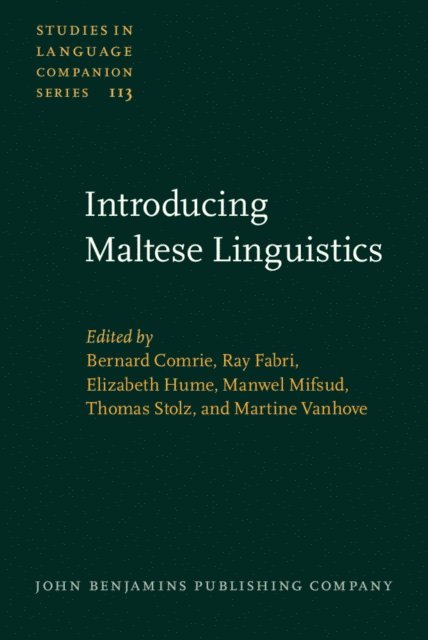
Introducing Maltese Linguistics
Selected papers from the 1st International Conference on Maltese Linguistics, Bremen, 18–20 October, 2007
Av Vanhove Martine Vanhove, Stolz Thomas Stolz m. fl.
E-bok, 2009
1477 kr
Lägg i varukorg
This collection of articles highlights a selection of on-going research projects. Phonological, morphological, and syntactic issues are addressed by international experts on Maltese. The diachronic development of Maltese, its age-long contact with Italo-Romance, and the present diglossic situation …
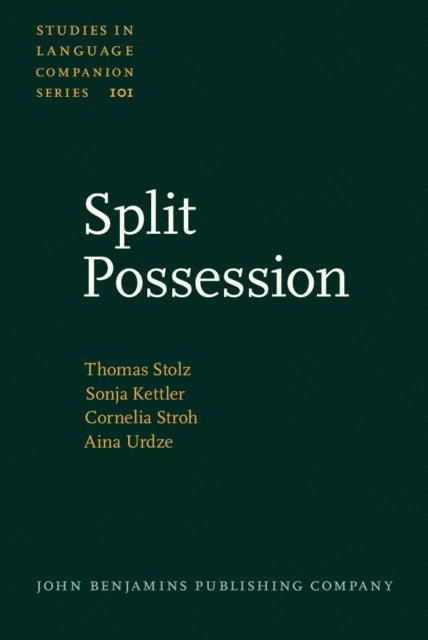
Split Possession
An areal-linguistic study of the alienability correlation and related phenomena in the languages of Europe
Av Urdze Aina Urdze, Stroh Cornelia Stroh m. fl.
E-bok, 2008
1830 kr
Lägg i varukorg
This book is a functional-typological study of possession splits in European languages. It shows that genetically and structurally diverse languages such as Icelandic, Welsh, and Maltese display possessive systems which are sensitive to semantically based distinctions reminiscent of the …