Stuart K. Card – författare
Visar alla böcker från författaren Stuart K. Card. Handla med fri frakt och snabb leverans.
5 produkter
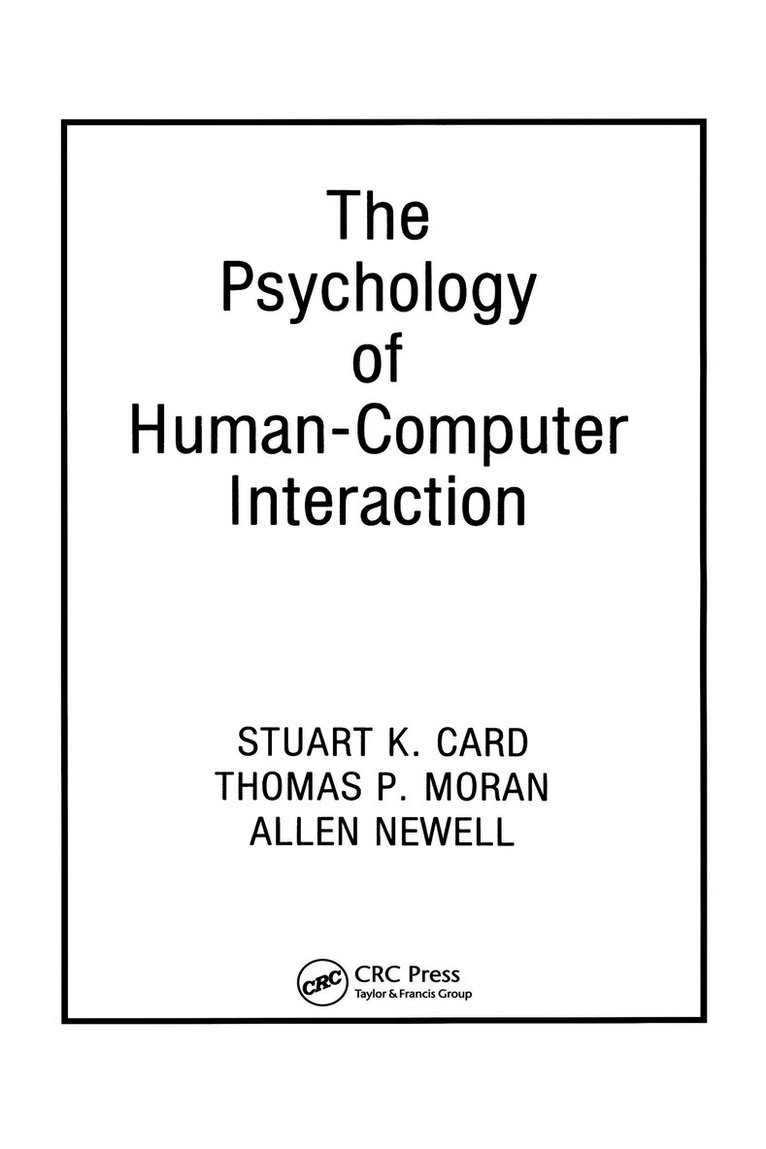
Psychology of Human-Computer Interaction
Av Thomas P. Moran, Stuart Card m. fl.
Häftad, 1986
1491 kr
Lägg i varukorg
This book aims to help lay a scientific foundation for an applied psychology concerned with the human users of interactive computer systems. It presents the results of some of the main strands of the Applied Information-Processing Psychology Project group's research.
Psychology of Human-Computer Interaction
Av Stuart K. Card, Thomas P. Moran m. fl.
Inbunden, 2017
3063 kr
Lägg i varukorg
Defines the psychology of human-computer interaction, showing how to span the gap between science & application. Studies the behavior of users in interacting with computer systems.
Psychology of Human-Computer Interaction
Av Allen Newell, Thomas P. Moran m. fl.
E-bok, 2018
1630 kr
Lägg i varukorg
Defines the psychology of human-computer interaction, showing how to span the gap between science & application. Studies the behavior of users in interacting with computer systems.
Psychology of Human-Computer Interaction
Av Allen Newell, Thomas P. Moran m. fl.
E-bok, 2018
1666 kr
Lägg i varukorg
Defines the psychology of human-computer interaction, showing how to span the gap between science & application. Studies the behavior of users in interacting with computer systems.
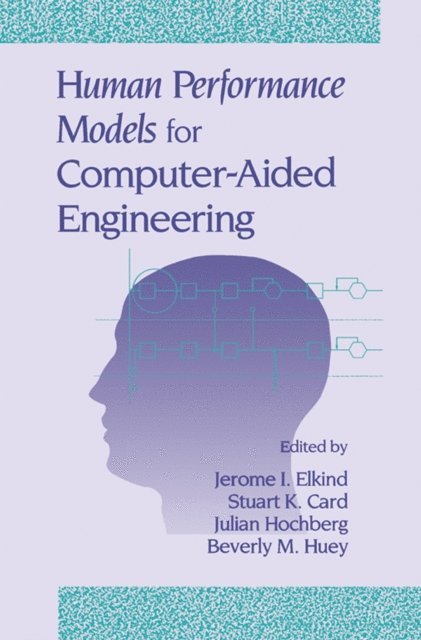
Human Performance Models for Computer-Aided Engineering
Av Julian Hochberg, Stuart K. Card m. fl.
E-bok, 2014
807 kr
Lägg i varukorg
Human Performance Models for Computer-Aided Engineering is a collection of papers that deals with the relationship between scientific theories of human performance and practical engineering. This collection describes the emergence of a scientific engineering paradigm that uses computational …