Su-Mi Lee - Böcker
Visar alla böcker från författaren Su-Mi Lee. Handla med fri frakt och snabb leverans.
3 produkter
3 produkter
583 kr
Skickas inom 3-6 vardagar
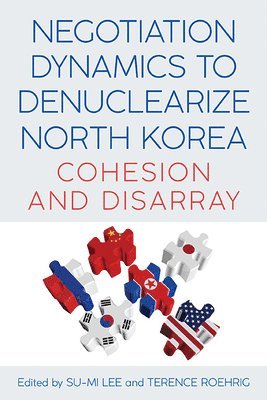
Comprehensive examination of the goals, strategies, and motives of the six parties involved in North Korea denuclearization talks through the lens of negotiation theory.Was there ever a window of opportunity for successful negotiations over North Korea's nuclear weapons program? Negotiation Dynamics to Denuclearize North Korea brings together country experts with negotiation specialists to apply negotiation theory to the North Korea denuclearization process. Country expert chapters provide a detailed assessment of the goals, motives, and strategies of the six parties-North Korea, South Korea, the United States, China, Japan, and Russia-along with contextual variables of each player such as political, economic, and social conditions while the negotiation scholars collate and scrutinize the results of these key variables. Based on thorough descriptive contexts provided by the country experts, the negotiation scholars identify the lack of two factors, party cohesion and ripeness, as detriments to successful North Korea nuclear negotiations.
1 019 kr
Skickas
Comprehensive examination of the goals, strategies, and motives of the six parties involved in North Korea denuclearization talks through the lens of negotiation theory.Was there ever a window of opportunity for successful negotiations over North Korea's nuclear weapons program? Negotiation Dynamics to Denuclearize North Korea brings together country experts with negotiation specialists to apply negotiation theory to the North Korea denuclearization process. Country expert chapters provide a detailed assessment of the goals, motives, and strategies of the six parties-North Korea, South Korea, the United States, China, Japan, and Russia-along with contextual variables of each player such as political, economic, and social conditions while the negotiation scholars collate and scrutinize the results of these key variables. Based on thorough descriptive contexts provided by the country experts, the negotiation scholars identify the lack of two factors, party cohesion and ripeness, as detriments to successful North Korea nuclear negotiations.
488 kr
Skickas inom 10-15 vardagar
This book examines how mediators’ relational characteristics can alter the outcome of mediation in international militarized disputes. Rather than focusing on neutrality and bias that are rigorously discussed in the mediation literature, this book redefines the sources of effective mediators, impartiality and interest, and shows how such seemingly opposing characteristics of a mediator can lead to successful mediation through different channels, complementing each other. This book also uncovers the two dimensions of mediator trust, fairness and capacity. For mediation to be successful, disputants must trust that mediators are fair and capable of leading to successful mediation. The identification of these two sources is crucial as each of the two relational characteristics of mediators’ discussed above improves each dimension of the mediator trust. Moreover, this book explores how impartial and interested mediators are more or less effective in particular conflicts characterized by the nature of dispute, the nature of disputants’ relationships, and the nature of mediators. The book’s empirical analysis as well as case studies on the mediation cases led by the Philippines and Syria in the Borneo confrontation and Yemen dispute, respectively, demonstrate how the levels of mediator impartiality and mediator interest counterbalance each other in leading to mediation success.