Subhash L. Shinde - Böcker
Visar alla böcker från författaren Subhash L. Shinde. Handla med fri frakt och snabb leverans.
5 produkter
5 produkter
1 577 kr
Skickas inom 10-15 vardagar
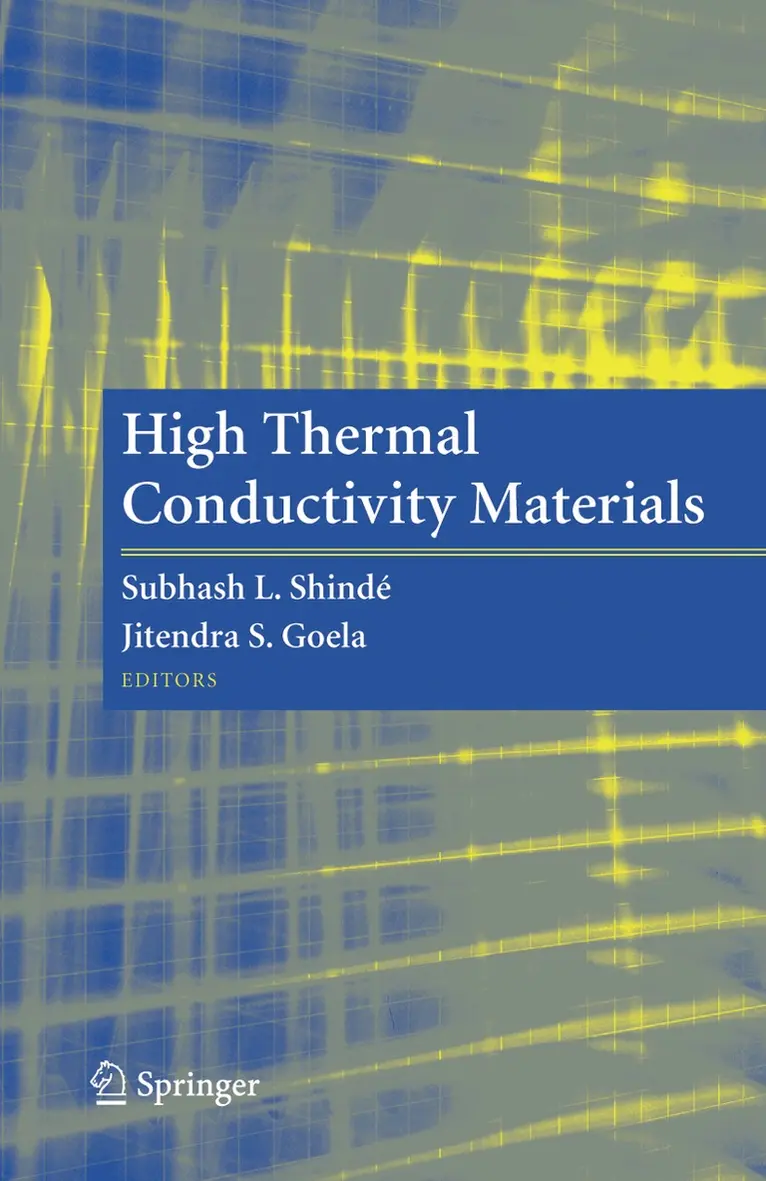
Thedemandfore?cientthermalmanagementhasincreasedsubstantiallyover the last decade in every imaginable area, be it a formula 1 racing car suddenly braking to decelerate from 200 to 50 mph going around a sharp corner, a space shuttle entering the earth’s atmosphere, or an advanced microproc- sor operating at a very high speed. The temperatures at the hot junctions are extremely high and the thermal ?ux can reach values higher than a few 2 hundred to a thousand watts/cm in these applications. To take a speci?c example of the microelectronics area, the chip heat ?ux for CMOS microp- cessors, though moderate compared to the numbers mentioned above have 2 already reached values close to 100 W/cm , and are projected to increase 2 above 200 W/cm over the next few years. Although the thermal mana- ment strategies for microprocessors do involve power optimization through improved design, it is extremely di?cult to eliminate “hot spots” completely. This is where high thermal conductivity materials ?nd most of their appli- tions, as “heat spreaders”. The high thermal conductivity of these materials allows the heat to be carried away from the “hot spots” very quickly in all directions thereby “spreading” the heat. Heat spreading reduces the heat ?ux density, and thus makes it possible to cool systems using standard cooling solutions like ?nned heat sinks with forced air cooling.
1 564 kr
Skickas inom 5-8 vardagar
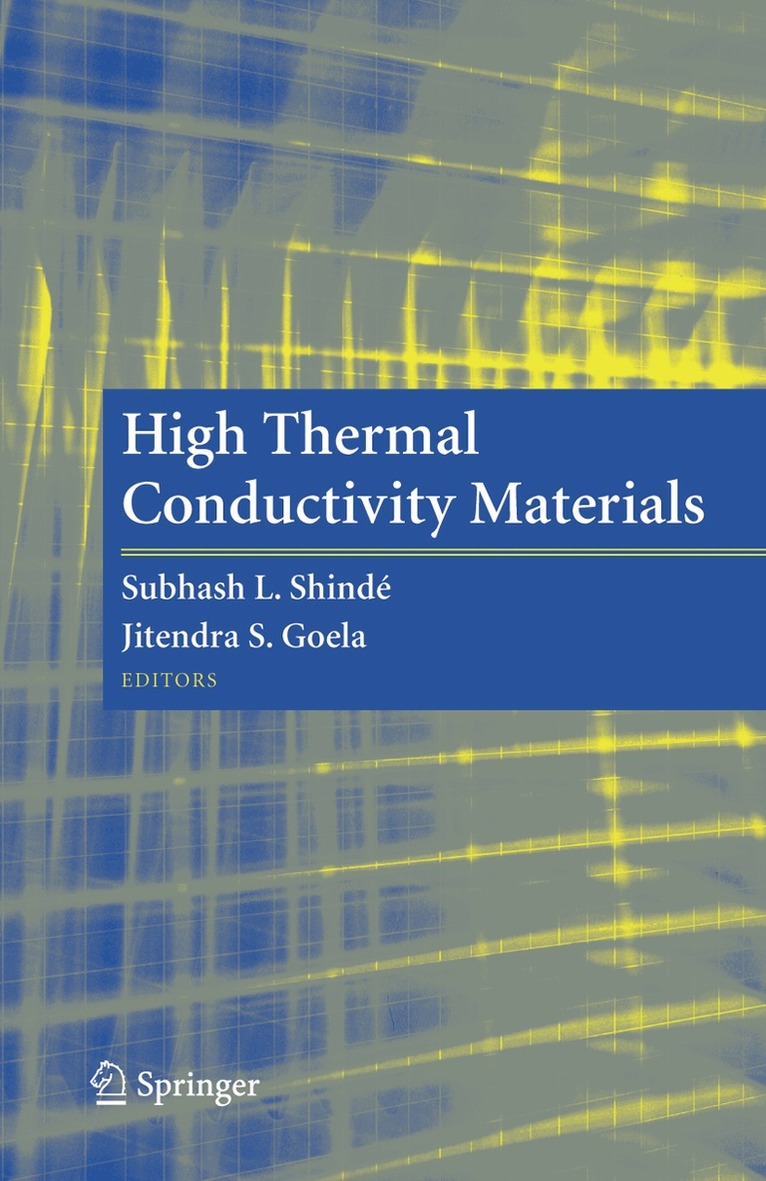
Thedemandfore?cientthermalmanagementhasincreasedsubstantiallyover the last decade in every imaginable area, be it a formula 1 racing car suddenly braking to decelerate from 200 to 50 mph going around a sharp corner, a space shuttle entering the earth’s atmosphere, or an advanced microproc- sor operating at a very high speed. The temperatures at the hot junctions are extremely high and the thermal ?ux can reach values higher than a few 2 hundred to a thousand watts/cm in these applications. To take a speci?c example of the microelectronics area, the chip heat ?ux for CMOS microp- cessors, though moderate compared to the numbers mentioned above have 2 already reached values close to 100 W/cm , and are projected to increase 2 above 200 W/cm over the next few years. Although the thermal mana- ment strategies for microprocessors do involve power optimization through improved design, it is extremely di?cult to eliminate “hot spots” completely. This is where high thermal conductivity materials ?nd most of their appli- tions, as “heat spreaders”. The high thermal conductivity of these materials allows the heat to be carried away from the “hot spots” very quickly in all directions thereby “spreading” the heat. Heat spreading reduces the heat ?ux density, and thus makes it possible to cool systems using standard cooling solutions like ?nned heat sinks with forced air cooling.
535 kr
Skickas inom 10-15 vardagar
Because the new high-temperature superconductors cannot be grown as large single crystals, interfaces and junctions play an important role in their properties.
Del 128 - Topics in Applied Physics
Length-Scale Dependent Phonon Interactions
Inbunden, Engelska, 2013
1 064 kr
Skickas inom 10-15 vardagar
This book presents a comprehensive description of phonons and their interactions in systems with different dimensions and length scales. Internationally-recognized leaders describe theories and measurements of phonon interactions in relation to the design of materials with exotic properties such as metamaterials, nano-mechanical systems, next-generation electronic, photonic, and acoustic devices, energy harvesting, optical information storage, and applications of phonon lasers in a variety of fields.The emergence of techniques for control of semiconductor properties and geometry has enabled engineers to design structures in which functionality is derived from controlling electron behavior. As manufacturing techniques have greatly expanded the list of available materials and the range of attainable length scales, similar opportunities now exist for designing devices whose functionality is derived from controlling phonon behavior. However, progress in this area is hampered by gaps in our knowledge of phonon transport across and along arbitrary interfaces, the scattering of phonons with crystal defects, interface roughness and mass-mixing, delocalized electrons/collective electronic excitations, and solid acoustic vibrations when these occur in structures with small physical dimensions. This book provides a comprehensive description of phonons and their interactions in systems with different dimensions and length scales. Theories and measurements of phonon interactions are described in relation to the design of materials with exotic properties such as metamaterials, nano-mechanical systems, next-generation electronic, photonic, and acoustic devices, energy harvesting, optical information storage, and applications of phonon lasers in a variety of fields.
1 064 kr
Skickas inom 10-15 vardagar
This book presents a comprehensive description of phonons and their interactions in systems with different dimensions and length scales. Internationally-recognized leaders describe theories and measurements of phonon interactions in relation to the design of materials with exotic properties such as metamaterials, nano-mechanical systems, next-generation electronic, photonic, and acoustic devices, energy harvesting, optical information storage, and applications of phonon lasers in a variety of fields.The emergence of techniques for control of semiconductor properties and geometry has enabled engineers to design structures in which functionality is derived from controlling electron behavior. As manufacturing techniques have greatly expanded the list of available materials and the range of attainable length scales, similar opportunities now exist for designing devices whose functionality is derived from controlling phonon behavior. However, progress in this area is hampered by gaps in our knowledge of phonon transport across and along arbitrary interfaces, the scattering of phonons with crystal defects, interface roughness and mass-mixing, delocalized electrons/collective electronic excitations, and solid acoustic vibrations when these occur in structures with small physical dimensions. This book provides a comprehensive description of phonons and their interactions in systems with different dimensions and length scales. Theories and measurements of phonon interactions are described in relation to the design of materials with exotic properties such as metamaterials, nano-mechanical systems, next-generation electronic, photonic, and acoustic devices, energy harvesting, optical information storage, and applications of phonon lasers in a variety of fields.