Sun Kim – författare
Visar alla böcker från författaren Sun Kim. Handla med fri frakt och snabb leverans.
4 produkter
4 produkter
E-bok
Engelska55 kr
Läs direkt efter köp
E-bok
PDF, Engelska, 20201 548 kr
Läs direkt efter köp
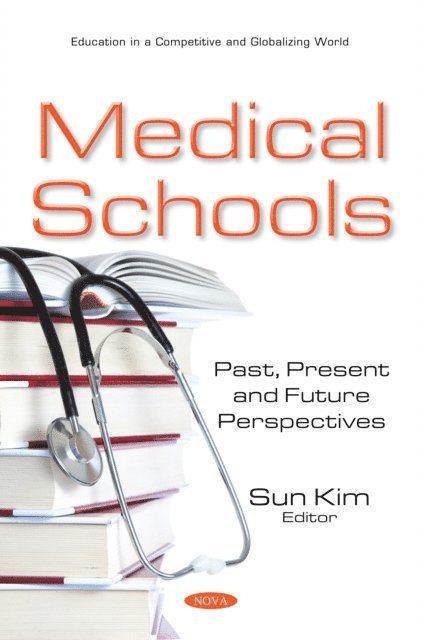
Medical Schools: Past, Present and Future Perspectives opens with a focus on the study of anatomy, the foundation of any medical education. Advances in technology involving radiological imaging, touch-based computer programs, and virtual anatomy laboratories have been adopted to provide students with large amounts of less costly, more widely accessible and more rapidly retrievable anatomical data. Following this, the authors discuss medical education in India from its beginnings in informal schools to today, where institutes of medical sciences are being set up in different parts of the country without the necessary preparatory work. A comprehensive framework for institutions aiming to improve academic support for struggling students is provided. Medical school is known to be academically demanding and resource intensive, and some students are at higher risk for struggling based on their background, as well as educational or demographic factors. The closing study explores cinemeducation, an approach that uses film and TV as complementary tools to illustrate concepts and stimulate discussion about humanistic perspectives of medicine. Many health sciences students watch TV medical dramas and films about medical issues, and they remember the portrayal of medical professionals and their relationships with patients and one another, as well as the ethical dilemmas these characters face in their work.
Häftad, Engelska, 2006
566 kr
Skickas inom 10-15 vardagar
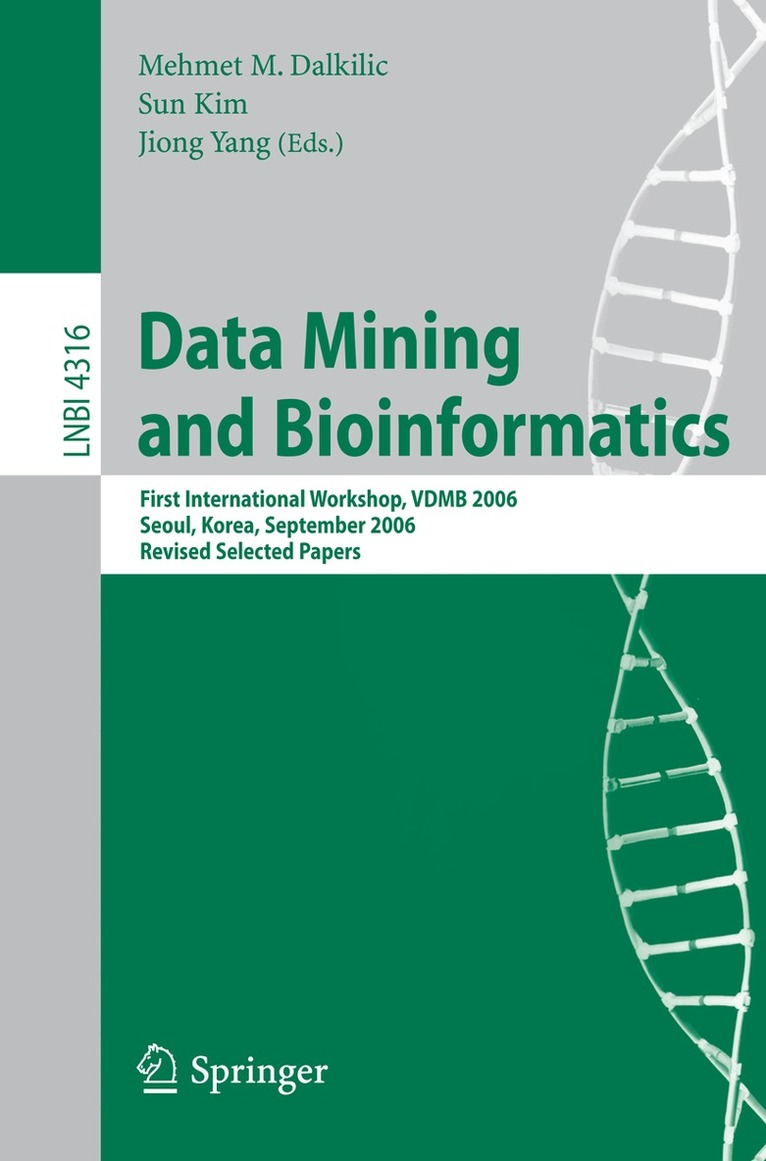
This volume contains the papers presented at the inaugural workshop on Data Mining and Bioinformatics at the 32nd International Conference on Very Large Data Bases (VLDB). The purpose of this workshop was to begin bringing - gether researchersfrom database, data mining, and bioinformatics areas to help leverage respective successes in each to the others. We also hope to expose the richness, complexity, and challenges in this area that involves mining very large complex biological data that will only grow in size and complexity as geno- scale high-throughput techniques become more routine. The problems are s- ?ciently di?erent enough from traditional data mining problems (outside of life sciences) that novel approaches must be taken to data mine in this area. The workshop was held in Seoul, Korea, on September 11, 2006. We received 30 submissions in response to the call for papers. Each subm- sion was assigned to at least three members of the Program Committee. The Program Committee discussed the submission electronically, judging them on their importance, originality, clarity, relevance, and appropriateness to the - pected audience. The Program Committee selected 15 papers for presentation. These papers arein the areasof microarraydata analysis, bioinformaticssystem and text retrieval, application of gene expression data, and sequence analysis. Because of the format of the workshop and the high number of submissions, many good papers could not be included.
E-bok
PDF, Engelska, 2006687 kr
Läs direkt efter köp
This volume contains the papers presented at the inaugural workshop on Data Mining and Bioinformatics at the 32nd International Conference on Very Large Data Bases (VLDB). The purpose of this workshop was to begin bringing - gether researchersfrom database, data mining, and bioinformatics areas to help leverage respective successes in each to the others. We also hope to expose the richness, complexity, and challenges in this area that involves mining very large complex biological data that will only grow in size and complexity as geno- scale high-throughput techniques become more routine. The problems are s- ?ciently di?erent enough from traditional data mining problems (outside of life sciences) that novel approaches must be taken to data mine in this area. The workshop was held in Seoul, Korea, on September 11, 2006. We received 30 submissions in response to the call for papers. Each subm- sion was assigned to at least three members of the Program Committee. The Program Committee discussed the submission electronically, judging them on their importance, originality, clarity, relevance, and appropriateness to the - pected audience. The Program Committee selected 15 papers for presentation. These papers arein the areasof microarraydata analysis, bioinformaticssystem and text retrieval, application of gene expression data, and sequence analysis. Because of the format of the workshop and the high number of submissions, many good papers could not be included.