Sung Chull Kim - Böcker
Visar alla böcker från författaren Sung Chull Kim. Handla med fri frakt och snabb leverans.
13 produkter
13 produkter
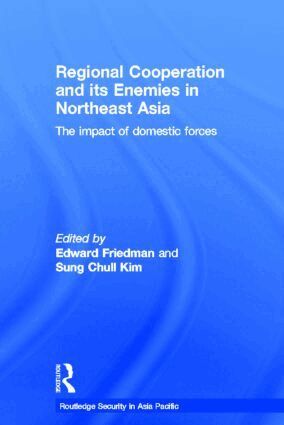
Regional Co-operation and Its Enemies in Northeast Asia
The Impact of Domestic Forces
Inbunden, Engelska, 2006
1 363 kr
Skickas inom 10-15 vardagar
Examining the prospects for building a regional community in Northeast Asia, this book considers the foreign policies of the individual states as well as the impact of domestic politics on the regionalist agenda. It outlines the emerging Northeast Asian community and the domestic requisites for its evolution and realization, and puts it in context by comparing the emerging community with Southeast Asia. The book investigates the attitudes of the key powers, including China, Japan, South Korea, North Korea, Russia and the US, towards the ideal of greater regional cooperation, with particular emphasis on the implications of domestic factors in each country for regional dynamics. It explores the North Korean nuclear crisis, the continuing tensions over the Taiwan Straits, the impact of Sino-Japanese rivalry, the shift in stance of South Korea towards North Korea since 2001 and its implications for its relationship with the US, and Putin’s attempts to strengthen Russian influence in the region. It concludes by identifying the foremost dangers that risk obstructing greater regional cooperation, particularly the China-Japan rivalry, nationalist sentiments, territorial disputes and energy competition.
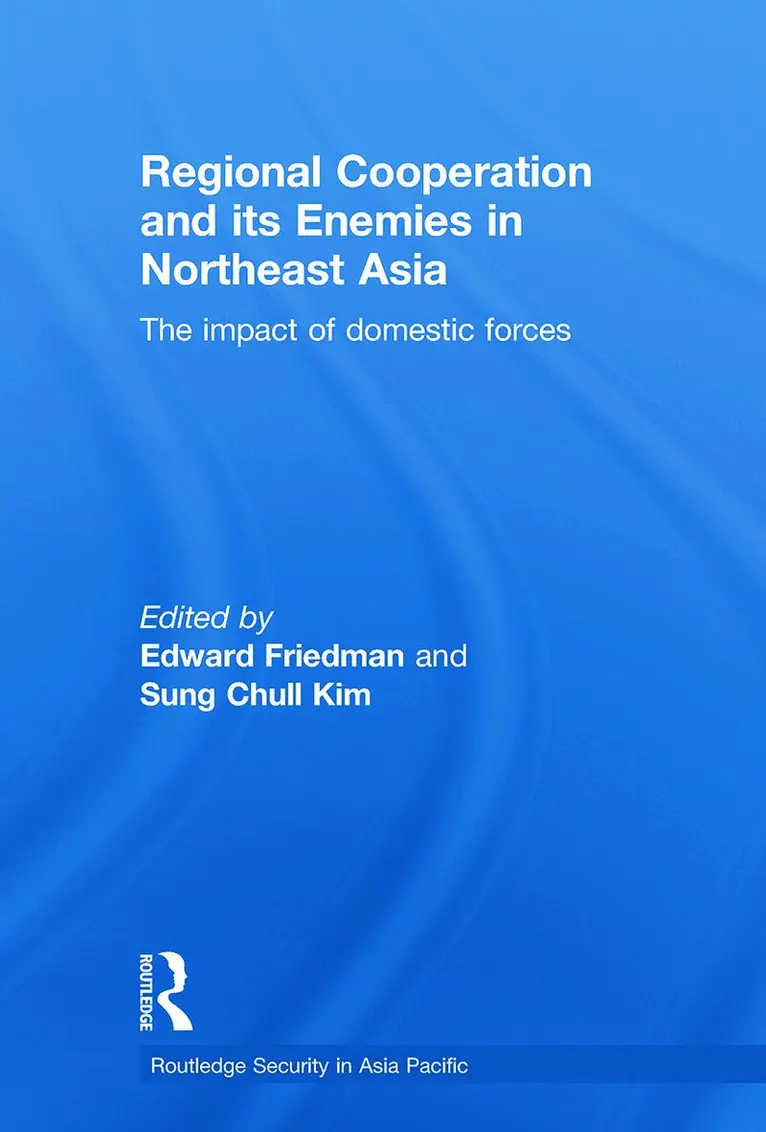
Regional Co-operation and Its Enemies in Northeast Asia
The Impact of Domestic Forces
Häftad, Engelska, 2012
427 kr
Skickas inom 10-15 vardagar
Examining the prospects for building a regional community in Northeast Asia, this book considers the foreign policies of the individual states as well as the impact of domestic politics on the regionalist agenda. It outlines the emerging Northeast Asian community and the domestic requisites for its evolution and realization, and puts it in context by comparing the emerging community with Southeast Asia. The book investigates the attitudes of the key powers, including China, Japan, South Korea, North Korea, Russia and the US, towards the ideal of greater regional cooperation, with particular emphasis on the implications of domestic factors in each country for regional dynamics. It explores the North Korean nuclear crisis, the continuing tensions over the Taiwan Straits, the impact of Sino-Japanese rivalry, the shift in stance of South Korea towards North Korea since 2001 and its implications for its relationship with the US, and Putin’s attempts to strengthen Russian influence in the region. It concludes by identifying the foremost dangers that risk obstructing greater regional cooperation, particularly the China-Japan rivalry, nationalist sentiments, territorial disputes and energy competition.
1 057 kr
Tillfälligt slut
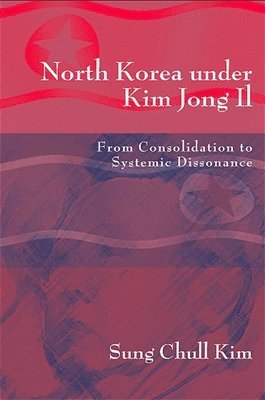
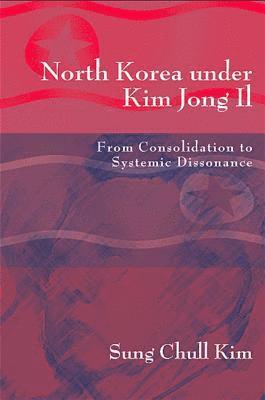
Examines internal changes in North Korea under the expanding rule of Kim Jong Il.North Korea has long been a country of mystique, both provoking two nuclear crises and receiving aid from the international community and South Korea in more recent times. North Korea under Kim Jong Il examines how internal changes in North Korea since the early 1970s have structured that nation's apparently provocative nuclear diplomacy and recent economic reform measures. To understand these changes, author Sung Chull Kim uncovers relatively unknown internal aspects of the country under Kim Jong Il's leadership. His account, based on a thorough examination of primary sources, traces the origins, consolidation, and dissonance of North Korea's systemic identity. He reveals how official and unofficial developments in the domains of North Korea's politics, ideology, economics, and intellectual-cultural affairs have brought about system-wide duality, particularly between socialist principles embedded in the official ideology and economic institutions.
364 kr
Skickas inom 7-10 vardagar
Examines internal changes in North Korea under the expanding rule of Kim Jong Il.North Korea has long been a country of mystique, both provoking two nuclear crises and receiving aid from the international community and South Korea in more recent times. North Korea under Kim Jong Il examines how internal changes in North Korea since the early 1970s have structured that nation's apparently provocative nuclear diplomacy and recent economic reform measures. To understand these changes, author Sung Chull Kim uncovers relatively unknown internal aspects of the country under Kim Jong Il's leadership. His account, based on a thorough examination of primary sources, traces the origins, consolidation, and dissonance of North Korea's systemic identity. He reveals how official and unofficial developments in the domains of North Korea's politics, ideology, economics, and intellectual-cultural affairs have brought about system-wide duality, particularly between socialist principles embedded in the official ideology and economic institutions.
512 kr
Skickas inom 3-6 vardagar
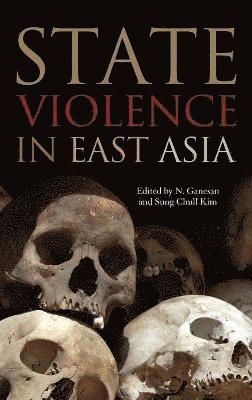
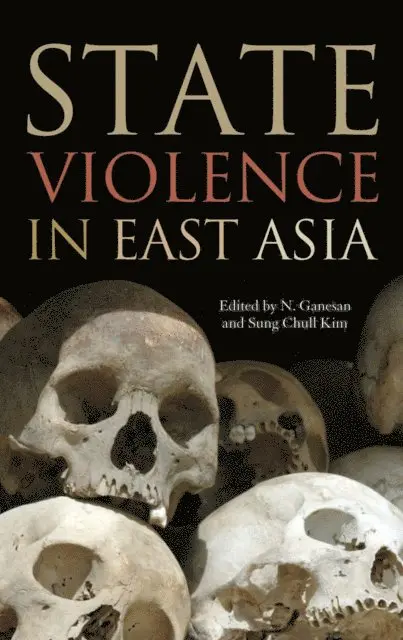
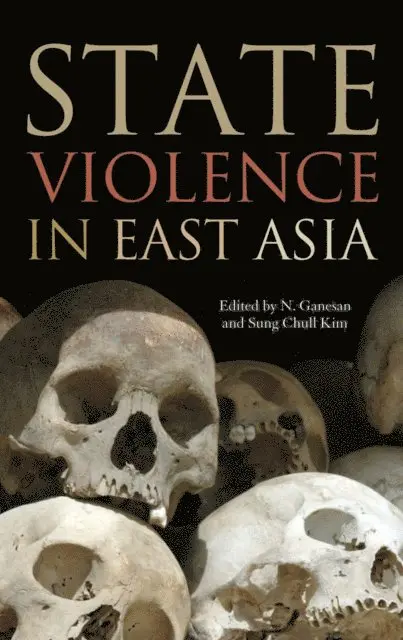
The world was watching when footage of the "tank man" -- the lone Chinese citizen blocking the passage of a column of tanks during the brutal 1989 crackdown on protesters in Beijing's Tiananmen Square -- first appeared in the media. The furtive video is now regarded as an iconic depiction of a government's violence against its own people.Throughout the twentieth century, states across East Asia committed many relatively undocumented atrocities, with victims numbering in the millions. The contributors to this insightful volume analyze many of the most notorious cases, including the Japanese army's Okinawan killings in 1945, Indonesia's anticommunist purge in 1965--1968, Thailand's Red Drum incinerations in 1972--1975, Cambodia's Khmer Rouge massacre in 1975--1978, Korea's Kwangju crackdown in 1980, the Philippines' Mendiola incident in 1987, Myanmar's suppression of the democratic movement in 1988, and China's Tiananmen incident. With in-depth investigation of events that have long been misunderstood or kept hidden from public scrutiny, State Violence in East Asia provides critical insights into the political and cultural dynamics of state-sanctioned violence and discusses ways to prevent it in the future.
1 057 kr
Tillfälligt slut
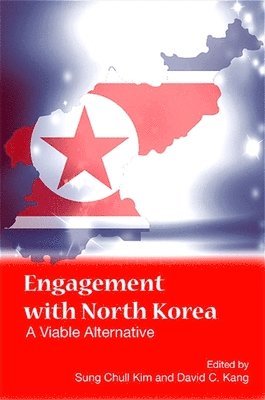
Examines how and why nations have persuaded North Korea to cooperate on topics such as nuclear policy.How the world deals with North Korea and its nuclear capability will have ramifications for both regional and global stability. Engagement with North Korea examines the still controversial policy strategy known as engagement, which aims to persuade rather than force North Korea to be cooperative. While examining the converging and diverging policies of engagement practiced by the United States, China, Russia, Japan, and South Korea, the contributors to this volume uncover how and to what extent engagement has made some form of progress, and under what conditions it is likely to achieve complete success. In addition to the critical topic of denuclearization, the volume also demonstrates that engagement involves the use of negotiations and incentives in both the economic and the security realms. This volume is essential reading for both students and policy makers concerned about denuclearization in the multilateral context.
382 kr
Tillfälligt slut
Examines how and why nations have persuaded North Korea to cooperate on topics such as nuclear policy.How the world deals with North Korea and its nuclear capability will have ramifications for both regional and global stability. Engagement with North Korea examines the still controversial policy strategy known as engagement, which aims to persuade rather than force North Korea to be cooperative. While examining the converging and diverging policies of engagement practiced by the United States, China, Russia, Japan, and South Korea, the contributors to this volume uncover how and to what extent engagement has made some form of progress, and under what conditions it is likely to achieve complete success. In addition to the critical topic of denuclearization, the volume also demonstrates that engagement involves the use of negotiations and incentives in both the economic and the security realms. This volume is essential reading for both students and policy makers concerned about denuclearization in the multilateral context.
1 088 kr
Tillfälligt slut
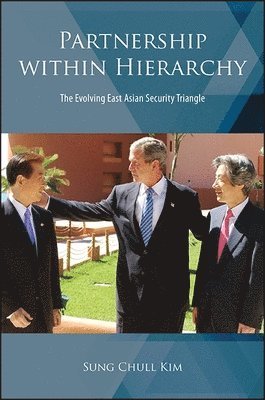
Examines intra-alliance politics between the United States, Japan, and South Korea.In an age of increasingly complex security situations around the world, it is essential that students and practitioners understand alliances and minilateral security mechanisms. Partnership within Hierarchy examines, in depth, the troubled evolution of the US–Japan–South Korea security triangle from the Cold War period to the present time. Referencing a voluminous amount of declassified documents in three different languages, Sung Chull Kim, through six case studies, delves into the common questions arising in different historical periods, such as who should pay costs, what to commit, and why. Burden sharing and commitment, Kim shows, emerged as the main subject of competing expectations and disagreements arising between the capable middle power Japan and the weak power South Korea. Kim details how the dominant power, the United States, has controlled the red lines and intervened in the disputes, the result of which is in most instances a balancing effect for the triangle. In this vein, he persuasively accounts for why historical disputes between Japan and South Korea, which submerged during the Cold War, reverberate today when asymmetry between the two is substantially balanced.
363 kr
Skickas
Examines intra-alliance politics between the United States, Japan, and South Korea.In an age of increasingly complex security situations around the world, it is essential that students and practitioners understand alliances and minilateral security mechanisms. Partnership within Hierarchy examines, in depth, the troubled evolution of the US–Japan–South Korea security triangle from the Cold War period to the present time. Referencing a voluminous amount of declassified documents in three different languages, Sung Chull Kim, through six case studies, delves into the common questions arising in different historical periods, such as who should pay costs, what to commit, and why. Burden sharing and commitment, Kim shows, emerged as the main subject of competing expectations and disagreements arising between the capable middle power Japan and the weak power South Korea. Kim details how the dominant power, the United States, has controlled the red lines and intervened in the disputes, the result of which is in most instances a balancing effect for the triangle. In this vein, he persuasively accounts for why historical disputes between Japan and South Korea, which submerged during the Cold War, reverberate today when asymmetry between the two is substantially balanced.
China and Its Small Neighbors
The Political Economy of Asymmetry, Vulnerability, and Hedging
Inbunden, Engelska, 2023
1 499 kr
Skickas inom 3-6 vardagar
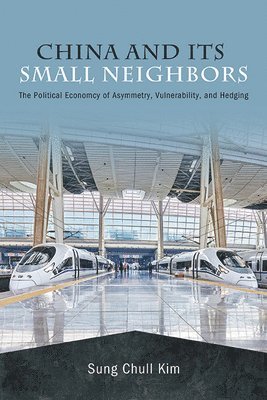
Analyzes the nature, processes, and political consequences of the asymmetrical relationships between China and its six small neighbors in Asia.In China and Its Small Neighbors, Sung Chull Kim examines the political implications of the economic asymmetry between China and its small neighbors, part of wider changes in international relations brought about by the rise of China. While being critical of the current trend that focuses on the China-U.S. rivalry alone, Kim argues that a microanalysis of China's advances toward its neighbors is a guide to understanding the trajectory of China's expanding influence and transitions in world politics more broadly. Economic asymmetry-as seen in trade concentration, non-transparency, and reliance on bilateral aid-has made China's small neighbors vulnerable on the political front, thus generating potential threats to their sovereignty and independence. Because China has the upper hand in the bilateral relationships, these weak states practice dual-core hedging as a strategy for survival. They hedge on China for expected economic benefits and at the same time hedge against their powerful neighbor to mitigate the risks involved in that hedging-on. Each small state's mode of hedging depends on its degree of vulnerability and its availability of policy instruments such as multilateral institutions and bilateral partnerships with extra-regional powers.
China and Its Small Neighbors
The Political Economy of Asymmetry, Vulnerability, and Hedging
Häftad, Engelska, 2023
611 kr
Skickas inom 3-6 vardagar
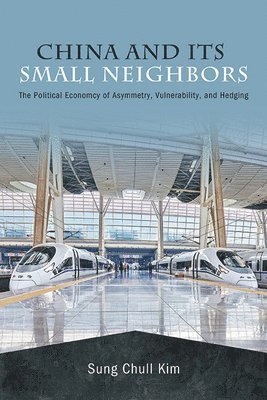
Analyzes the nature, processes, and political consequences of the asymmetrical relationships between China and its six small neighbors in Asia.In China and Its Small Neighbors, Sung Chull Kim examines the political implications of the economic asymmetry between China and its small neighbors, part of wider changes in international relations brought about by the rise of China. While being critical of the current trend that focuses on the China-U.S. rivalry alone, Kim argues that a microanalysis of China's advances toward its neighbors is a guide to understanding the trajectory of China's expanding influence and transitions in world politics more broadly. Economic asymmetry-as seen in trade concentration, non-transparency, and reliance on bilateral aid-has made China's small neighbors vulnerable on the political front, thus generating potential threats to their sovereignty and independence. Because China has the upper hand in the bilateral relationships, these weak states practice dual-core hedging as a strategy for survival. They hedge on China for expected economic benefits and at the same time hedge against their powerful neighbor to mitigate the risks involved in that hedging-on. Each small state's mode of hedging depends on its degree of vulnerability and its availability of policy instruments such as multilateral institutions and bilateral partnerships with extra-regional powers.
1 064 kr
Skickas inom 7-10 vardagar
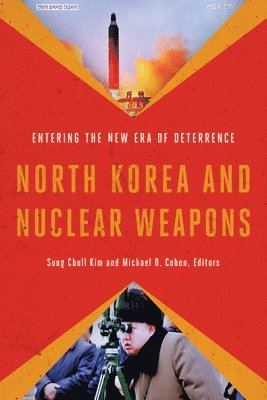
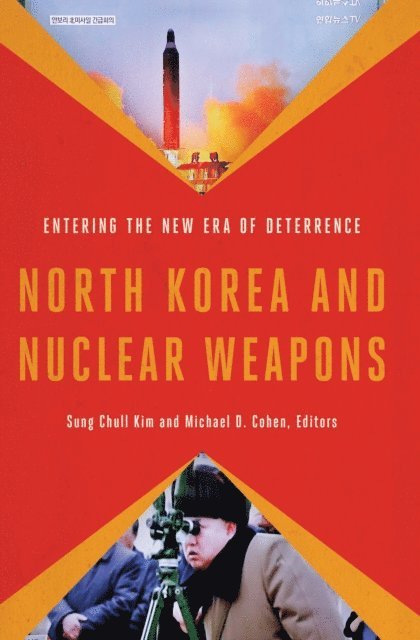
North Korea is perilously close to developing strategic nuclear weapons capable of hitting the United States and its East Asian allies. Since their first nuclear test in 2006, North Korea has struggled to perfect the required delivery systems. Kim Jong-un's regime now appears to be close, however. Sung Chull Kim, Michael D. Cohen, and the volume contributors contend that the time to prevent North Korea from achieving this capability is virtually over; scholars and policymakers must turn their attention to how to deter a nuclear North Korea. The United States, South Korea, and Japan must also come to terms with the fact that North Korea will be able to deter them with its nuclear arsenal. How will the erratic Kim Jong-un behave when North Korea develops the capability to hit medium- and long-range targets with nuclear weapons? How will and should the United States, South Korea, Japan, and China respond, and what will this mean for regional stability in the short term and long term? The international group of authors in this volume address these questions and offer a timely analysis of the consequences of an operational North Korean nuclear capability for international security.
360 kr
Skickas inom 7-10 vardagar
North Korea is perilously close to developing strategic nuclear weapons capable of hitting the United States and its East Asian allies. Since their first nuclear test in 2006, North Korea has struggled to perfect the required delivery systems. Kim Jong-un's regime now appears to be close, however. Sung Chull Kim, Michael D. Cohen, and the volume contributors contend that the time to prevent North Korea from achieving this capability is virtually over; scholars and policymakers must turn their attention to how to deter a nuclear North Korea. The United States, South Korea, and Japan must also come to terms with the fact that North Korea will be able to deter them with its nuclear arsenal. How will the erratic Kim Jong-un behave when North Korea develops the capability to hit medium- and long-range targets with nuclear weapons? How will and should the United States, South Korea, Japan, and China respond, and what will this mean for regional stability in the short term and long term? The international group of authors in this volume address these questions and offer a timely analysis of the consequences of an operational North Korean nuclear capability for international security.