Suparna Chaudhry – författare
Visar alla böcker från författaren . Handla med fri frakt och snabb leverans.
3 produkter
3 produkter
Inbunden, Engelska, 2022
655 kr
Skickas inom 5-8 vardagar
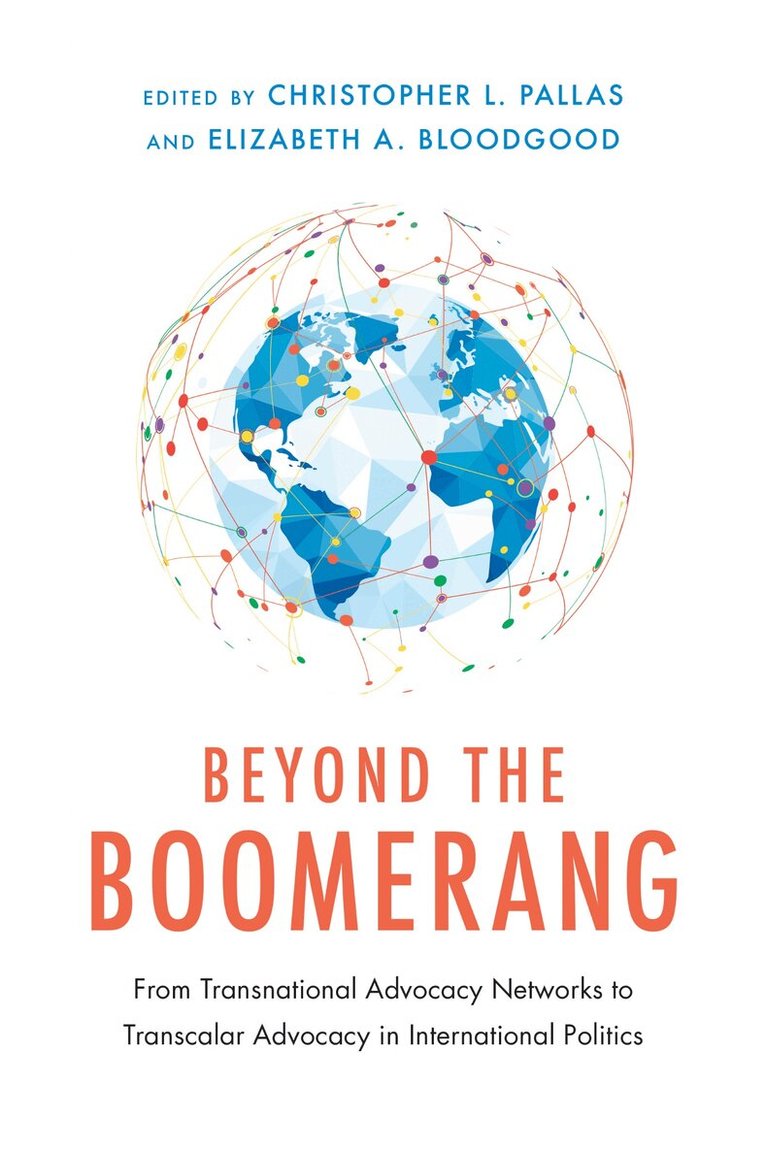
Essays that generate a new, empirically grounded theory of transnational advocacy Margaret E. Keck and Kathryn Sikkink introduced the boomerang theory in their 1998 book, Activists beyond Borders: Advocacy Networks in International Politics. It remains one of the first broadly applicable theories for why groups of NGOs and interested individuals form transnational advocacy networks. Since its publication, however, the empirical conditions that prompted their theory have changed. The types of actors involved in transnational advocacy have diversified. Northern NGOs have lost power and influence and have been restricted in their access to southern states. Southern NGOs have developed the capacity to undertake advocacy on their own and often built closer relationships with their own governments. The architecture of global governance has likewise changed, providing new avenues of access and influence for southern voices. In Beyond the Boomerang: From Transnational Advocacy Networks to Transcalar Advocacy in International Politics, editors Christopher L. Pallas and Elizabeth A. Bloodgood offer cutting-edge scholarship that synthesizes a new theoretical framework to develop a coherent, integrated picture of the current dynamics in global advocacy. This new theory of transcalar advocacy focuses on advocacy activities and policy impacts that transcend different levels or scales of political action. In transcalar advocacy, all NGOs–northern and southern–are treated as strategic actors, choosing the targets, scales of advocacy, and partnerships that best suit their capacities and goals. The case studies in the volume develop the empirical grounding of this theory using data from Latin America, Africa, Europe, and Asia, with several chapters featuring cross-national comparison. The chapters highlight the wide variety of actors involved in advocacy work, including NGOs, social movements, international institutions, governments, and businesses. Contributors use both qualitative and quantitative methodologies and bring to bear insights from political science, international relations, and sociology. The case studies also include diverse issue areas, from women’s rights to environmental protection, sustainable agriculture, health policy, and democracy promotion.
Inbunden, Engelska, 2026
2 211 kr
Skickas inom 3-6 vardagar
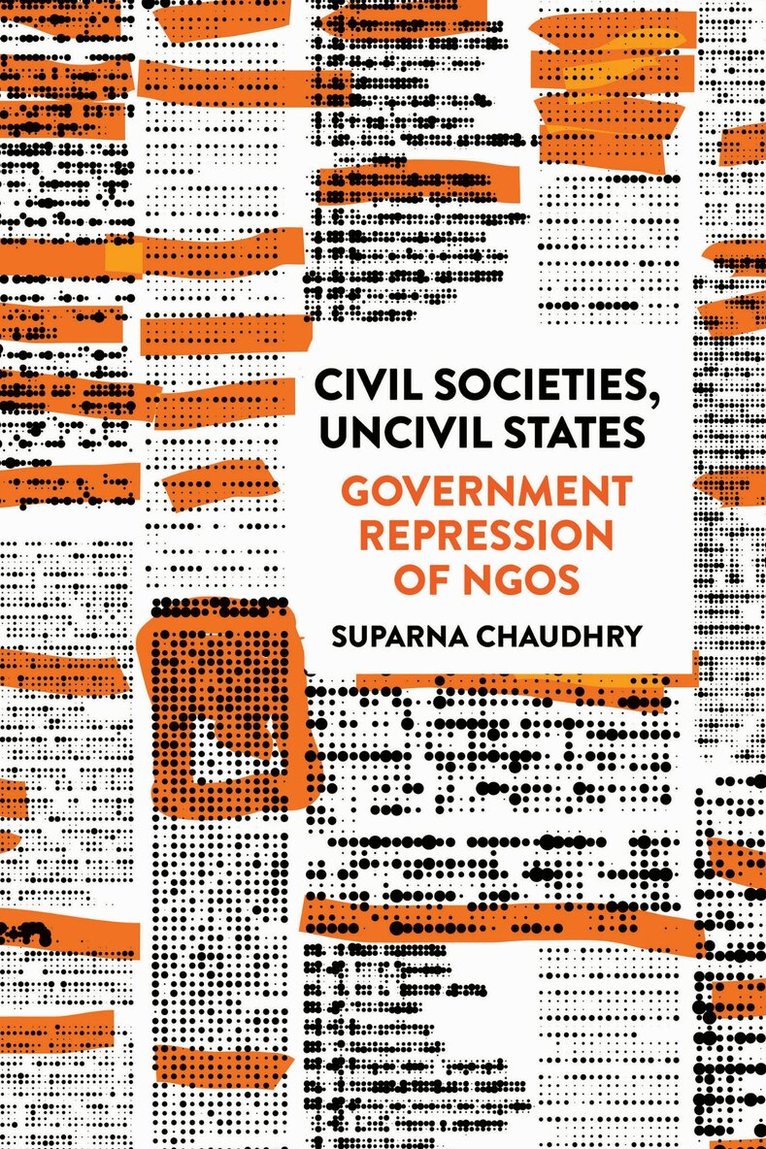
Civil Societies, Uncivil States examines why governments around the world have turned against the nongovernmental organizations they once welcomed—and how they choose their methods of repression.In the decades following the Cold War, NGOs became central players in global governance, buoyed by a liberal international order that rewarded states for supporting civil society. That openness proved short-lived. From Russia's foreign agent laws to India's crackdowns on foreign funding, governments increasingly viewed NGOs as threats. Suparna Chaudhry argues that whether governments choose violent crackdowns against NGOs or subtler administrative restrictions depends on two factors: whether an NGO poses long-term risks to state authority, and how visible it is internationally. A state's relationship with the liberal international order shapes which strategy it pursues.Chaudhry's findings show that administrative crackdowns allow states to maintain democratic facades while systematically dismantling infrastructures of accountability. She reveals that, paradoxically, the very successes of transnational advocacy networks in pressuring governments to reform incentivized more sophisticated tools of repression. Unflinching in its analyses, Civil Societies, Uncivil States asks us to understand how states are silencing dissent before it is too late.
Häftad, Engelska, 2026
550 kr
Skickas inom 3-6 vardagar
Civil Societies, Uncivil States examines why governments around the world have turned against the nongovernmental organizations they once welcomed—and how they choose their methods of repression.In the decades following the Cold War, NGOs became central players in global governance, buoyed by a liberal international order that rewarded states for supporting civil society. That openness proved short-lived. From Russia's foreign agent laws to India's crackdowns on foreign funding, governments increasingly viewed NGOs as threats. Suparna Chaudhry argues that whether governments choose violent crackdowns against NGOs or subtler administrative restrictions depends on two factors: whether an NGO poses long-term risks to state authority, and how visible it is internationally. A state's relationship with the liberal international order shapes which strategy it pursues.Chaudhry's findings show that administrative crackdowns allow states to maintain democratic facades while systematically dismantling infrastructures of accountability. She reveals that, paradoxically, the very successes of transnational advocacy networks in pressuring governments to reform incentivized more sophisticated tools of repression. Unflinching in its analyses, Civil Societies, Uncivil States asks us to understand how states are silencing dissent before it is too late.