Supriya Routh - Böcker
Visar alla böcker från författaren Supriya Routh. Handla med fri frakt och snabb leverans.
6 produkter
6 produkter
665 kr
Skickas inom 10-15 vardagar
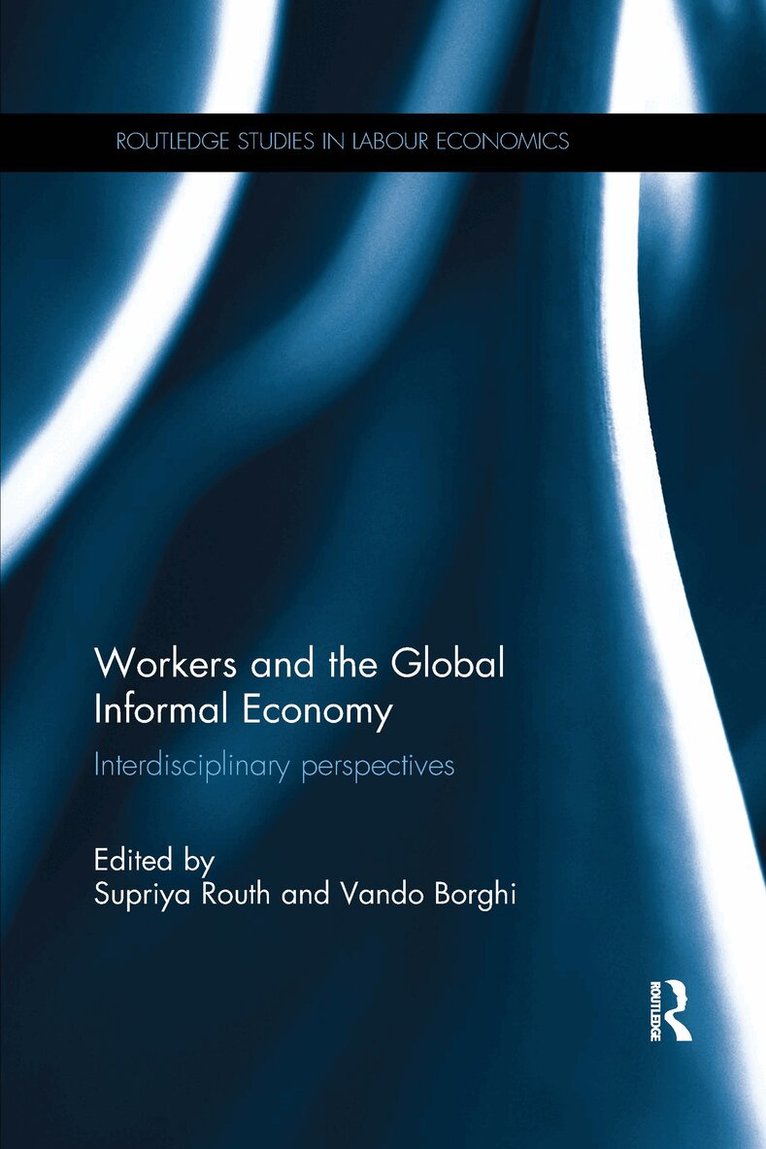
The global financial crisis and subsequent increase in social inequality has led in many cases to a redrawing of the boundaries between formal and informal work. This interdisciplinary volume explores the role of informal work in today’s global economy, presenting economic, legal, sociological, historical, anthropological, political and cultural perspectives on the topic.Workers and the Global Informal Economy explores varying definitions of informality in the backdrop of neo-liberal market logic, exploring how it manifests itself in different regions around the world, and its relationship with formal work. This volume demonstrates how neo-liberalism has been instrumental in accelerating informality and has resulted in the increasingly precarious position of the informal worker. Using different methodological approaches and regional focuses, this book considers key questions such as whether workers exercise choice over their work; how constrained such choices are; how social norms shape such choices; how work affects their well-being and agency; and what role culture plays in the determination of informality. This interdisciplinary collection will be of interest to policy-makers and researchers engaging with informality from different disciplinary and regional perspectives.
531 kr
Skickas inom 10-15 vardagar
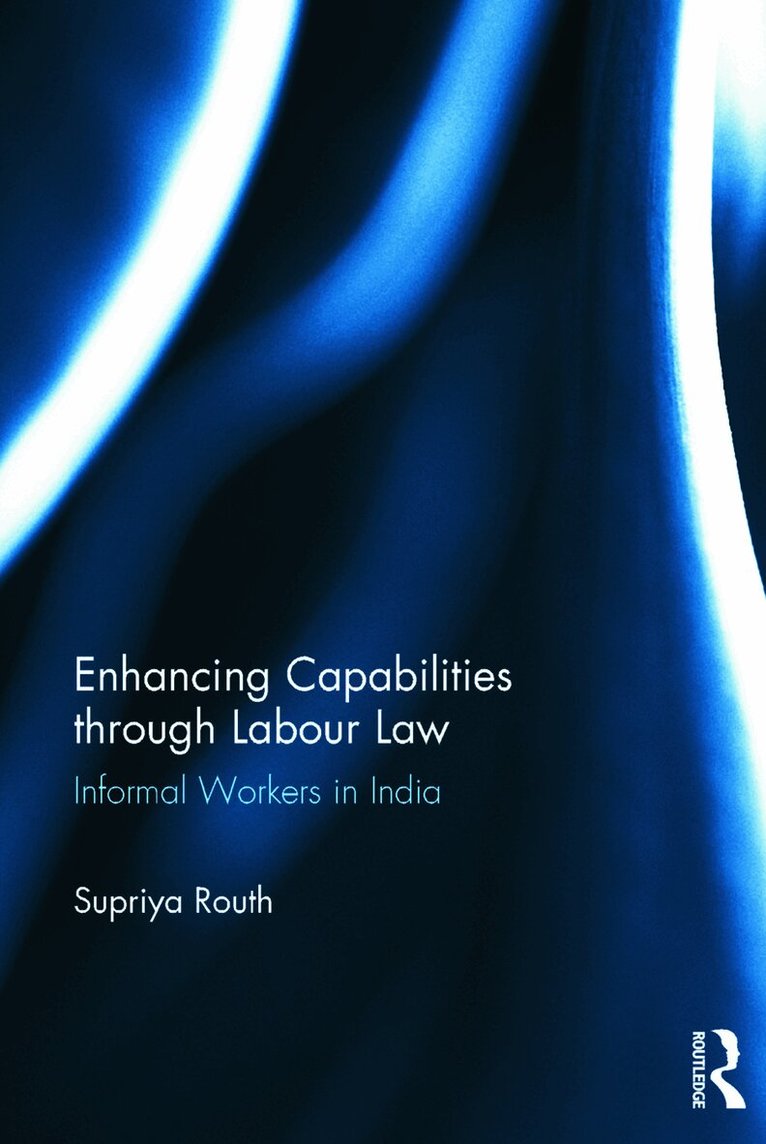
In 2002 the International Labour Organization issued a report titled ‘Decent work and the informal economy’ in which it stressed the need to ensure appropriate employment and income, rights at work, and effective social protection in informal economic activities. Such a call by the ILO is urgent in the context of countries such as India, where the majority of workers are engaged in informal economic activities, and where expansion of informal economic activities is coupled with deteriorating working conditions and living standards.This book explores the informal economic activity of India as a case study to examine typical requirements in the work-lives of informal workers, and to develop a means to institutionalise the promotion of these requirements through labour law. Drawing upon Amartya Sen’s theoretical outlook, the book considers whether a capability approach to human development may be able to promote recognition and work-life conditions of a specific category of informal workers in India by integrating specific informal workers within a social dialogue framework along with a range of other social partners including state and non-state institutions. While examining the viability of a human development based labour law in an Indian context, the book also indicates how the proposals put forth in the book may be relevant for informal workers in other developing countries.This research monograph will be of great interest to scholars of labour law, informal work and workers, law and development, social justice, and labour studies.
1 097 kr
Skickas inom 7-10 vardagar
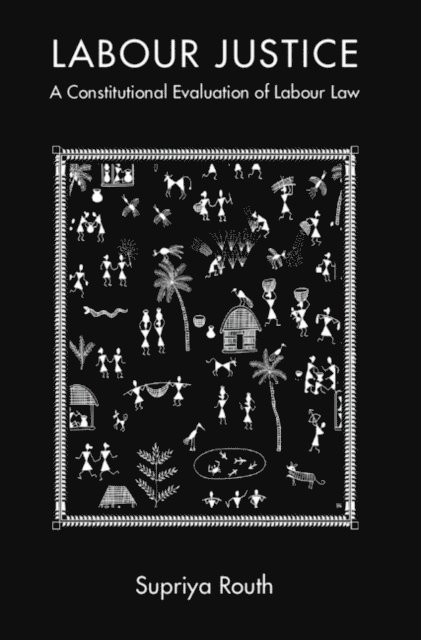
This book argues that the imagination of the worker-citizen, inherent in citizens' constitutional duty to work, is the very foundation of constitutional citizenship and its social justice agenda. The design of social justice in the constitution takes labour as its core ideological and political commitment, seeking to treat workers fairly for their social contribution through work. Employing this constitutional design, this book evaluates the recently repealed labour law against the constitutional metric of social justice. Drawing on the components of social justice, the book evaluates the new labour law in its capacity to promote market-based distribution, respecting basic individual liberties; the complementary redistribution of public goods, upholding the principle of solidarity; and worker participation in decisions about the operation of the market and the state. In offering such evaluation, the book conceives of work in its wider social relationship in contrast to its narrower private exchange rationale.
306 kr
Skickas inom 10-15 vardagar
In 2002 the International Labour Organization issued a report titled ‘Decent work and the informal economy’ in which it stressed the need to ensure appropriate employment and income, rights at work, and effective social protection in informal economic activities. Such a call by the ILO is urgent in the context of countries such as India, where the majority of workers are engaged in informal economic activities, and where expansion of informal economic activities is coupled with deteriorating working conditions and living standards.This book explores the informal economic activity of India as a case study to examine typical requirements in the work-lives of informal workers, and to develop a means to institutionalise the promotion of these requirements through labour law. Drawing upon Amartya Sen’s theoretical outlook, the book considers whether a capability approach to human development may be able to promote recognition and work-life conditions of a specific category of informal workers in India by integrating specific informal workers within a social dialogue framework along with a range of other social partners including state and non-state institutions. While examining the viability of a human development based labour law in an Indian context, the book also indicates how the proposals put forth in the book may be relevant for informal workers in other developing countries.This research monograph will be of great interest to scholars of labour law, informal work and workers, law and development, social justice, and labour studies.
2 316 kr
Skickas inom 10-15 vardagar
The global financial crisis and subsequent increase in social inequality has led in many cases to a redrawing of the boundaries between formal and informal work. This interdisciplinary volume explores the role of informal work in today’s global economy, presenting economic, legal, sociological, historical, anthropological, political and cultural perspectives on the topic.Workers and the Global Informal Economy explores varying definitions of informality in the backdrop of neo-liberal market logic, exploring how it manifests itself in different regions around the world, and its relationship with formal work. This volume demonstrates how neo-liberalism has been instrumental in accelerating informality and has resulted in the increasingly precarious position of the informal worker. Using different methodological approaches and regional focuses, this book considers key questions such as whether workers exercise choice over their work; how constrained such choices are; how social norms shape such choices; how work affects their well-being and agency; and what role culture plays in the determination of informality. This interdisciplinary collection will be of interest to policy-makers and researchers engaging with informality from different disciplinary and regional perspectives.
3 569 kr
Skickas inom 10-15 vardagar
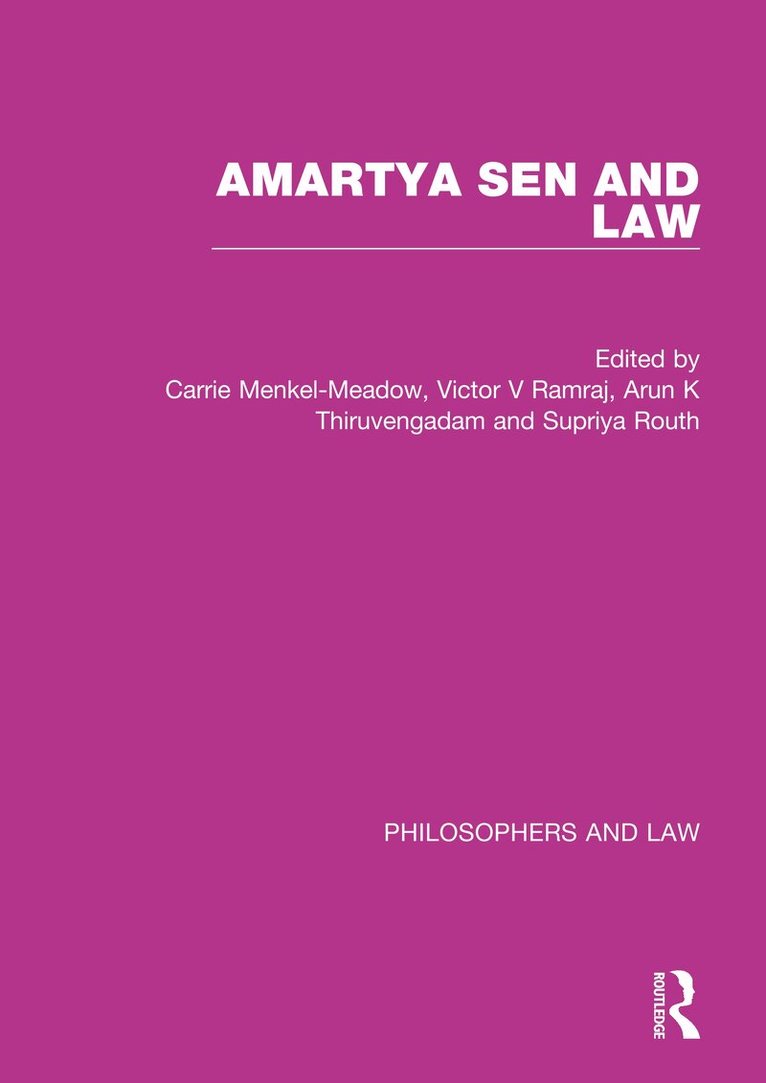
This volume introduces and collects some of the leading articles on noted economist and philosopher Amartya Sen’s contributions to law and jurisprudence. While Sen has not contributed explicitly to the discipline of law, his scholarship has inspired significant investigations of core jurisprudential subjects. With the publication of The Idea of Justice in 2009, Sen has contributed many notable ideas to important concepts of jurisprudence, challenging notions of universalism and institutionalism in jurisprudential concepts, and contributing his own ideas on justice and equality. He offers fresh insights on the content of democracy and enumerates what good decision making in different contexts might entail. He has written importantly on issues of identity and cosmopolitanism, demonstrating the complexity of modern ideas of diversity, fairness and most importantly, sensitivity to context in assessing policies and governmental strategies. This curated collection of essays seeks to explore what other scholars have made of Sen’s contributions to law and jurisprudence and the achievement of justice at both local and global levels. It includes an introductory essay that provides an overview of Sen’s corpus of work and sorts, defines and explains the issues that are explored more fully in the 14 essays that follow. Those essays engage with different aspect of Sen’s work, addressing his influence on political theory; jurisprudence; law with applications to constitutional theory and adjudication; deliberative democracy; political participation and decision making; human rights; labour law; law and development; gender justice; economic and political development and measurements; and assessment and theories of individual, collective and global justice.