Supriya Roy - Böcker
Visar alla böcker från författaren Supriya Roy. Handla med fri frakt och snabb leverans.
5 produkter
5 produkter
172 kr
Skickas inom 5-8 vardagar
203 kr
Skickas inom 5-8 vardagar
591 kr
Skickas inom 10-15 vardagar
Participatory GIS (PGIS) is important in social science research because it provides a powerful tool for exploring and comprehending various socio-spatial phenomena. It makes it easier to investigate intricate spatial relationships, community dynamics, and the effects of policies and interventions on local populations. Researchers can also use it to map and analyze the spatial distribution of social concerns, resources, and assets within a community. This Brief delves into the transformative potential of Participatory GIS (PGIS) in empowering communities and amplifying their voices through geospatial technologies. This book provides an in-depth discussion of PGIS, including approaches, data collection techniques, participatory mapping, critical discussions, the concept and thinking of geospatial citizenship, applications of participatory GIS in terms of socio-ecological concern, geographies and socio-spatial ecologies of a societal space, community cartography, challenges, and future directions. The book also offers real-world case studies that leverage PGIS technology to map the voices of ordinary people. Case studies include mapping natural resource management, modelling mangrove forest ecologies, indigenous technical knowledge of fish catching, social vulnerability to climate change in the coastal community, and identification of traditional coastal fishing sites. The book emphasizes the necessity of community involvement in decision-making processes, as well as the awareness of their perspectives in formulating policies and programs, through the lens of PGIS. It highlights how geospatial technologies can be a strong tool for community empowerment, allowing individuals to actively shape their surroundings and build a sense of ownership over their shared spaces.
1 891 kr
Skickas inom 7-10 vardagar
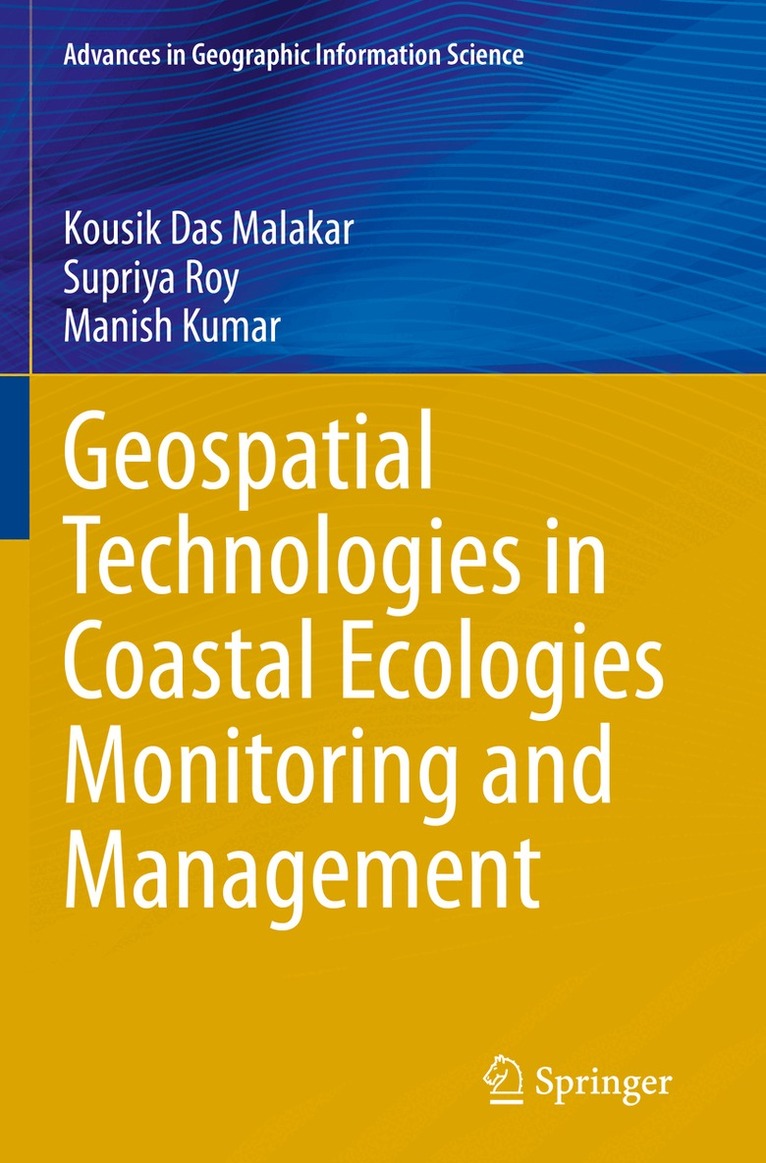
This book contributes to the advancement of scientific knowledge by demonstrating how geospatial technologies can support more effective coastal planning and management. These technologies, such as remote sensing, GIS, and GNSS, play a vital role in monitoring coastal ecosystems and offer powerful tools for data collection, analysis, visualization, and decision-making. They enhance the understanding of coastal needs and enable more informed and sustainable management strategies.Intended for scientists, professionals, researchers, planners, students, and the general public, the book promotes a deeper understanding of how geospatial tools address contemporary coastal challenges. It also emphasizes inclusive decision-making and supports the development of strategies for sustainable socio-ecological coastal systems.The book is structured into six parts. Part One introduces the fundamentals of remote sensing, including sensor networks, satellite systems, aerial imaging, photogrammetry, and air photo interpretation. Part Two covers key GIS concepts, data analysis, database management, digital image processing, and participatory GIS. Part Three explores GNSS and GPS techniques. Part Four discusses the application of geospatial tools in coastal ecological monitoring and management. Part Five presents real-world case studies and field narratives that explore a range of topics, including climatic trend analysis, shoreline dynamics modelling, mangrove canopy health, coastal land use and land cover changes, land surface temperature variations, ecological transformations, mangrove-human conflicts, climate adaptation strategies, the management of climate gaps, spatial considerations in coastal zone management, and the role of climate communication in shaping coastal narratives. And finally, Part Six examines the evolving nature of coastal research, highlighting the role of GIScience in transdisciplinary approaches and strategic decision-making.
Coastal Ecologies at Risk
Climate Disasters, Innovative Risk Reduction, and Socio-ecological Sustainability
Inbunden, Engelska, 2026
1 528 kr
Kommande
This book examines coastal ecologies under the growing pressures of climate change and climate-related disasters. It explores coastal vulnerability, disaster risk reduction, resilience, and socio-ecological sustainability. Bringing together theory, policy discussion, and empirical case studies, the book highlights how coastal communities, ecosystems, and governance systems respond to climate risks and environmental changes.The book is organized into five parts. The first part introduces key ideas related to climate disasters and socio-ecological vulnerability in coastal regions. The second part discusses coastal resilience and management strategies, including infrastructure resilience, risk perception, communication and early warning systems, ecosystem-based adaptation, and community participation. The third part focuses on policy frameworks, sustainable coastal management, and future challenges in reducing climate-related risks. The fourth part highlights participatory research approaches and field experiences from coastal communities in the Global South. The final part presents case studies demonstrating the use of geographic information systems, community knowledge, nature-based solutions, and participatory planning in coastal disaster risk reduction.The book enhances disaster policy planning by integrating coastal community perspectives into geographic analysis, benefiting policy planners, scientists, researchers, professionals, students and those working in disaster studies.