Surajit Sengupta – författare
Visar alla böcker från författaren Surajit Sengupta. Handla med fri frakt och snabb leverans.
6 produkter
Coir (Cocos nucifera): A Sustainable Industrial Fibre
E-bok, 2020
1252 kr
Lägg i varukorg
This monograph is intended to present an overview- most of which is based on ideas and conclusions presented in published literature, the rest representing our own concepts developed through extensive research. Here, the reader will discover the rational relationships between basic mechanisms, and …
Introductory Sociology
E-bok, 2020
1393 kr
Lägg i varukorg
This book minutely treats the subject in all its three divisions - the social structure, social control and social change.
Corporate Laws and Secretarial Practice
E-bok, 2020
1291 kr
Lägg i varukorg
Though this book has been presented in the form of questions and answers, sufficient care has been taken to ensure the fullest possible discussion of all principles.
Commercial and Industrial Law
E-bok, 2020
1418 kr
Lägg i varukorg
The book contains discussions on the different laws that are required to be studied by the students.
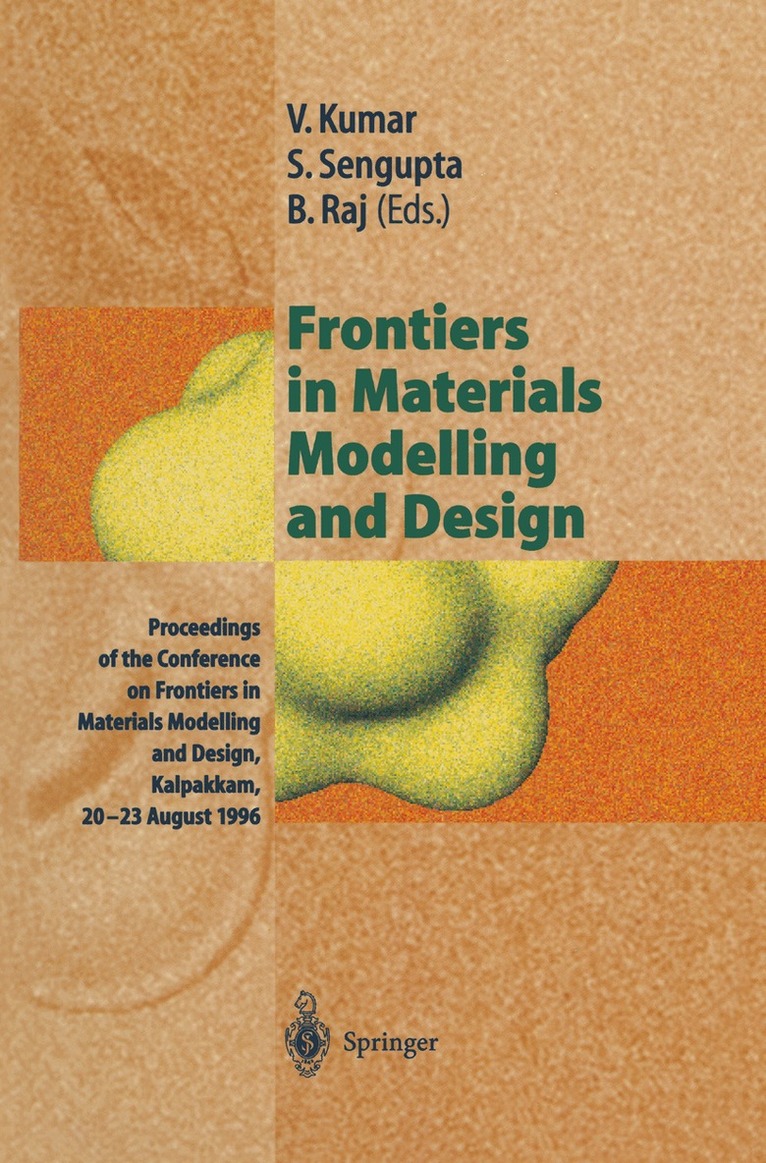
Frontiers in Materials Modelling and Design
Proceedings of the Conference on Frontiers in Materials Modelling and Design, Kalpakkam, 20–23 August 1996
Av Baldev Raj, Surajit Sengupta m. fl.
E-bok, 2012
1427 kr
Lägg i varukorg
It is about fifteen years since we started hearing about Computational Ma terials Science and Materials Modelling and Design. Fifteen years is a long time and all of us realise that the use of computational methods in the design of materials has not been rapid enough. We also know the reasons for …
Frontiers in Materials Modelling and Design
Proceedings of the Conference on Frontiers in Materials Modelling and Design, Kalpakkam, 20–23 August 1996
Av Vijay Kumar, Surajit Sengupta m. fl.
Häftad, 2011
1098 kr
Lägg i varukorg
It is about fifteen years since we started hearing about Computational Ma terials Science and Materials Modelling and Design. Fifteen years is a long time and all of us realise that the use of computational methods in the design of materials has not been rapid enough. We also know the reasons for …