
Häftad, Engelska, 2022
302 kr
Skickas inom 5-8 vardagar
302 kr
Skickas inom 5-8 vardagar
397 kr
Skickas inom 5-8 vardagar
270 kr
Skickas inom 5-8 vardagar
362 kr
Skickas inom 5-8 vardagar
254 kr
Skickas inom 5-8 vardagar
551 kr
Skickas inom 3-6 vardagar
381 kr
Skickas inom 5-8 vardagar
254 kr
Skickas inom 5-8 vardagar

434 kr
Skickas inom 3-6 vardagar
350 kr
Skickas inom 5-8 vardagar
176 kr
Läs direkt efter köp
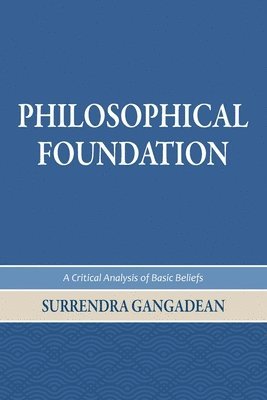
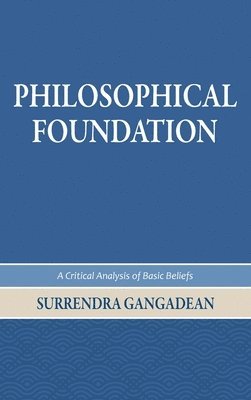
Philosophical Foundation argues for clarity over and against meaninglessness, which is implicit in various forms of skepticism and fideism. Throughout the book, critical analysis is applied to unexamined assumptions in the areas of metaphysics and ethics in order to address long-standing disputes. The basic beliefs of western naturalism, eastern idealism, Greek dualism, post-modern anti-realism, and classical theism are incisively analyzed by reason for their coherence of meaning. Those who have questions about knowledge and certainty, faith and reason, the existence of God and the problem of evil, will find critical insight throughout this study in its use of presuppositional thinking.
316 kr
Skickas inom 3-6 vardagar

541 kr
Skickas inom 5-8 vardagar
176 kr
Läs direkt efter köp
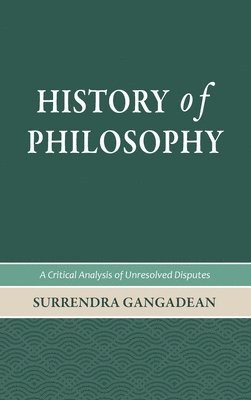
The history of philosophy is beset by unresolved disputes. These disputes are passed down from generation to generation as problems to be solved. If not solved, they engender skepticism. Philosophical disputes, posed as problems, can be resolved or dissolved if we first acknowledge that some things are clear to reason. Philosophical problems are about beliefs. There are more basic and less basic beliefs. All philosophical problems can be resolved by critical analysis of basic beliefs. What is basic is clear to reason. Basic beliefs are about God and man and good and evil. A historical, critical analysis of philosophical problems reveals what a thinker believes about reason, God, man, and the good for man. Not all basic beliefs are coherent when tested by the critical use of reason. A critical analysis of basic beliefs should lead us to see what is clear.
In History of Philosophy, Dr. Gangadean critically examines what several prominent philosophers have said about what is basic and clear. He considers how and why they differed from others and what influences they had. Among the philosophers examined are the views of the Presocratics, Plato and Aristotle, Nagarjuna and Buddhist philosophy, Augustine (and Augustinians such as John Calvin and Alvin Plantinga), Shankara and Advaita Vedanta philosophy, Ramanuja and Dvaita Vedanta philosophy, Thomas Aquinas, Rationalism (including Rene Descartes, Baruch Spinoza, and Gottfried Leibniz), Empiricism (including John Locke, George Berkeley, and David Hume), Immanuel Kant, Georg Hegel, Existentialism (including Soren Kierkegaard, Friedrich Nietzsche, Jean-Paul Sartre, and Albert Camus), Postmodernism, and Critical Theory. The author confines himself to what each says about what is basic-about the possibility of knowledge, what is reason, what is real, and what is the good. In doing so, he hopes to make it clear that disputes arise from unexamined basic beliefs and that, upon examination, the truth about what is basic is clear.
334 kr
Skickas inom 5-8 vardagar
652 kr
Skickas inom 5-8 vardagar
488 kr
Skickas inom 5-8 vardagar
271 kr
Läs direkt efter köp
The Westminster Standards (The Westminster Confession and accompanying Shorter and Larger Catechisms) are the high-water mark of the Historic Christian Faith since they build upon the preceding councils and creeds of the Church while responding to the challenges of the Reformation. A thoughtful study of the Standards requires penetrating the material at the level of challenges and responses to the Faith. It is the Lord''s intention that the Church respond to challenges as the process by which it grows in its understanding of the Faith and that by which fullness of the truth is to be attained. In understanding the Historic Christian Faith, the saints are prepared for works of service until believers come to maturity, fruitfulness, unity of the faith, and attain to the fullness that there is in Christ.
In The Westminster Confession of Faith: A Doxological Understanding, Dr. Gangadean provides a critical exposition of the most significant doctrines needed to respond to the challenges of Modernity (1650-1950) and Postmodernity (1950-present). Since the Westminster Assembly (1643-1648), these challenges include: faith vs. reason, otherworldliness vs. this worldliness, the problem of evil, religion in public life, and exclusivism. The doxological understanding of the Westminster Confession of Faith incorporates the following in providing an awaited response: the doctrine of the clarity of general revelation and the inexcusability of unbelief, the use of reason (the light of nature and good and necessary consequences) to understand general and special revelation, the doxological focus on the knowledge of the glory of God, divine sovereignty in creation-fall-redemption, and the law of God for all of life. In understanding the Westminster Standards at the doxological level, the Church can overcome the challenges to the faith in our time and lay a deeper foundation to guard against future challenges.
472 kr
Skickas inom 5-8 vardagar
477 kr
Skickas inom 5-8 vardagar

846 kr
Skickas inom 3-6 vardagar

286 kr
Skickas inom 5-8 vardagar
379 kr
Skickas inom 5-8 vardagar
270 kr
Skickas inom 5-8 vardagar
575 kr
Skickas inom 5-8 vardagar
397 kr
Skickas inom 5-8 vardagar
270 kr
Skickas inom 5-8 vardagar

379 kr
Skickas inom 5-8 vardagar

270 kr
Skickas inom 5-8 vardagar
394 kr
Skickas inom 5-8 vardagar
302 kr
Skickas inom 5-8 vardagar
397 kr
Skickas inom 5-8 vardagar
270 kr
Skickas inom 5-8 vardagar
362 kr
Skickas inom 5-8 vardagar
254 kr
Skickas inom 5-8 vardagar
551 kr
Skickas inom 3-6 vardagar
381 kr
Skickas inom 5-8 vardagar
254 kr
Skickas inom 5-8 vardagar
434 kr
Skickas inom 3-6 vardagar
350 kr
Skickas inom 5-8 vardagar
176 kr
Läs direkt efter köp
Philosophical Foundation argues for clarity over and against meaninglessness, which is implicit in various forms of skepticism and fideism. Throughout the book, critical analysis is applied to unexamined assumptions in the areas of metaphysics and ethics in order to address long-standing disputes. The basic beliefs of western naturalism, eastern idealism, Greek dualism, post-modern anti-realism, and classical theism are incisively analyzed by reason for their coherence of meaning. Those who have questions about knowledge and certainty, faith and reason, the existence of God and the problem of evil, will find critical insight throughout this study in its use of presuppositional thinking.
316 kr
Skickas inom 3-6 vardagar
541 kr
Skickas inom 5-8 vardagar
176 kr
Läs direkt efter köp
The history of philosophy is beset by unresolved disputes. These disputes are passed down from generation to generation as problems to be solved. If not solved, they engender skepticism. Philosophical disputes, posed as problems, can be resolved or dissolved if we first acknowledge that some things are clear to reason. Philosophical problems are about beliefs. There are more basic and less basic beliefs. All philosophical problems can be resolved by critical analysis of basic beliefs. What is basic is clear to reason. Basic beliefs are about God and man and good and evil. A historical, critical analysis of philosophical problems reveals what a thinker believes about reason, God, man, and the good for man. Not all basic beliefs are coherent when tested by the critical use of reason. A critical analysis of basic beliefs should lead us to see what is clear.
In History of Philosophy, Dr. Gangadean critically examines what several prominent philosophers have said about what is basic and clear. He considers how and why they differed from others and what influences they had. Among the philosophers examined are the views of the Presocratics, Plato and Aristotle, Nagarjuna and Buddhist philosophy, Augustine (and Augustinians such as John Calvin and Alvin Plantinga), Shankara and Advaita Vedanta philosophy, Ramanuja and Dvaita Vedanta philosophy, Thomas Aquinas, Rationalism (including Rene Descartes, Baruch Spinoza, and Gottfried Leibniz), Empiricism (including John Locke, George Berkeley, and David Hume), Immanuel Kant, Georg Hegel, Existentialism (including Soren Kierkegaard, Friedrich Nietzsche, Jean-Paul Sartre, and Albert Camus), Postmodernism, and Critical Theory. The author confines himself to what each says about what is basic-about the possibility of knowledge, what is reason, what is real, and what is the good. In doing so, he hopes to make it clear that disputes arise from unexamined basic beliefs and that, upon examination, the truth about what is basic is clear.
334 kr
Skickas inom 5-8 vardagar
652 kr
Skickas inom 5-8 vardagar
488 kr
Skickas inom 5-8 vardagar
271 kr
Läs direkt efter köp
The Westminster Standards (The Westminster Confession and accompanying Shorter and Larger Catechisms) are the high-water mark of the Historic Christian Faith since they build upon the preceding councils and creeds of the Church while responding to the challenges of the Reformation. A thoughtful study of the Standards requires penetrating the material at the level of challenges and responses to the Faith. It is the Lord''s intention that the Church respond to challenges as the process by which it grows in its understanding of the Faith and that by which fullness of the truth is to be attained. In understanding the Historic Christian Faith, the saints are prepared for works of service until believers come to maturity, fruitfulness, unity of the faith, and attain to the fullness that there is in Christ.
In The Westminster Confession of Faith: A Doxological Understanding, Dr. Gangadean provides a critical exposition of the most significant doctrines needed to respond to the challenges of Modernity (1650-1950) and Postmodernity (1950-present). Since the Westminster Assembly (1643-1648), these challenges include: faith vs. reason, otherworldliness vs. this worldliness, the problem of evil, religion in public life, and exclusivism. The doxological understanding of the Westminster Confession of Faith incorporates the following in providing an awaited response: the doctrine of the clarity of general revelation and the inexcusability of unbelief, the use of reason (the light of nature and good and necessary consequences) to understand general and special revelation, the doxological focus on the knowledge of the glory of God, divine sovereignty in creation-fall-redemption, and the law of God for all of life. In understanding the Westminster Standards at the doxological level, the Church can overcome the challenges to the faith in our time and lay a deeper foundation to guard against future challenges.
472 kr
Skickas inom 5-8 vardagar
477 kr
Skickas inom 5-8 vardagar
846 kr
Skickas inom 3-6 vardagar
286 kr
Skickas inom 5-8 vardagar
379 kr
Skickas inom 5-8 vardagar
270 kr
Skickas inom 5-8 vardagar
575 kr
Skickas inom 5-8 vardagar
397 kr
Skickas inom 5-8 vardagar
270 kr
Skickas inom 5-8 vardagar
379 kr
Skickas inom 5-8 vardagar
270 kr
Skickas inom 5-8 vardagar
394 kr
Skickas inom 5-8 vardagar