Susan B. Hansen – författare
Visar alla böcker från författaren Susan B. Hansen. Handla med fri frakt och snabb leverans.
3 produkter
3 produkter
Inbunden, Engelska, 2014
2 339 kr
Skickas inom 10-15 vardagar
The American cultural landscape has shifted considerably since the 1990s. As church attendance has declined, seculars have increased in number and in political involvement. The economy was supposed to be the most important issue in the 2008 and 2012 elections, but social issues such as gay rights and the status of women actually had a greater impact on vote choice. Moral issues and perceptions of candidate morality had less effect on voters in 2004 than in 2008. These arguments directly challenge the conventional wisdom concerning the 2004 and 2008 elections, which were supposedly decided on the basis of moral values and the economy respectively. Yet in The Politics of Sex, Susan B. Hansen justifies these claims theoretically based on evidence about how voters actually evaluate candidates. Hansen explores trends in public opinion on abortion, gay rights, and the status of women and finds that "values voters" are still crucial in presidential elections, even those supposedly fought over economic or foreign-policy issues. She then analyzes campaign strategies and vote choice to show how Barack Obama made effective use of the liberal trends in public opinion on social issues in 2008 and 2012. Hansen also examines trends in demographics, religious involvement, the institutional setting, and public opinion to predict who in future years benefit from the politics of sex.By providing an historical perspective on the changing impact of morality politics on presidential elections, this book will show how and why the politics of sex now favors the Democratic Party.
Häftad, Engelska, 2014
734 kr
Skickas inom 10-15 vardagar
The American cultural landscape has shifted considerably since the 1990s. As church attendance has declined, seculars have increased in number and in political involvement. The economy was supposed to be the most important issue in the 2008 and 2012 elections, but social issues such as gay rights and the status of women actually had a greater impact on vote choice. Moral issues and perceptions of candidate morality had less effect on voters in 2004 than in 2008. These arguments directly challenge the conventional wisdom concerning the 2004 and 2008 elections, which were supposedly decided on the basis of moral values and the economy respectively. Yet in The Politics of Sex, Susan B. Hansen justifies these claims theoretically based on evidence about how voters actually evaluate candidates. Hansen explores trends in public opinion on abortion, gay rights, and the status of women and finds that "values voters" are still crucial in presidential elections, even those supposedly fought over economic or foreign-policy issues. She then analyzes campaign strategies and vote choice to show how Barack Obama made effective use of the liberal trends in public opinion on social issues in 2008 and 2012. Hansen also examines trends in demographics, religious involvement, the institutional setting, and public opinion to predict who in future years benefit from the politics of sex.By providing an historical perspective on the changing impact of morality politics on presidential elections, this book will show how and why the politics of sex now favors the Democratic Party.
Häftad, Engelska, 2006
621 kr
Skickas inom 7-10 vardagar
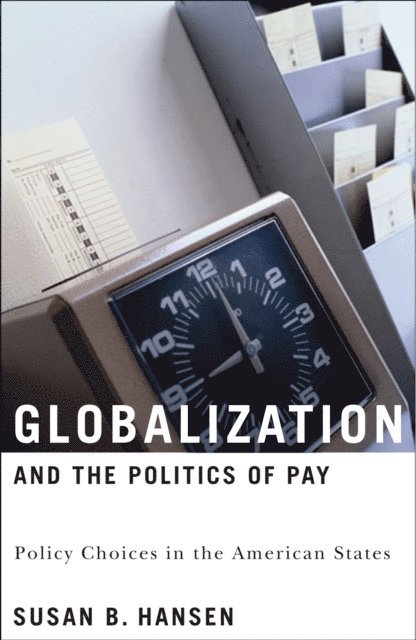
In the American federal system, states actively compete for jobs, business investment, and factory locations. Labor costs have played an important role in such interstate competition since the days of the pre-Civil War plantation economy. In recent years, however, global economic trends have put added pressures on businesses and government to reduce labor costs. At least, that is what most politicians, the media, and the business community believe. "Globalization and the Politics of Pay" examines the economic, political, and social causes and consequences of declining wages in the United States. It challenges the conventional wisdom that globalization is to blame for the decline in workers' earnings. Susan B. Hansen presents a comprehensive analysis of the many factors affecting labor costs and concludes that many of them result from choices made by the states themselves through the laws and policies they enact. In addition, free-market ideologies and low voter turnout have had greater effects in keeping wages down than globalization. In fact, foreign trade and investment can actually result in higher pay in the state labor market.In this rigorous yet surprising study, Hansen develops new measures of state and federal labor costs to test competing theories of the consequences of reducing wages and benefits. Most economists would argue that higher labor costs cause higher unemployment, and that reducing labor costs will lead to higher levels of job creation. But citizens and elected officials must weigh any employment gains in lower-wage jobs against slower state economic growth, declining personal income, and a less-competitive position in international trade. Cutting state labor costs is shown to have adverse social consequences, including family instability, high crime rates, poverty, and low voter turnouts. The book concludes with policy recommendations for state governments trying to balance their need for more jobs with policies to enhance productivity, living standards, social stability, and international competitiveness.