Susan D. Blum - Böcker
Visar alla böcker från författaren Susan D. Blum. Handla med fri frakt och snabb leverans.
11 produkter
11 produkter
581 kr
Skickas inom 10-15 vardagar
Ethnicity is a highly politicized issue in contemporary China. Twentieth-century nation-building has been intimately involved with classification of China’s fifty-five ethnic minorities and with fostering harmony and unity among nationalities. Officially sanctioned social science classifies the majority group, the so-called Han, at the pinnacle of modernization and civilization and most other groups as “primitive.” In post-socialist China, popular conceptions of self, person, and nation intersect with political and scholarly concerns with identity, sometimes contradicting them and sometimes reinforcing them. In Portraits of “Primitives,” Susan D. Blum explores how Han in the city of Kunming, in southwest China, regard ethnic minorities and, by extension, themselves. She sketches “portraits,” or cognitive prototypes, of ethnic groups in a variety of contexts, explaining the perceived visibility of each group (which almost never correlates with size of population). Ideas of “Hanness” can be understood in part through Han desire to identify unique characteristics in ethnic minorities and also through Han celebration of the differences that distance minorities. The book considers questions of identity, alterity, and self in the context of a complex nation-state, employing methods from linguistic anthropology and psychological anthropology, as well as other forms of cultural analysis. Providing nuanced views of relationships among political, scholarly, and popular models of identity, this book will be an invaluable guide for those working in China studies, anthropology, and ethnic studies.
1 343 kr
Skickas inom 10-15 vardagar
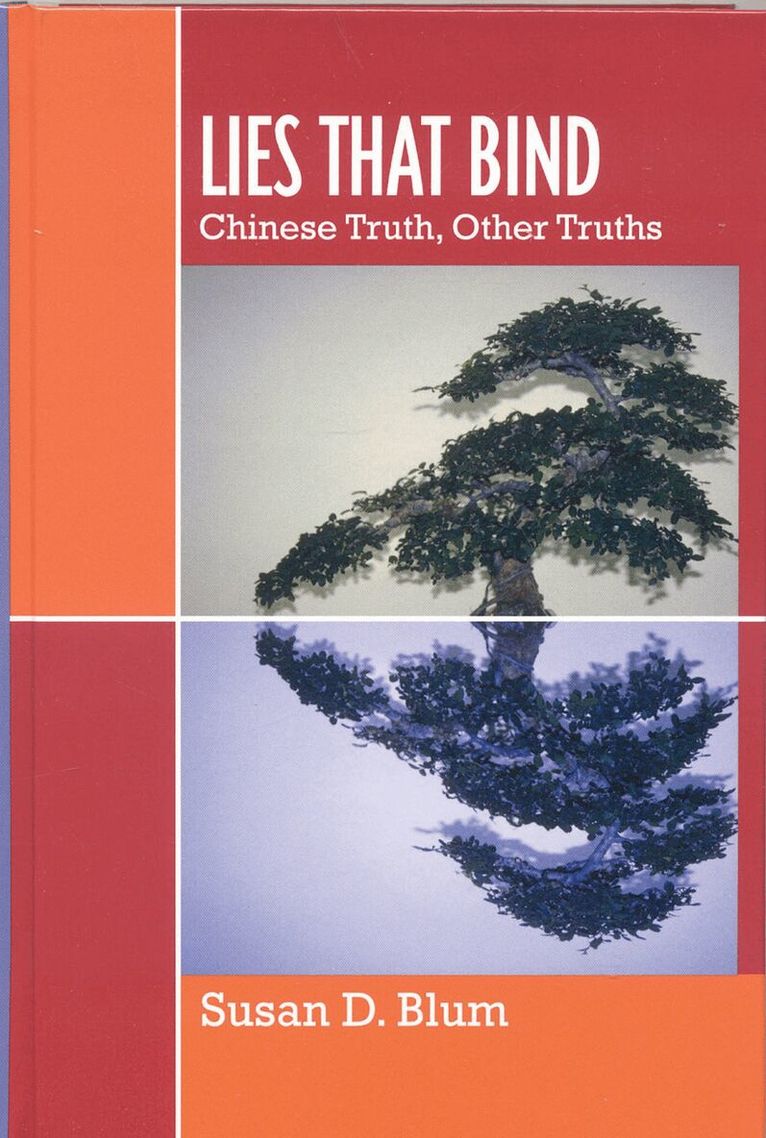
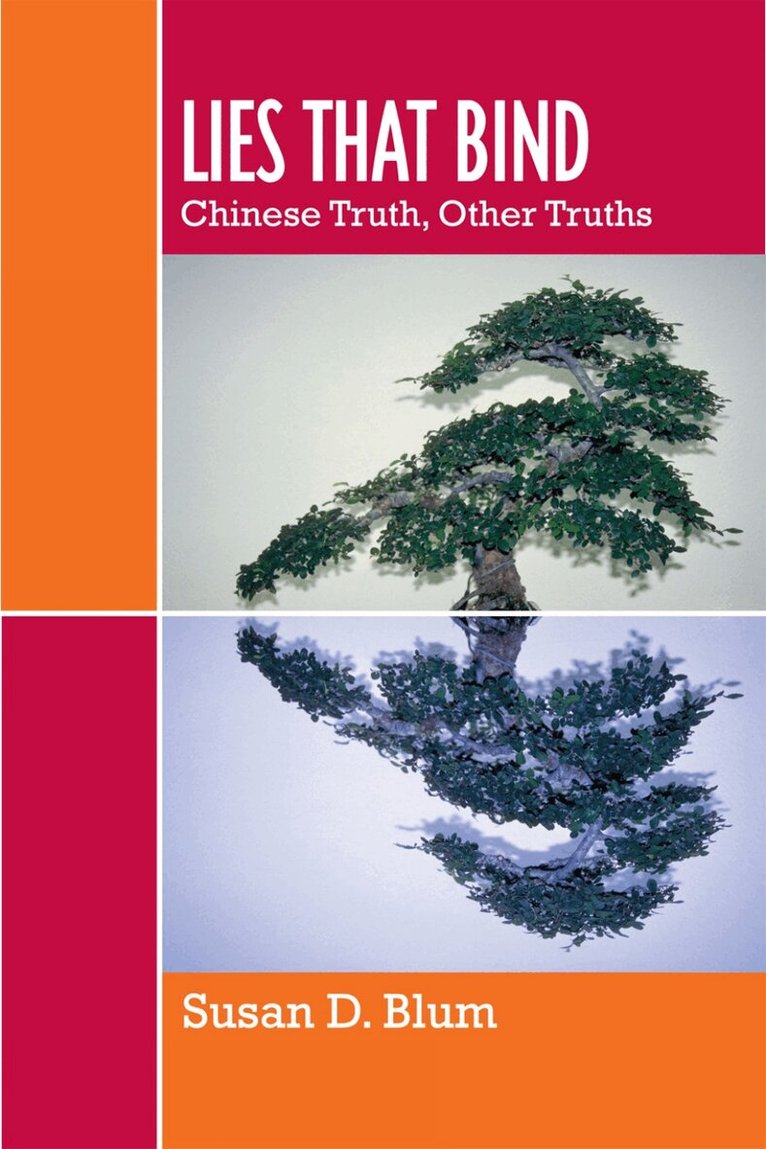
This provocative book explores the ideology of truth and deception in China, offering a nuanced perspective on social interaction in different cultural settings. Drawing on decades of fieldwork in China, Susan D. Blum offers an authoritative examination of rules, expectations, and beliefs regarding lying and honesty in society. Blum points to a propensity for deception in Chinese public interactions in situations where people in the United States would expect truthfulness, yet argues that lying is evaluated within Chinese society by moral standards different from those of Americans. Chinese, for example, might emphasize the consequences of speech, Americans the absolute truthfulness. Blum considers the longstanding values that led to this style of interaction, as well as more recent factors, such as the government's control over expression. But Chinese society is not alone in the practice of such customs. The author observes that many Americans also excel in manipulation of language, yet find a simultaneous moral absolutism opposed to lying in any form. She also considers other traditions, including Japanese and Jewish, that struggle to control the boundaries of lying, balancing human needs with moral values in contrasting ways. Deception and lying, the book concludes, are distinctively cultural yet universal—inseparable from what it is to be a human being equipped with language in all its subtlety.
581 kr
Skickas inom 10-15 vardagar
This provocative book explores the ideology of truth and deception in China, offering a nuanced perspective on social interaction in different cultural settings. Drawing on decades of fieldwork in China, Susan D. Blum offers an authoritative examination of rules, expectations, and beliefs regarding lying and honesty in society. Blum points to a propensity for deception in Chinese public interactions in situations where people in the United States would expect truthfulness, yet argues that lying is evaluated within Chinese society by moral standards different from those of Americans. Chinese, for example, might emphasize the consequences of speech, Americans the absolute truthfulness. Blum considers the longstanding values that led to this style of interaction, as well as more recent factors, such as the government's control over expression. But Chinese society is not alone in the practice of such customs. The author observes that many Americans also excel in manipulation of language, yet find a simultaneous moral absolutism opposed to lying in any form. She also considers other traditions, including Japanese and Jewish, that struggle to control the boundaries of lying, balancing human needs with moral values in contrasting ways. Deception and lying, the book concludes, are distinctively cultural yet universal—inseparable from what it is to be a human being equipped with language in all its subtlety.
227 kr
Skickas inom 10-15 vardagar
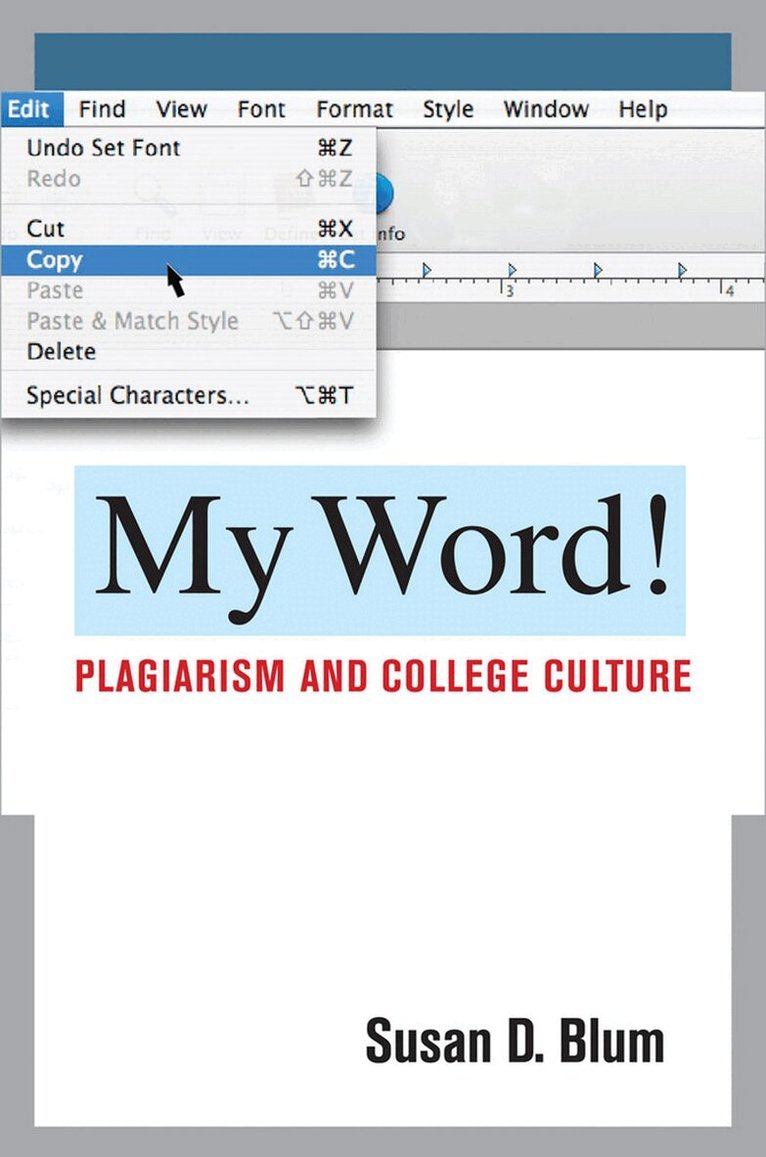
"Classroom Cheats Turn to Computers." "Student Essays on Internet Offer Challenge to Teachers." "Faking the Grade." Headlines such as these have been blaring the alarming news of an epidemic of plagiarism and cheating in American colleges: more than 75 percent of students admit to having cheated; 68 percent admit to cutting and pasting material from the Internet without citation. Professors are reminded almost daily that many of today's college students operate under an entirely new set of assumptions about originality and ethics. Practices that even a decade ago would have been regarded almost universally as academically dishonest are now commonplace. Is this development an indication of dramatic shifts in education and the larger culture? In a book that dismisses hand-wringing in favor of a rich account of how students actually think and act, Susan D. Blum discovers two cultures that exist, often uneasily, side by side in the classroom.Relying extensively on interviews conducted by students with students, My Word! presents the voices of today's young adults as they muse about their daily activities, their challenges, and the meanings of their college lives. Outcomes-based secondary education, the steeply rising cost of college tuition, and an economic climate in which higher education is valued for its effect on future earnings above all else: These factors each have a role to play in explaining why students might pursue good grades by any means necessary. These incentives have arisen in the same era as easily accessible ways to cheat electronically and with almost intolerable pressures that result in many students being diagnosed as clinically depressed during their transition from childhood to adulthood.However, Blum suggests, the real problem of academic dishonesty arises primarily from a lack of communication between two distinct cultures within the university setting. On one hand, professors and administrators regard plagiarism as a serious academic crime, an ethical transgression, even a sin against an ethos of individualism and originality. Students, on the other hand, revel in sharing, in multiplicity, in accomplishment at any cost. Although this book is unlikely to reassure readers who hope that increasing rates of plagiarism can be reversed with strongly worded warnings on the first day of class, My Word! opens a dialogue between professors and their students that may lead to true mutual comprehension and serve as the basis for an alignment between student practices and their professors' expectations.
327 kr
Skickas inom 10-15 vardagar
China Off Center takes as its fundamental assumption that contemporary China can only be understood as a complex, decentralized place, where the view from above (Beijing) and from tourist buses is a skewed one. Instead of generalizing about China, it demonstrates that this diverse national terrain is better conceived as it is experienced by Chinese, as a set of many Chinas. To that end, this anthology of interpretive essays and ethnographic reports focuses on the everyday, the particular, the local, and the puzzling. Together with contextualizing introductions, the readings provide students with a compelling look at some little-known but significant aspects of China from the past decade; for those already familiar with China, they furnish an assortment of uncommon viewpoints in a single, convenient volume.
266 kr
Skickas inom 10-15 vardagar
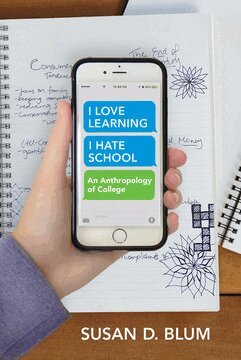
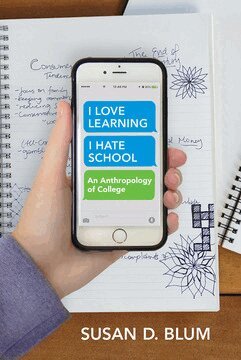
Frustrated by her students' performance, her relationships with them, and her own daughter's problems in school, Susan D. Blum, a professor of anthropology, set out to understand why her students found their educational experience at a top-tier institution so profoundly difficult and unsatisfying. Through her research and in conversations with her students, she discovered a troubling mismatch between the goals of the university and the needs of students.In I Love Learning; I Hate School, Blum tells two intertwined but inseparable stories: the results of her research into how students learn contrasted with the way conventional education works, and the personal narrative of how she herself was transformed by this understanding. Blum concludes that the dominant forms of higher education do not match the myriad forms of learning that help students-people in general-master meaningful and worthwhile skills and knowledge. Students are capable of learning huge amounts, but the ways higher education is structured often leads them to fail to learn. More than that, it leads to ill effects.In this critique of higher education, infused with anthropological insights, Blum explains why so much is going wrong and offers suggestions for how to bring classroom learning more in line with appropriate forms of engagement. She challenges our system of education and argues for a "reintegration of learning with life."
201 kr
Skickas inom 10-15 vardagar
Frustrated by her students' performance, her relationships with them, and her own daughter's problems in school, Susan D. Blum, a professor of anthropology, set out to understand why her students found their educational experience at a top-tier institution so profoundly difficult and unsatisfying. Through her research and in conversations with her students, she discovered a troubling mismatch between the goals of the university and the needs of students.In I Love Learning; I Hate School, Blum tells two intertwined but inseparable stories: the results of her research into how students learn contrasted with the way conventional education works, and the personal narrative of how she herself was transformed by this understanding. Blum concludes that the dominant forms of higher education do not match the myriad forms of learning that help students-people in general-master meaningful and worthwhile skills and knowledge. Students are capable of learning huge amounts, but the ways higher education is structured often leads them to fail to learn. More than that, it leads to ill effects.In this critique of higher education, infused with anthropological insights, Blum explains why so much is going wrong and offers suggestions for how to bring classroom learning more in line with appropriate forms of engagement. She challenges our system of education and argues for a "reintegration of learning with life."
Schoolishness
Alienated Education and the Quest for Authentic, Joyful Learning
Inbunden, Engelska, 2024
1 475 kr
Skickas inom 10-15 vardagar
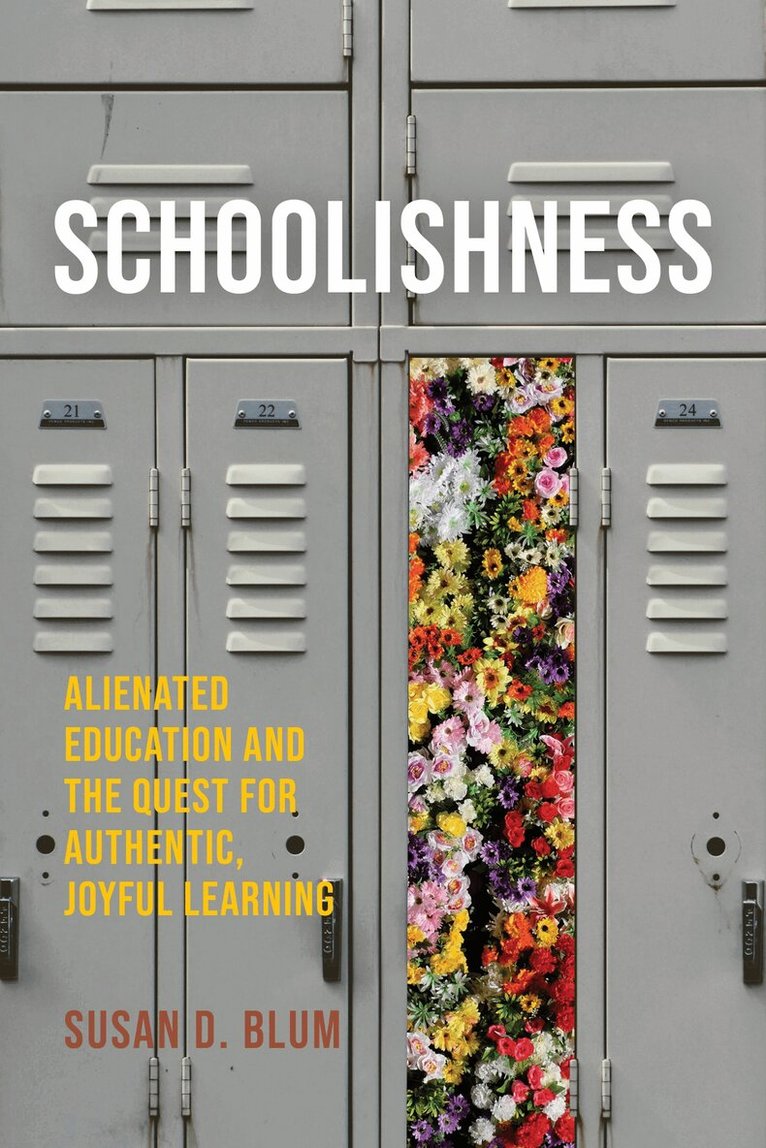
In Schoolishness, Susan D. Blum continues her journey as an anthropologist and educator. The author defines "schoolishness" as educational practices that emphasize packaged "learning," unimaginative teaching, uniformity, constant evaluation by others, arbitrary forms, predetermined time, and artificial boundaries, resulting in personal and educational alienation, dependence, and dread.Drawing on critical, progressive, and feminist pedagogy in conversation with the anthropology of learning, and building on the insights of her two previous books Blum proposes less-schoolish ways of learning in ten dimensions, to lessen the mismatch between learning in school and learning in the wild. She asks, if learning is our human "superpower," why is it so difficult to accomplish in school? In every chapter Blum compares the fake learning of schoolishness with successful examples of authentic learning, including in her own courses, which she scrutinizes critically.Schoolishness is not a pedagogical how-to book, but a theory-based phenomenology of institutional education. It has moral, psychological, and educational arguments against schoolishness that, as Blum notes, "rhymes with foolishness."
305 kr
Skickas inom 10-15 vardagar
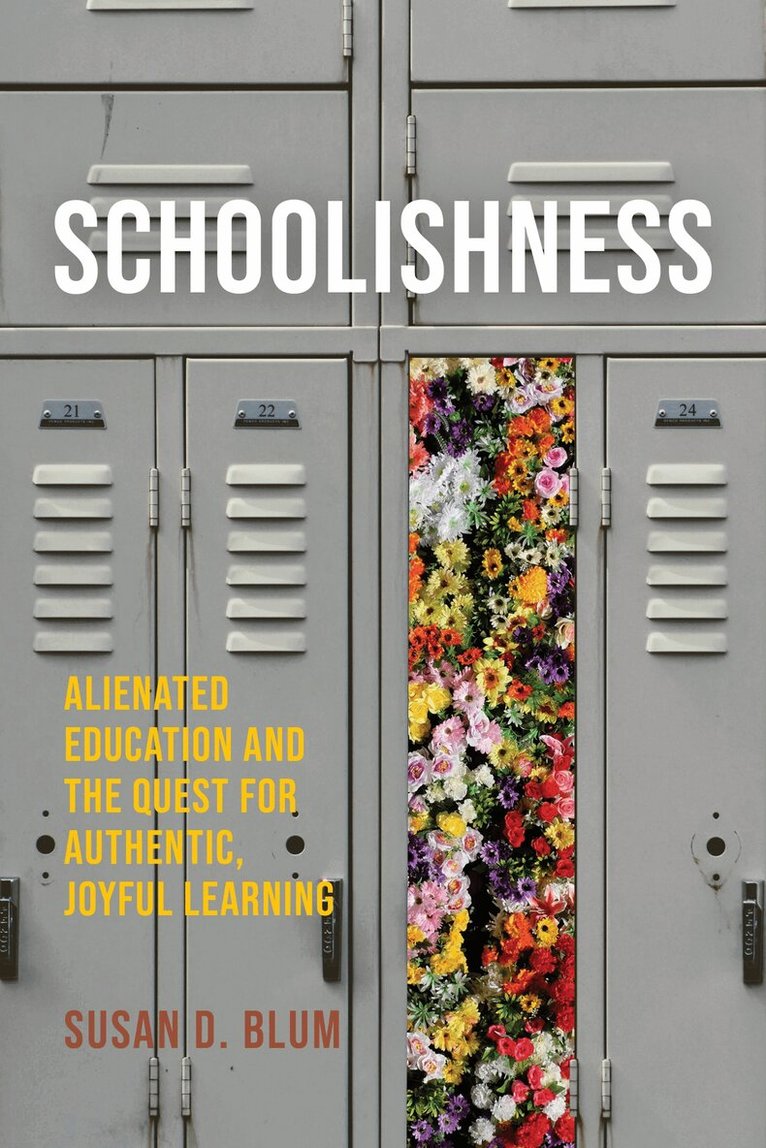
In Schoolishness, Susan D. Blum continues her journey as an anthropologist and educator. The author defines "schoolishness" as educational practices that emphasize packaged "learning," unimaginative teaching, uniformity, constant evaluation by others, arbitrary forms, predetermined time, and artificial boundaries, resulting in personal and educational alienation, dependence, and dread.Drawing on critical, progressive, and feminist pedagogy in conversation with the anthropology of learning, and building on the insights of her two previous books Blum proposes less-schoolish ways of learning in ten dimensions, to lessen the mismatch between learning in school and learning in the wild. She asks, if learning is our human "superpower," why is it so difficult to accomplish in school? In every chapter Blum compares the fake learning of schoolishness with successful examples of authentic learning, including in her own courses, which she scrutinizes critically.Schoolishness is not a pedagogical how-to book, but a theory-based phenomenology of institutional education. It has moral, psychological, and educational arguments against schoolishness that, as Blum notes, "rhymes with foolishness."
1 044 kr
Skickas inom 10-15 vardagar
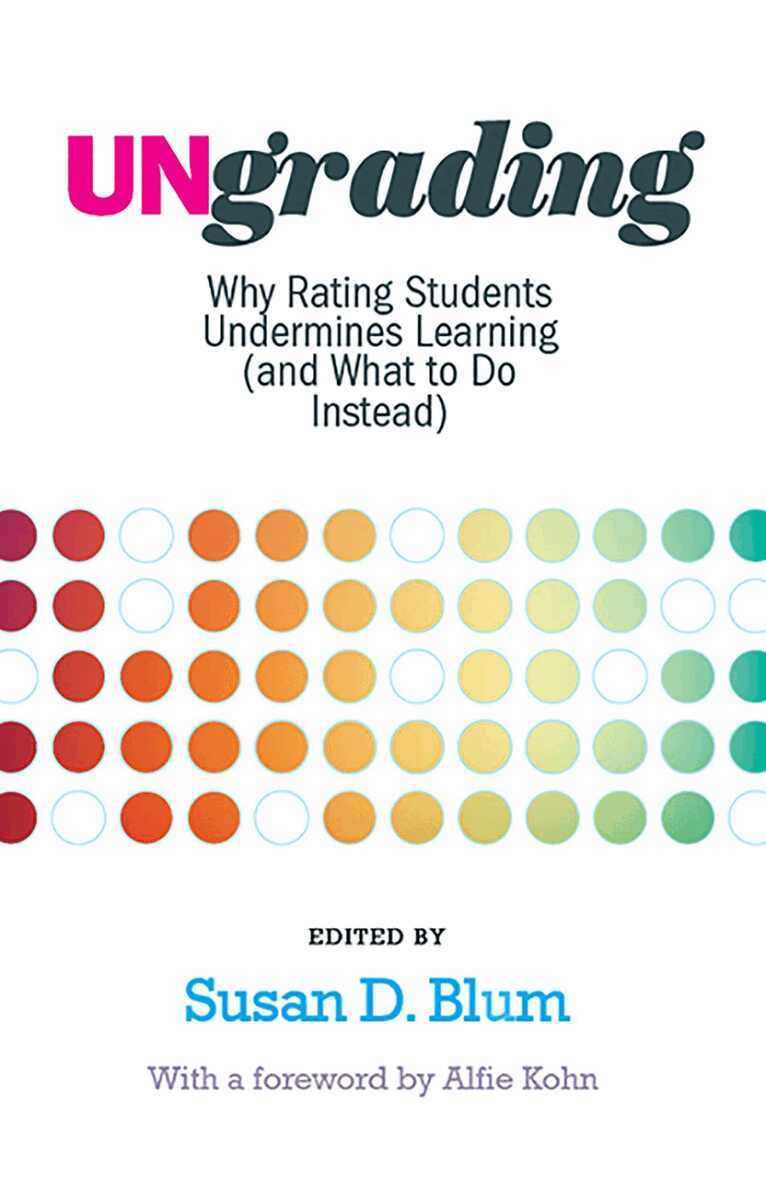
The moment is right for critical reflection on what has been assumed to be a core part of schooling. In Ungrading, fifteen educators write about their diverse experiences going gradeless. Some contributors are new to the practice and some have been engaging in it for decades. Some are in humanities and social sciences, some in STEM fields. Some are in higher education, but some are the K-12 pioneers who led the way. Based on rigorous and replicated research, this is the first book to show why and how faculty who wish to focus on learning, rather than sorting or judging, might proceed. It includes honest reflection on what makes ungrading challenging, and testimonials about what makes it transformative.
279 kr
Skickas inom 10-15 vardagar
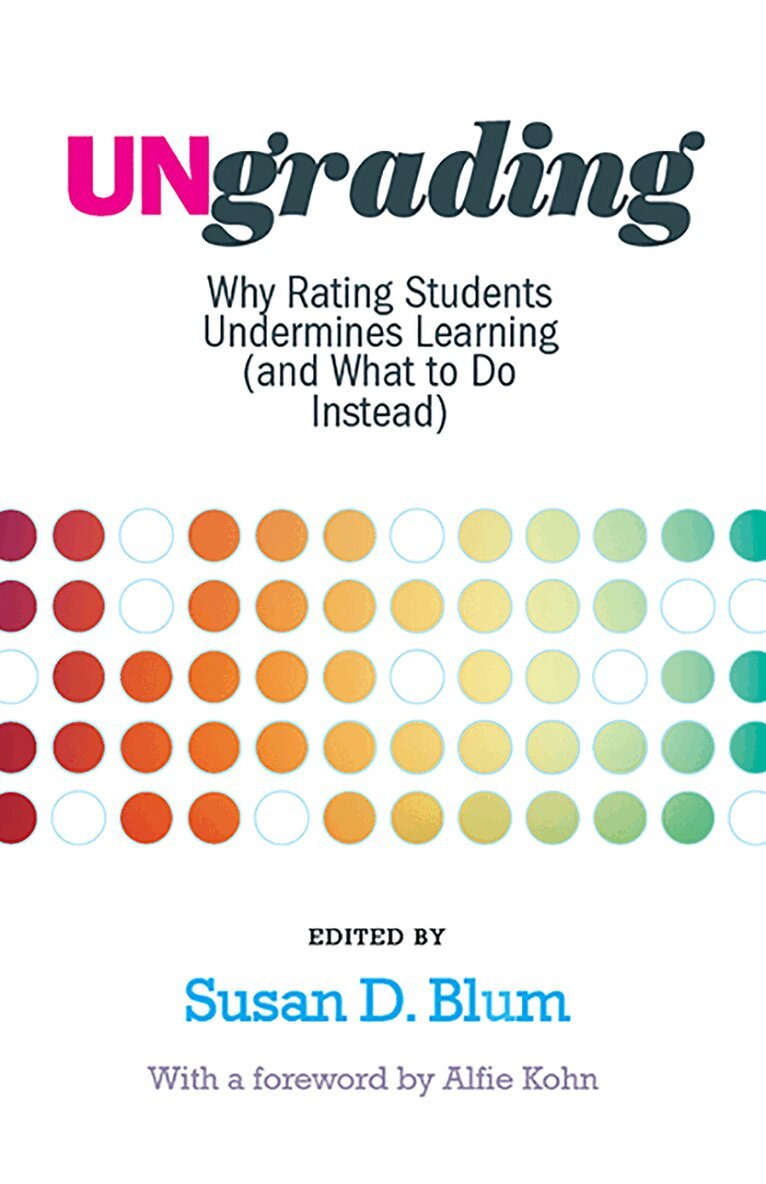
The moment is right for critical reflection on what has been assumed to be a core part of schooling. In Ungrading, fifteen educators write about their diverse experiences going gradeless. Some contributors are new to the practice and some have been engaging in it for decades. Some are in humanities and social sciences, some in STEM fields. Some are in higher education, but some are the K-12 pioneers who led the way. Based on rigorous and replicated research, this is the first book to show why and how faculty who wish to focus on learning, rather than sorting or judging, might proceed. It includes honest reflection on what makes ungrading challenging, and testimonials about what makes it transformative.