Susan D. Collins - Böcker
Visar alla böcker från författaren Susan D. Collins. Handla med fri frakt och snabb leverans.
4 produkter
4 produkter
560 kr
Skickas inom 7-10 vardagar
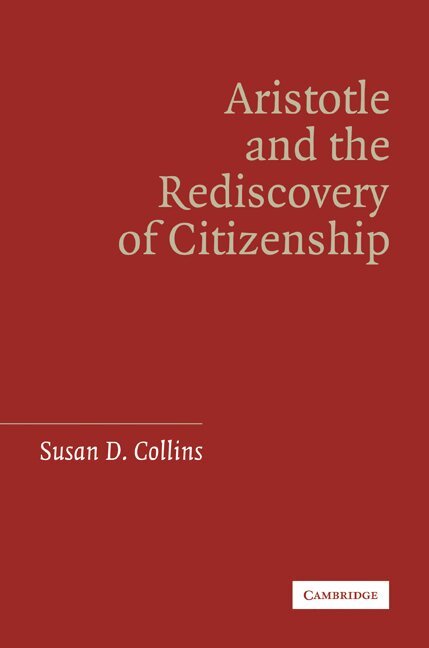
Aristotle and the Rediscovery of Citizenship confronts a question that is central to Aristotle's political philosophy as well as to contemporary political theory: what is a citizen? Answers prove to be elusive, in part because late twentieth-century critiques of the Enlightenment called into doubt fundamental tenets that once guided us. Engaging the two major works of Aristotle's political philosophy, his Nicomachean Ethics and his Politics, Susan D. Collins poses questions that current discussions of liberal citizenship do not adequately address. Drawing a path from contemporary disputes to Aristotle, she examines in detail his complex presentations of moral virtue, civic education, and law; his view of the aims and limits of the political community; and his treatment of the connection between citizenship and the human good. Collins thereby shows how Aristotle continues to be an indispensable source of enlightenment, as he has been for political and religious traditions of the past.
1 192 kr
Skickas inom 7-10 vardagar
Aristotle and the Rediscovery of Citizenship confronts a question that is central to Aristotle's political philosophy as well as to contemporary political theory: what is a citizen? Answers prove to be elusive, in part because late twentieth-century critiques of the Enlightenment called into doubt fundamental tenets that once guided us. Engaging the two major works of Aristotle's political philosophy, his Nicomachean Ethics and his Politics, Susan D. Collins poses questions that current discussions of liberal citizenship do not adequately address. Drawing a path from contemporary disputes to Aristotle, she examines in detail his complex presentations of moral virtue, civic education, and law; his view of the aims and limits of the political community; and his treatment of the connection between citizenship and the human good. Collins thereby shows how Aristotle continues to be an indispensable source of enlightenment, as he has been for political and religious traditions of the past.
Action and Contemplation
Studies in the Moral and Political Thought of Aristotle
Inbunden, Engelska, 1999
1 057 kr
Tillfälligt slut
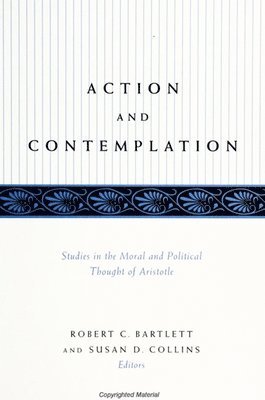
European and North American scholars explore the political philosophy of Aristotle, with particular attention to questions arising from the Politics and the Nicomachean Ethics.This wide-ranging collection of essays by European and American scholars presents some of the most interesting and important work now being done on the political philosophy of Aristotle. Part One investigates what is arguably the most urgent and controversial question of concern to students of Aristotle today, namely, the possibility of grounding moral and political action in some version of Aristotelian rationalism. Part Two considers a series of specific questions arising from the Politics and the Nicomachean Ethics, among which are Aristotle's understanding of moral virtue; the problem of evil; justice and the very idea of "common good"; friendship; the status of the philosophic life vis-à-vis the political; and the outlines of the best possible political community.[Contributors include Wayne Ambler, Robert C. Bartlett, Ronald Beiner, Richard Bodéüs, David Bolotin, Hauke Brunkhorst, Eric Buzzetti, Susan D. Collins, Kent Enns, Hans-Georg Gadamer, Louis Hunt, Joseph Knippenberg, David K. O'Connor, Lorraine Smith Pangle, Judith A. Swanson, Aristide Tessitore, Franco Volpi, and Bernard Yack.]
Action and Contemplation
Studies in the Moral and Political Thought of Aristotle
Häftad, Engelska, 1999
594 kr
Skickas inom 3-6 vardagar
European and North American scholars explore the political philosophy of Aristotle, with particular attention to questions arising from the Politics and the Nicomachean Ethics.This wide-ranging collection of essays by European and American scholars presents some of the most interesting and important work now being done on the political philosophy of Aristotle. Part One investigates what is arguably the most urgent and controversial question of concern to students of Aristotle today, namely, the possibility of grounding moral and political action in some version of Aristotelian rationalism. Part Two considers a series of specific questions arising from the Politics and the Nicomachean Ethics, among which are Aristotle's understanding of moral virtue; the problem of evil; justice and the very idea of "common good"; friendship; the status of the philosophic life vis-à-vis the political; and the outlines of the best possible political community.[Contributors include Wayne Ambler, Robert C. Bartlett, Ronald Beiner, Richard Bodéüs, David Bolotin, Hauke Brunkhorst, Eric Buzzetti, Susan D. Collins, Kent Enns, Hans-Georg Gadamer, Louis Hunt, Joseph Knippenberg, David K. O'Connor, Lorraine Smith Pangle, Judith A. Swanson, Aristide Tessitore, Franco Volpi, and Bernard Yack.]