Susan D. Phillips – författare
721 kr
Skickas inom 10-15 vardagar
3 440 kr
Skickas inom 10-15 vardagar
507 kr
Läs direkt efter köp
507 kr
Läs direkt efter köp
507 kr
Läs direkt efter köp
2 189 kr
Skickas inom 10-15 vardagar
825 kr
Skickas inom 10-15 vardagar
852 kr
Läs direkt efter köp
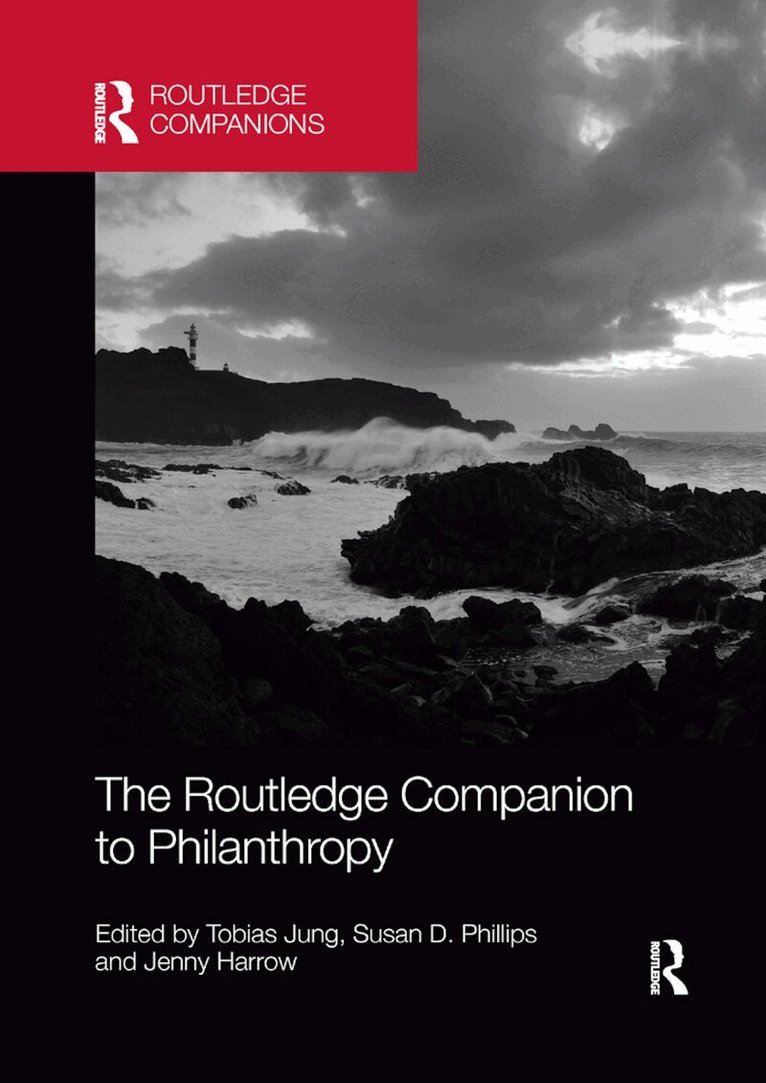
Philanthropy – the use of private resources for public purposes – is undergoing a transformation, both in practice and as an emerging field of study.
Expectations of what philanthropy can achieve have risen significantly in recent years, reflecting a substantial, but uneven, increase in global wealth and the rolling back of state services in anticipation that philanthropy will fill the void. In addition to this, experiments with entrepreneurial and venture philanthropy are producing novel intersections of the public, non-profit and private spheres, accompanied by new kinds of partnerships and hybrid organisational forms. The Routledge Companion to Philanthropy examines these changes and other challenges that philanthropists and philanthropic organisations face.
With contributions from an international team of leading contemporary thinkers on philanthropy, this Companion provides an introduction to, and critical exploration of, philanthropy; discussing current theories, research and the diverse professional practices within the field from a variety of disciplinary perspectives. The Routledge Companion to Philanthropy is a rich and valuable resource for students, researchers, practitioners and policymakers working in or interested in philanthropy.
852 kr
Läs direkt efter köp
Philanthropy – the use of private resources for public purposes – is undergoing a transformation, both in practice and as an emerging field of study.
Expectations of what philanthropy can achieve have risen significantly in recent years, reflecting a substantial, but uneven, increase in global wealth and the rolling back of state services in anticipation that philanthropy will fill the void. In addition to this, experiments with entrepreneurial and venture philanthropy are producing novel intersections of the public, non-profit and private spheres, accompanied by new kinds of partnerships and hybrid organisational forms. The Routledge Companion to Philanthropy examines these changes and other challenges that philanthropists and philanthropic organisations face.
With contributions from an international team of leading contemporary thinkers on philanthropy, this Companion provides an introduction to, and critical exploration of, philanthropy; discussing current theories, research and the diverse professional practices within the field from a variety of disciplinary perspectives. The Routledge Companion to Philanthropy is a rich and valuable resource for students, researchers, practitioners and policymakers working in or interested in philanthropy.
946 kr
Läs direkt efter köp
Personal Project Pursuit is the first book to feature Brian Little''s highly respected personal projects analysis (PPA), one of the pioneering theories in contemporary personality and motivational psychology. The book examines both the internal and external dynamics of personal goals and projects and clearly demonstrates that human flourishing is enhanced when individuals are engaged in the pursuit of personal projects.The book opens with the theory and methodologies of personal projects research. The historical perspective on the development of the two dominant research perspectives from personality and developmental psychology is explored. Section II examines the internal dynamics and competing demands of goal formulation and project inception. The third part accentuates the role that social ecologies play in shaping the nature and outcomes of personal projects. These chapters highlight the importance of interpersonal relationships, organizational contexts, and the societal and cultural expectations in affecting the pursuit of personal projects. Ideas for orchestrating the environment to enhance human flourishing are explored. Section IV demonstrates how personal projects can illuminate and enhance human flourishing, from psychological well being to physical health. The book concludes with applications for enhancing human flourishing from individual counseling to public policy.Personal Project Pursuit is intended for advanced students, researchers, and practitioners in personality, social, developmental, industrial/organizational, health, environmental, clinical and counseling psychology interested in motivation and well being. An excellent supplemental text for courses on personality, motivation, positive psychology, well being, personal and life span development, the book''s applied focus will appeal to counselors and rehabilitation/occupational therapists.
946 kr
Läs direkt efter köp
Personal Project Pursuit is the first book to feature Brian Little''s highly respected personal projects analysis (PPA), one of the pioneering theories in contemporary personality and motivational psychology. The book examines both the internal and external dynamics of personal goals and projects and clearly demonstrates that human flourishing is enhanced when individuals are engaged in the pursuit of personal projects.The book opens with the theory and methodologies of personal projects research. The historical perspective on the development of the two dominant research perspectives from personality and developmental psychology is explored. Section II examines the internal dynamics and competing demands of goal formulation and project inception. The third part accentuates the role that social ecologies play in shaping the nature and outcomes of personal projects. These chapters highlight the importance of interpersonal relationships, organizational contexts, and the societal and cultural expectations in affecting the pursuit of personal projects. Ideas for orchestrating the environment to enhance human flourishing are explored. Section IV demonstrates how personal projects can illuminate and enhance human flourishing, from psychological well being to physical health. The book concludes with applications for enhancing human flourishing from individual counseling to public policy.Personal Project Pursuit is intended for advanced students, researchers, and practitioners in personality, social, developmental, industrial/organizational, health, environmental, clinical and counseling psychology interested in motivation and well being. An excellent supplemental text for courses on personality, motivation, positive psychology, well being, personal and life span development, the book''s applied focus will appeal to counselors and rehabilitation/occupational therapists.
534 kr
Skickas inom 5-8 vardagar
1 148 kr
Skickas
458 kr
Läs direkt efter köp
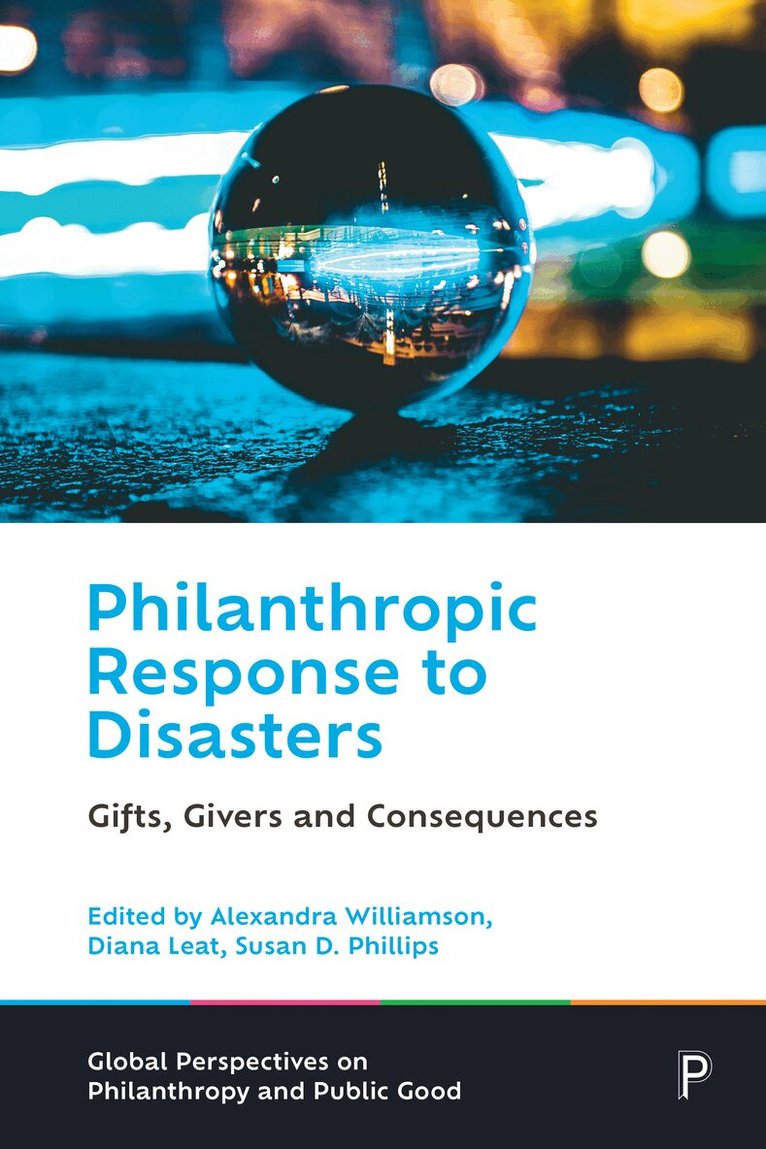
When disaster strikes, our instinctive response is to make things better, not only as individuals but also as groups, organisations, communities and major institutions within society.
With increasing climate-related disasters and the potential for future global pandemics, philanthropy will continue to play an essential role. Yet our knowledge of how philanthropic responses to disasters are motivated, organised and received is fragmented.
This book is a step toward curating our existing knowledge in the emerging field of ‘disaster philanthropy’ and to building a robust base for future research, practice and public policy.
The authors highlight unknowns and ambiguities, extensions and unexplored spaces, and challenges and paradoxes. Above all, they recognise that philanthropic responses to disasters are complex, conditional and subject to change.
458 kr
Läs direkt efter köp
When disaster strikes, our instinctive response is to make things better, not only as individuals but also as groups, organisations, communities and major institutions within society.
With increasing climate-related disasters and the potential for future global pandemics, philanthropy will continue to play an essential role. Yet our knowledge of how philanthropic responses to disasters are motivated, organised and received is fragmented.
This book is a step toward curating our existing knowledge in the emerging field of ‘disaster philanthropy’ and to building a robust base for future research, practice and public policy.
The authors highlight unknowns and ambiguities, extensions and unexplored spaces, and challenges and paradoxes. Above all, they recognise that philanthropic responses to disasters are complex, conditional and subject to change.