Susan E. Cook – författare
Visar alla böcker från författaren Susan E. Cook. Handla med fri frakt och snabb leverans.
6 produkter
6 produkter
2 193 kr
Skickas inom 10-15 vardagar
This volume deals with aspects of genocide in Rwandaand Cambodia that have been largely unexplored to date, including the impact of regional politics and the role played by social institutions in perpetrating genocide. Although the "story" of the Cambodian genocide of 1975-1979 and that of the Rwandan genocide of 1994 have been written about in detail, most have focused on how the genocides took place, what the ideas and motives were that led extremist factions to attempt to kill whole sections of their country's population, and who their victims were. This volume builds on our understanding of genocide in Cambodia and Rwanda by bringing new issues, sources, and approaches into focus.The chapters in this book are grouped so that a single theme^s explored in both the Cambodian and Rwandan contexts; their ordering is designed to facilitate comparative analysis. The first three chapters emphasize the importance of political discourse in the genocidal process. Chapters 4 and 5 examine social institutions and explore their role in the genocidal process. Chapters 6 and 7 describe the military trajectories of the genocidal regimes in Cambodia and Rwanda after their overthrow, showing that genocide and genocidal intents as a political program do not cease the moment the massacres subside. The final chapters deal with private and public efforts to memorialize the genocides in the months and years following the killing.Drawing on ten years of genocide studies at Yale, this excellent anthology assembles high-quality new research from a variety of continents, disciplines, and languages. It will be an important addition to ongoing research on genocide.
728 kr
Skickas inom 10-15 vardagar
This volume deals with aspects of genocide in Rwandaand Cambodia that have been largely unexplored to date, including the impact of regional politics and the role played by social institutions in perpetrating genocide. Although the "story" of the Cambodian genocide of 1975-1979 and that of the Rwandan genocide of 1994 have been written about in detail, most have focused on how the genocides took place, what the ideas and motives were that led extremist factions to attempt to kill whole sections of their country's population, and who their victims were. This volume builds on our understanding of genocide in Cambodia and Rwanda by bringing new issues, sources, and approaches into focus.The chapters in this book are grouped so that a single theme^s explored in both the Cambodian and Rwandan contexts; their ordering is designed to facilitate comparative analysis. The first three chapters emphasize the importance of political discourse in the genocidal process. Chapters 4 and 5 examine social institutions and explore their role in the genocidal process. Chapters 6 and 7 describe the military trajectories of the genocidal regimes in Cambodia and Rwanda after their overthrow, showing that genocide and genocidal intents as a political program do not cease the moment the massacres subside. The final chapters deal with private and public efforts to memorialize the genocides in the months and years following the killing.Drawing on ten years of genocide studies at Yale, this excellent anthology assembles high-quality new research from a variety of continents, disciplines, and languages. It will be an important addition to ongoing research on genocide.
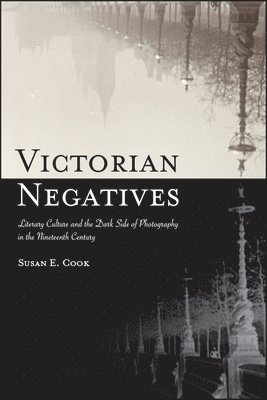
Victorian Negatives
Literary Culture and the Dark Side of Photography in the Nineteenth Century
Häftad, Engelska, 2020
504 kr
Skickas inom 5-8 vardagar
Argues that the photographic negative gives a new way of understanding Victorian debates surrounding origins and copies as well as reality and representation.Victorian Negatives examines the intersection between Victorian photography and literary culture, and argues that the development of the photographic negative played an instrumental role in their confluence. The negative is a technology that facilitates photographic reproduction by way of image inversion, and Susan E. Cook argues that this particular photographic technology influenced the British realist novel and literary celebrity culture, as authors grappled with the technology of inversion and reproduction in their lives and works. The book analyzes literary works by Charles Dickens, Arthur Conan Doyle, E. W. Hornung, Cyril Bennett, Robert Louis Stevenson, Oscar Wilde, Thomas Hardy, and Bram Stoker, and puts readings of those works into conversations with distinct photographic forms, including the daguerreotype, solarization, forensic photography, common cabinet cards, double exposures, and postmortem portraiture. In addition to literary texts, the book analyzes photographic discourses from letters and public writings of photographers and the nineteenth-century press, as well as discussions and debates surrounding Victorian celebrity authorship. The book's focus on the negative both illuminates an oft-marginalized part of the history of photography and demonstrates the way in which this history is central to Victorian literary culture.
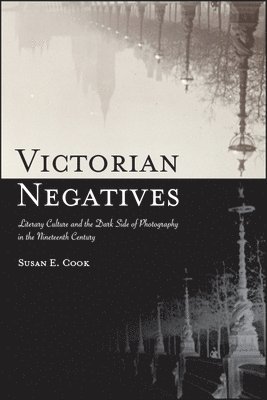
Victorian Negatives
Literary Culture and the Dark Side of Photography in the Nineteenth Century
Inbunden, Engelska, 2019
1 399 kr
Skickas inom 5-8 vardagar
Argues that the photographic negative gives a new way of understanding Victorian debates surrounding origins and copies as well as reality and representation.Victorian Negatives examines the intersection between Victorian photography and literary culture, and argues that the development of the photographic negative played an instrumental role in their confluence. The negative is a technology that facilitates photographic reproduction by way of image inversion, and Susan E. Cook argues that this particular photographic technology influenced the British realist novel and literary celebrity culture, as authors grappled with the technology of inversion and reproduction in their lives and works. The book analyzes literary works by Charles Dickens, Arthur Conan Doyle, E. W. Hornung, Cyril Bennett, Robert Louis Stevenson, Oscar Wilde, Thomas Hardy, and Bram Stoker, and puts readings of those works into conversations with distinct photographic forms, including the daguerreotype, solarization, forensic photography, common cabinet cards, double exposures, and postmortem portraiture. In addition to literary texts, the book analyzes photographic discourses from letters and public writings of photographers and the nineteenth-century press, as well as discussions and debates surrounding Victorian celebrity authorship. The book's focus on the negative both illuminates an oft-marginalized part of the history of photography and demonstrates the way in which this history is central to Victorian literary culture.
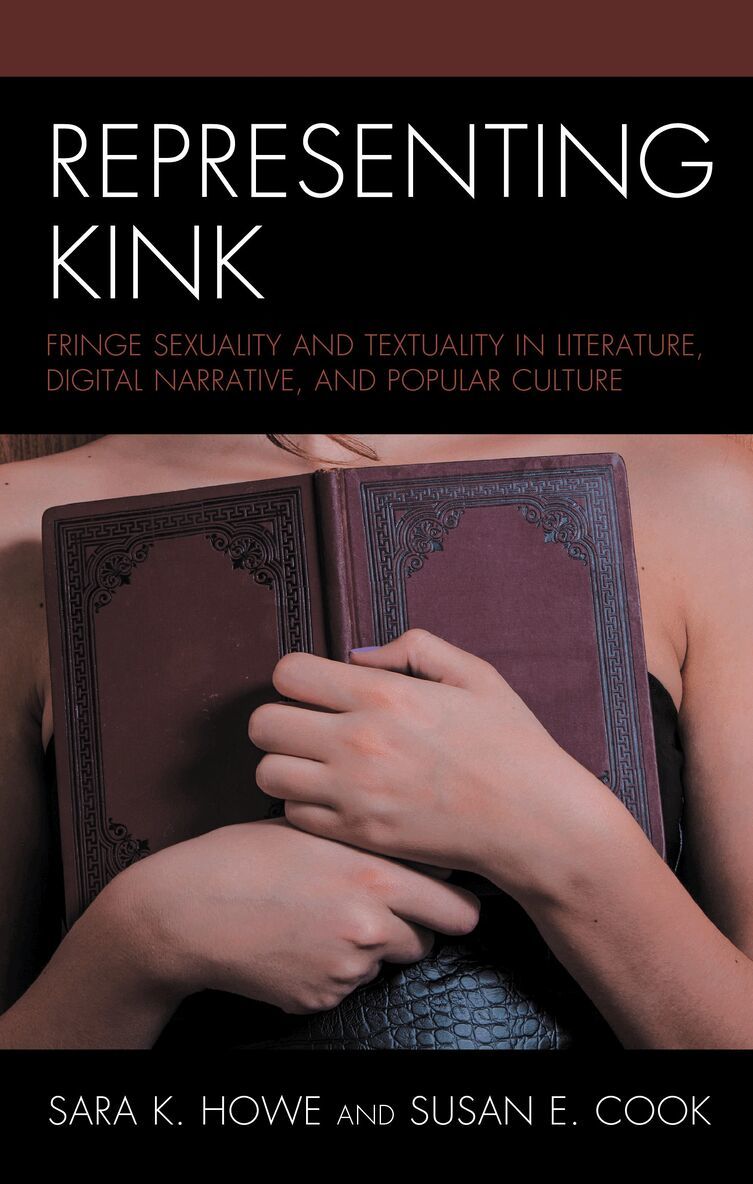
Representing Kink
Fringe Sexuality and Textuality in Literature, Digital Narrative, and Popular Culture
Inbunden, Engelska, 2019
1 325 kr
Skickas inom 10-15 vardagar
Representing Kink raises awareness about non-normative texts and non-normative erotic practices and desires. It defines “kink” broadly, encompassing a range of “inappropriate” texts and understanding it in frequent reference to non-normative erotic fantasies and experiences. Kink is treated as both a set of practices as well as a category of texts at the nexus of subject and form. In addition to canonical texts that take up erotic and marginalized themes, the collection also studies forms that are themselves fringe and feature kink: taboo literature, self-published erotica, SM narratives, fan fiction, role-playing games, and other disavowed texts. The purpose of this study is to focus attention on the margins of an already marginalized subject, in order to highlight the extent to which non-normative textuality and eroticism both shape and are shaped by culture and context. It sheds light on a category of subjects that is at once mainstream in the form of texts such as Fifty Shades of Grey and yet nevertheless repeatedly disparaged and undertheorized. This book advocates for conversations about kinky texts that transcend dichotomous frameworks of good and bad, and normal and deviant--thinking instead in new, theoretically rigorous and flexible directions.
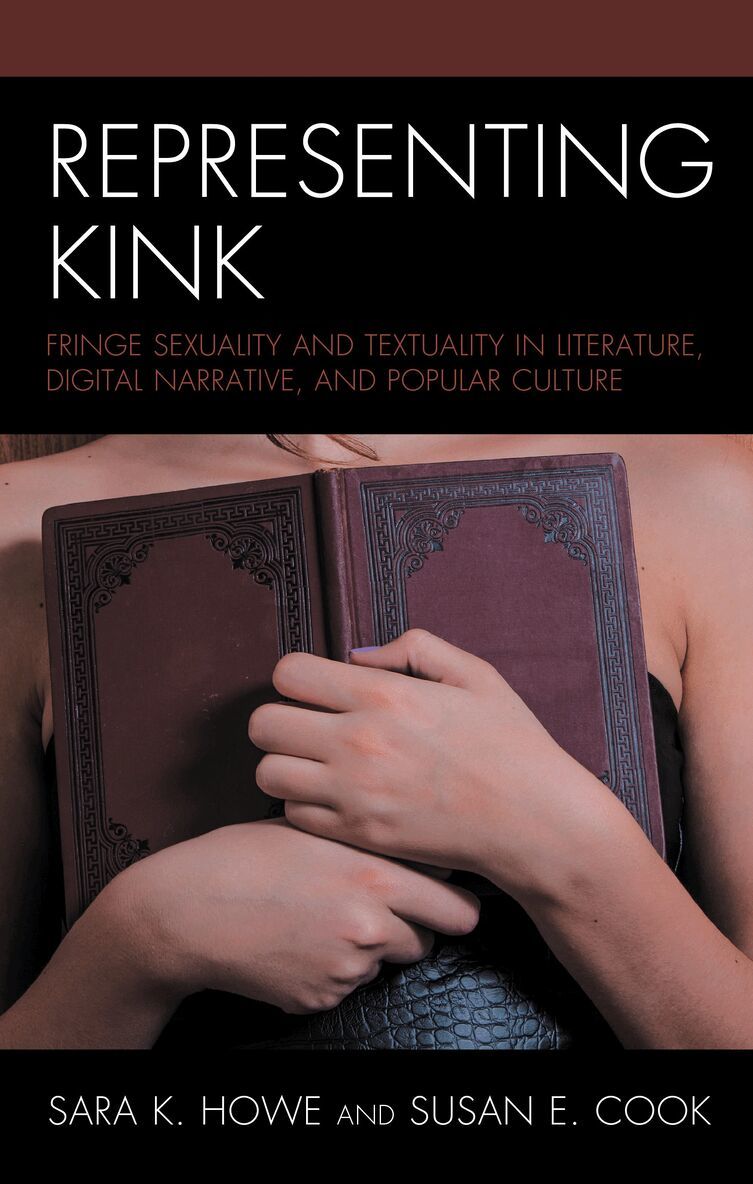
Representing Kink
Fringe Sexuality and Textuality in Literature, Digital Narrative, and Popular Culture
Häftad, Engelska, 2021
566 kr
Skickas inom 10-15 vardagar
Representing Kink raises awareness about non-normative texts and non-normative erotic practices and desires. It defines “kink” broadly, encompassing a range of “inappropriate” texts and understanding it in frequent reference to non-normative erotic fantasies and experiences. Kink is treated as both a set of practices as well as a category of texts at the nexus of subject and form. In addition to canonical texts that take up erotic and marginalized themes, the collection also studies forms that are themselves fringe and feature kink: taboo literature, self-published erotica, SM narratives, fan fiction, role-playing games, and other disavowed texts. The purpose of this study is to focus attention on the margins of an already marginalized subject, in order to highlight the extent to which non-normative textuality and eroticism both shape and are shaped by culture and context. It sheds light on a category of subjects that is at once mainstream in the form of texts such as Fifty Shades of Grey and yet nevertheless repeatedly disparaged and undertheorized. This book advocates for conversations about kinky texts that transcend dichotomous frameworks of good and bad, and normal and deviant--thinking instead in new, theoretically rigorous and flexible directions.