391 kr
Susan E. Hylen – författare
- Häftad, Engelska, 2018Modern readers of the New Testament often notice its varying ideas about women. Some passages encouraged women to be submissive and remain silent. Yet in others, women characters owned property, headed households, or spoke with approval. Women in the New Testament World helps readers understand this conflicting evidence. It argues that social norms of the time encouraged traditional feminine virtues. However, as Susan Hylen argues, women in the culture enacted these virtues in a variety of ways, including active leadership in households, associations, and cities. In contrast to earlier approaches that divided the evidence into groups that either allowed or forbade women's leadership, this book points to a tension that was pervasive across different groups and regions of the Roman world. Society widely viewed women as inferior to men yet applauded their active pursuit of familial and civic interests. Thus, it was not the case that some women led while others were silent; instead, women were praised for modesty at the same time as they exerted influence in their communities. Elaborating on this rich historical background, Hylen illuminates new possibilities in New Testament texts.
- E-bokPDF, Engelska, 2018
316 kr
Läs direkt efter köp
Modern readers of the New Testament often notice its varying ideas about women. Some passages encouraged women to be submissive and remain silent. Yet in others, women characters owned property, headed households, or spoke with approval. Women in the New Testament World helps readers understand this conflicting evidence. It argues that social norms of the time encouraged traditional feminine virtues. However, as Susan Hylen argues, women in the culture enacted these virtues in a variety of ways, including active leadership in households, associations, and cities. In contrast to earlier approaches that divided the evidence into groups that either allowed or forbade women''s leadership, this book points to a tension that was pervasive across different groups and regions of the Roman world. Society widely viewed women as inferior to men yet applauded their active pursuit of familial and civic interests. Thus, it was not the case that some women led while others were silent; instead, women were praised for modesty at the same time as they exerted influence in their communities. Elaborating on this rich historical background, Hylen illuminates new possibilities in New Testament texts. - E-bokEngelska, 2018
319 kr
Läs direkt efter köp
Modern readers of the New Testament often notice its varying ideas about women. Some passages encouraged women to be submissive and remain silent. Yet in others, women characters owned property, headed households, or spoke with approval. Women in the New Testament World helps readers understand this conflicting evidence. It argues that social norms of the time encouraged traditional feminine virtues. However, as Susan Hylen argues, women in the culture enacted these virtues in a variety of ways, including active leadership in households, associations, and cities. In contrast to earlier approaches that divided the evidence into groups that either allowed or forbade women''s leadership, this book points to a tension that was pervasive across different groups and regions of the Roman world. Society widely viewed women as inferior to men yet applauded their active pursuit of familial and civic interests. Thus, it was not the case that some women led while others were silent; instead, women were praised for modesty at the same time as they exerted influence in their communities. Elaborating on this rich historical background, Hylen illuminates new possibilities in New Testament texts. - Inbunden, Engelska, 2015
2 108 kr
Skickas inom 3-6 vardagar
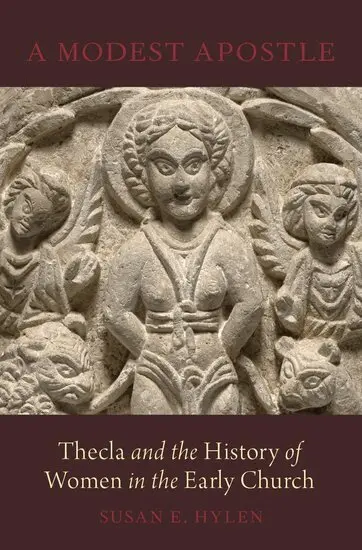
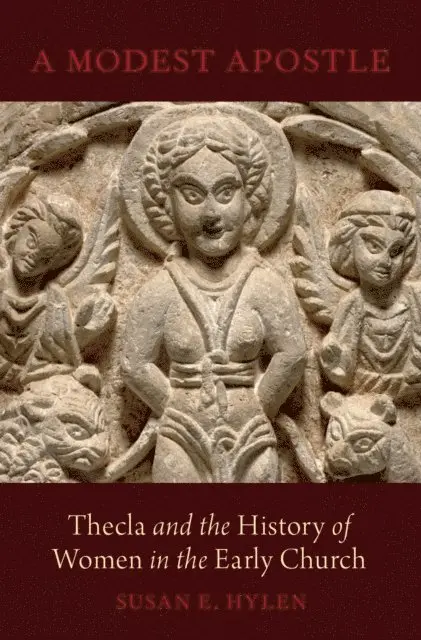
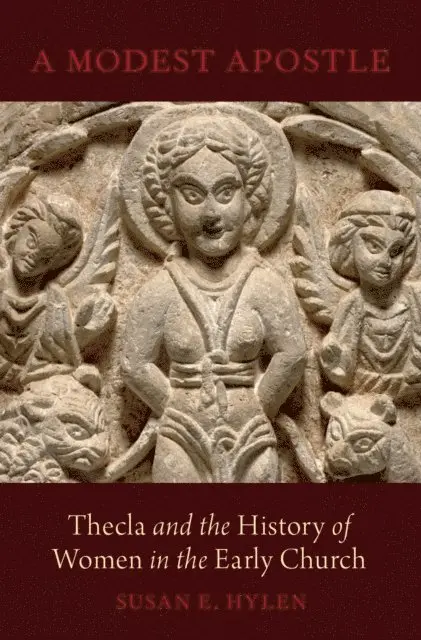
Scholars and mainline pastors tell a familiar narrative about the roles of women in the early church: that women held leadership roles and exercised some authority in the church, but, with the establishment of formal institutional roles, they were excluded from active leadership in the church. Evidence of women's leadership is either described as "exceptional" or relegated to (so-called) heretical groups, who differed with proto-orthodox groups precisely over the issue of women's participation. For example, scholars often contrast the Acts of Paul and Thecla (ATh) with 1Timothy. They understand the two works to represent discrete communities with opposite responses to the question of women's leadership. In A Modest Apostle Susan Hylen uses Thecla as a microcosm from which to challenge this larger narrative. In contrast to previous interpreters, Hylen reads 1Timothy and the ATh as texts that emerge out of and share a common cultural framework. In the Roman period, women were widely expected to exhibit gendered virtues like modesty, industry and loyalty to family. However, women pursued these virtues in remarkably different ways, including active leadership in their communities. Read against a background in which multiple and conflicting norms already existed for women's behavior, Hylen shows that texts like the ATh and 1Timothy begin to look different. Like the culture, 1Timothy affirms women's leadership as deacons and widows while upholding standards of modesty in dress and speech. In the ATh, Thecla's virtue is first established by her modest behavior, which allows her to emerge as a virtuous leader. The text presents Thecla as one who fulfills culturally established norms, even as she pursues a bold new way of life.Hylen's approach points to a new way of understanding women in the early church, one that insists upon the acknowledgment of women's leadership as a historical reality without neglecting the effects of the culture's gender biases. - E-bokPDF, Engelska, 2015
1 274 kr
Läs direkt efter köp
Scholars and mainline pastors tell a familiar narrative about the roles of women in the early church-that women held leadership roles and exercised some authority in the church, but, with the establishment of formal institutional roles, they were excluded from active leadership. Evidence of women''s leadership is either described as "exceptional" or relegated to (so-called) heretical groups, who differed with proto-orthodox groups precisely over the issue of women''s participation. For example, scholars often contrast the Acts of Paul and Thecla (ATh) with 1Timothy. They understand the two works to represent discrete communities with opposite responses to the question of women''s leadership.In A Modest Apostle, Susan Hylen uses Thecla as a microcosm from which to challenge this larger narrative. In contrast to previous interpreters, Hylen reads 1Timothy and the ATh as texts that emerge out of and share a common cultural framework. In the Roman period, women were widely expected to exhibit gendered virtues like modesty, industry, and loyalty to family. However, women pursued these virtues in remarkably different ways, including active leadership in their communities. Reading against a cultural background in which multiple and conflicting norms already existed for women''s behavior, Hylen shows that texts like the ATh and 1Timothy begin to look different. Like the culture, 1Timothy affirms women''s leadership as deacons and widows while upholding standards of modesty in dress and speech. In the ATh, Thecla''s virtue is first established by her modest behavior, which allows her to emerge as a virtuous leader. The text presents Thecla as one who fulfills culturally established norms, even as she pursues a bold new way of life.Hylen''s approach points to a new way of understanding women in the early church, one that insists upon the acknowledgment of women''s leadership as a historical reality without neglecting the effects of the culture''s gender biases. - E-bokEngelska, 2015
1 261 kr
Läs direkt efter köp
Scholars and mainline pastors tell a familiar narrative about the roles of women in the early church-that women held leadership roles and exercised some authority in the church, but, with the establishment of formal institutional roles, they were excluded from active leadership. Evidence of women''s leadership is either described as "exceptional" or relegated to (so-called) heretical groups, who differed with proto-orthodox groups precisely over the issue of women''s participation. For example, scholars often contrast the Acts of Paul and Thecla (ATh) with 1Timothy. They understand the two works to represent discrete communities with opposite responses to the question of women''s leadership.In A Modest Apostle, Susan Hylen uses Thecla as a microcosm from which to challenge this larger narrative. In contrast to previous interpreters, Hylen reads 1Timothy and the ATh as texts that emerge out of and share a common cultural framework. In the Roman period, women were widely expected to exhibit gendered virtues like modesty, industry, and loyalty to family. However, women pursued these virtues in remarkably different ways, including active leadership in their communities. Reading against a cultural background in which multiple and conflicting norms already existed for women''s behavior, Hylen shows that texts like the ATh and 1Timothy begin to look different. Like the culture, 1Timothy affirms women''s leadership as deacons and widows while upholding standards of modesty in dress and speech. In the ATh, Thecla''s virtue is first established by her modest behavior, which allows her to emerge as a virtuous leader. The text presents Thecla as one who fulfills culturally established norms, even as she pursues a bold new way of life.Hylen''s approach points to a new way of understanding women in the early church, one that insists upon the acknowledgment of women''s leadership as a historical reality without neglecting the effects of the culture''s gender biases. - E-bokPDF, Engelska, 2025
341 kr
Läs direkt efter köp
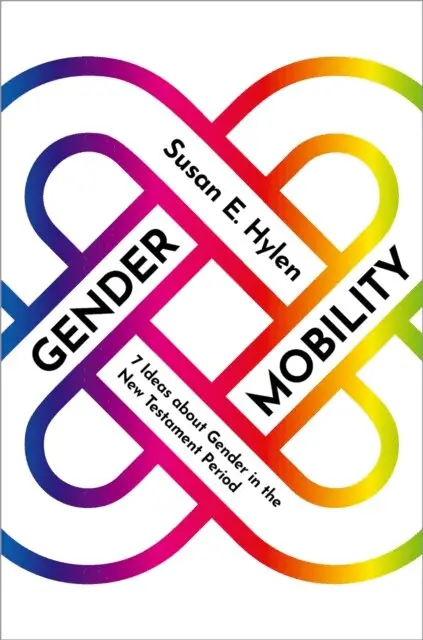
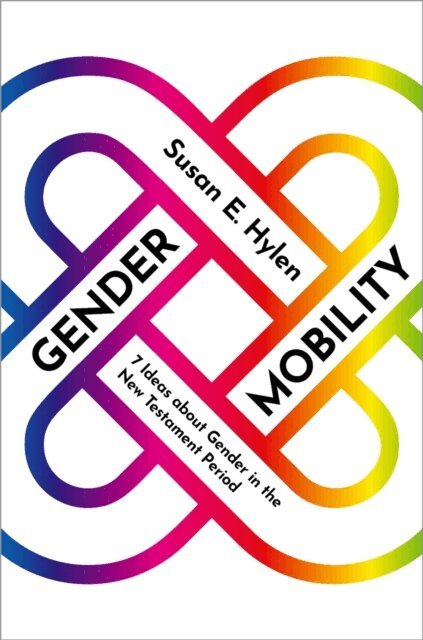
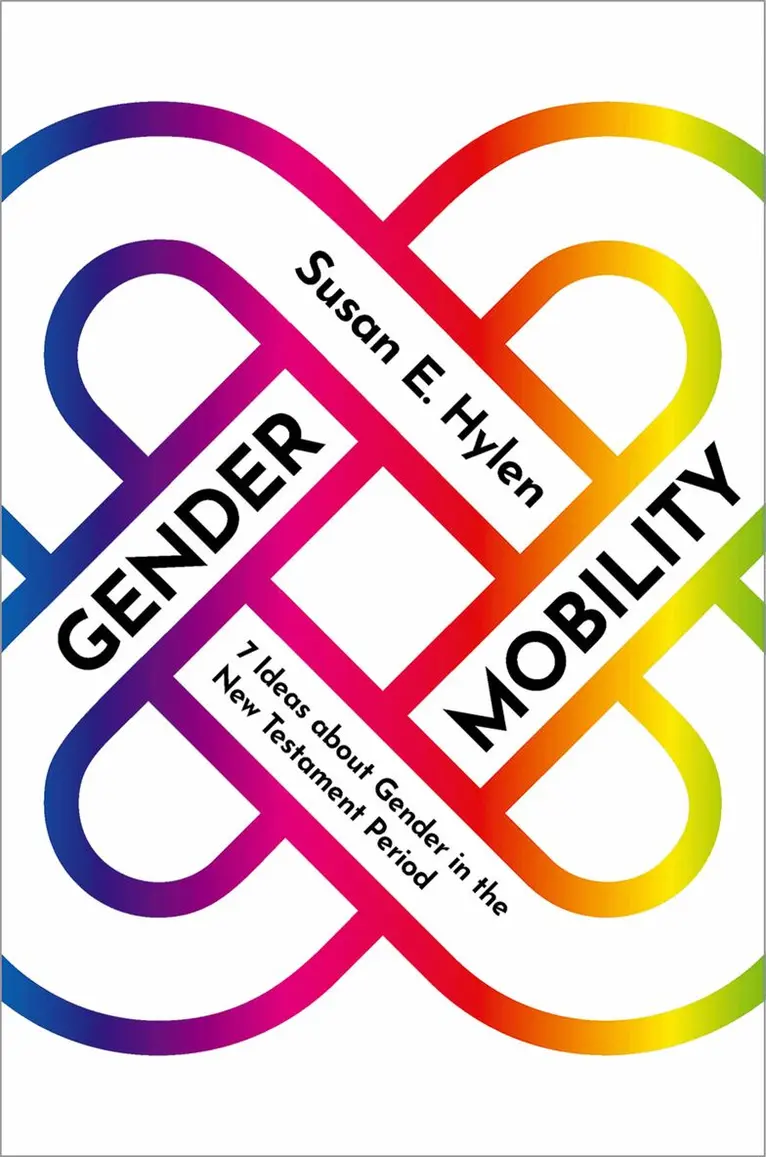
What if our long-held understandings of gender have less historical basis than we imagine?The gender norms and sexual distinctions of the first century world that produced the New Testament were not strictly binary, as we might think. Although some ancient writers did indeed contrast male and female attributes, other social norms created considerable overlap between men and women. In Gender Mobility, Susan E. Hylen argues that the Roman gender order was definitively non-binary. She makes a compelling case that freeborn men, freeborn women, freed men, freed women, enslaved men, and enslaved women all constituted different genders. Further, specifically non-binary genders like eunuchs held a place within Roman gender norms and systems. And the possibility that some people could change gender -- what Hylen calls "e;gender mobility"e; -- was a standard feature of the period. Hylen also shows that, for the most part, gender options were not freely chosen, and moreover that gender norms were dominated by familiar forms of oppression -- a social domination that favored freeborn men and women over other groups. In this way, Hylen redirects our contemporary thinking about gender roles to the ancient past, while simultaneously opening our imaginations to other ways that societies have constructed gender. This thought-provoking book serves our own current moment as we continue to debate gender norms and the institutions that maintain them. - E-bokEngelska, 2025
344 kr
Läs direkt efter köp
What if our long-held understandings of gender have less historical basis than we imagine?The gender norms and sexual distinctions of the first century world that produced the New Testament were not strictly binary, as we might think. Although some ancient writers did indeed contrast male and female attributes, other social norms created considerable overlap between men and women. In Gender Mobility, Susan E. Hylen argues that the Roman gender order was definitively non-binary. She makes a compelling case that freeborn men, freeborn women, freed men, freed women, enslaved men, and enslaved women all constituted different genders. Further, specifically non-binary genders like eunuchs held a place within Roman gender norms and systems. And the possibility that some people could change gender -- what Hylen calls "e;gender mobility"e; -- was a standard feature of the period. Hylen also shows that, for the most part, gender options were not freely chosen, and moreover that gender norms were dominated by familiar forms of oppression -- a social domination that favored freeborn men and women over other groups. In this way, Hylen redirects our contemporary thinking about gender roles to the ancient past, while simultaneously opening our imaginations to other ways that societies have constructed gender. This thought-provoking book serves our own current moment as we continue to debate gender norms and the institutions that maintain them. - Häftad, Engelska, 2028
328 kr
Skickas inom 5-8 vardagar
What if our long-held understandings of gender have less historical basis than we imagine?The gender norms and sexual distinctions of the first century world that produced the New Testament were not strictly binary, as we might think. Although some ancient writers did indeed contrast male and female attributes, other social norms created considerable overlap between men and women.In Gender Mobility, Susan E. Hylen argues that the Roman gender order was definitively non-binary. She makes a compelling case that freeborn men, freeborn women, freed men, freed women, enslaved men, and enslaved women all constituted different genders. Further, specifically non-binary genders like eunuchs held a place within Roman gender norms and systems. And the possibility that some people could change gender -- what Hylen calls "gender mobility" -- was a standard feature of the period.Hylen also shows that, for the most part, gender options were not freely chosen, and moreover that gender norms were dominated by familiar forms of oppression -- a social domination that favored freeborn men and women over other groups. In this way, Hylen redirects our contemporary thinking about gender roles to the ancient past, while simultaneously opening our imaginations to other ways that societies have constructed gender. This thought-provoking book serves our own current moment as we continue to debate gender norms and the institutions that maintain them. - Häftad, Engelska, 2009
421 kr
Skickas inom 3-6 vardagar
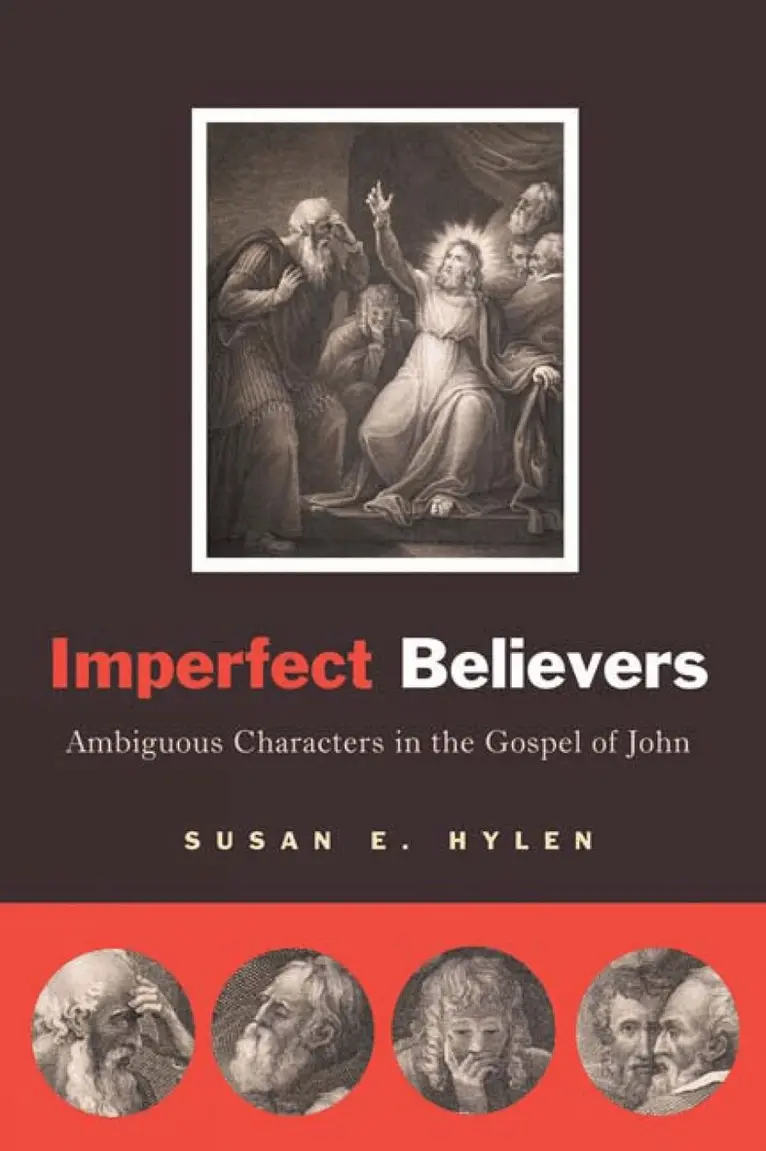
This book is a solid study of characters in the Gospel of John--Nicodemus, the Samaritan woman, the disciples, the Jews, Martha and Mary, Peter and the Beloved Disciple, and Jesus. Susan Hylen argues that John's characters are not simply one-dimensional depictions of belief and unbelief, but are in fact far more complex and ambiguous.This ambiguity has an important literary function: it invites the reader to understand biblical characters within the context of the inherent logic of the Gospel. The Gospel establishes ideals like believing and abiding in Jesus. The reader is left to decide to what extent a character's actions and speech reflect these aims. Individual character portraits explore what readers may learn from studying John's complex characters.This is an excellent secondary source for seminary classes on the fourth Gospel. - Häftad, Engelska, 2006
388 kr
Skickas inom 3-6 vardagar
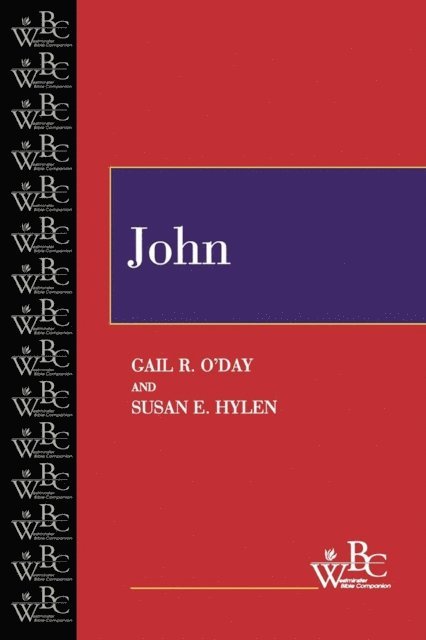
The Gospel of John is one of the most beloved books in the Christian canon. Its stories and images have long captured the imaginations of Christians. Not only is it one of the most popular writings of the New Testament, but many aspects of its style and outlook are distinctive. In this clear, thorough, and accessible commentary on the Gospel of John, scholars Gail O'Day and Susan Hylen explore and explain this Gospel's distinctive qualities.Books in the Westminster Bible Companion series assist laity in their study of the Bible as a guide to Christian faith and practice. Each volume explains the biblical book in its original historical context and explores its significance for faithful living today. These books are ideal for individual study and for Bible study classes and groups. - Häftad, Engelska, 2023
202 kr
Skickas
- Inbunden, Engelska, 2021
622 kr
Skickas inom 5-8 vardagar
- E-bokEngelska, 2006
386 kr
Läs direkt efter köp
The Gospel of John is one of the most beloved books in the Christian canon. Its stories and images have long captured the imaginations of Christians. Not only is it one of the most popular writings of the New Testament, but many aspects of its style and outlook are distinctive. In this clear, thorough, and accessible commentary on the Gospel of John, scholars Gail O''Day and Susan Hylen explore and explain this Gospel''s distinctive qualities.
Books in the Westminster Bible Companion series assist laity in their study of the Bible as a guide to Christian faith and practice. Each volume explains the biblical book in its original historical context and explores its significance for faithful living today. These books are ideal for individual study and for Bible study classes and groups.
- Häftad, Engelska, 2022
774 kr
Skickas inom 5-8 vardagar
- Häftad, Engelska, 2023
774 kr
Skickas inom 5-8 vardagar
- Häftad, Engelska, 2023
774 kr
Skickas inom 5-8 vardagar
- Häftad, Engelska, 2024
774 kr
Skickas inom 5-8 vardagar
- Häftad, Engelska, 2021
401 kr
Skickas inom 5-8 vardagar
- Häftad, Engelska, 2022
782 kr
Skickas inom 5-8 vardagar
- Häftad, Engelska, 2022
774 kr
Skickas inom 5-8 vardagar
- Häftad, Engelska, 2023
774 kr
Skickas inom 5-8 vardagar
- Häftad, Engelska, 2022
782 kr
Skickas inom 5-8 vardagar
- Häftad, Engelska, 2024
782 kr
Skickas inom 5-8 vardagar
- Häftad, Engelska, 2024
782 kr
Skickas inom 5-8 vardagar
- Häftad, Engelska, 2024
782 kr
Skickas inom 5-8 vardagar
- Häftad, Engelska, 2024
782 kr
Skickas inom 5-8 vardagar
- Häftad, Engelska, 2025
782 kr
Skickas inom 5-8 vardagar
- Häftad, Engelska, 2025
782 kr
Skickas inom 5-8 vardagar
- Häftad, Engelska, 2025
763 kr
Skickas inom 5-8 vardagar