Susan Gordon - Böcker
Visar alla böcker från författaren Susan Gordon. Handla med fri frakt och snabb leverans.
9 produkter
9 produkter
131 kr
Skickas inom 5-8 vardagar
1 064 kr
Skickas inom 10-15 vardagar
This book explores the meaning and import of neurophenomenology and the philosophy of enactive or embodied cognition for psychology. It introduces the psychologist to an experiential, non-reductive, holistic, theoretical, and practical framework that integrates the approaches of natural and human science to consciousness. In integrating phenomenology with cognitive science, neurophenomenology provides a bridge between the natural and human sciences that opens an interdisciplinary dialogue on the nature of awareness, the ontological primacy of experience, the perception of the observer, and the mind-brain relationship, which will shape the future of psychological theory, research, and practice.
371 kr
Skickas inom 5-8 vardagar
1 069 kr
Skickas inom 10-15 vardagar
This book explores the meaning and import of neurophenomenology and the philosophy of enactive or embodied cognition for psychology. It introduces the psychologist to an experiential, non-reductive, holistic, theoretical, and practical framework that integrates the approaches of natural and human science to consciousness. In integrating phenomenology with cognitive science, neurophenomenology provides a bridge between the natural and human sciences that opens an interdisciplinary dialogue on the nature of awareness, the ontological primacy of experience, the perception of the observer, and the mind-brain relationship, which will shape the future of psychological theory, research, and practice.
Guanacaste Snapshots
An Album of Images and Memories of Rural Costa Rica 1965-1985
Häftad, Engelska, 2024
175 kr
Skickas inom 5-8 vardagar
Guanacaste Snapshots
An Album of Images and Memories of Rural Costa Rica 1965-1985
Inbunden, Engelska, 2024
270 kr
Skickas inom 5-8 vardagar
1 276 kr
Skickas inom 10-15 vardagar
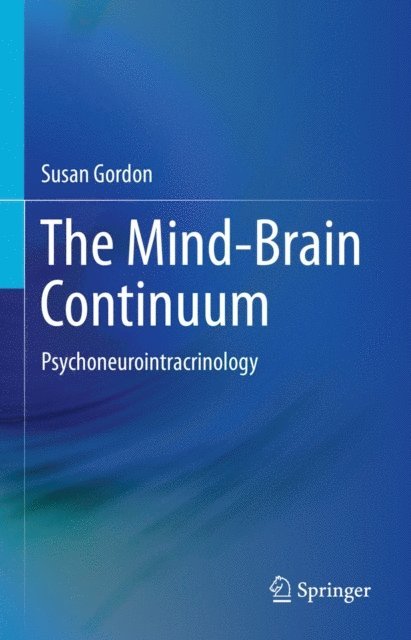
This insightful book proposes a holistic theory of the development of self, drawing on interdisciplinary literature in existential-phenomenology, neurophenomenology, intracrinology, endocrinology, and naturopathic medicine. The psychoneurointracrine hypothesis bridges the gap between the mind and brain, providing a framework to explain the complex system that facilitates development of one’s sense of self and well-being. The book challenges assumptions in present day neuroscience and psychiatry, placing the mind and brain on a continuum of health and growth rather than reducing the study of human consciousness to neurobiological terms and pathological classifications.“In this landmark book, Susan Gordon presents a bold hypothesis, one that underscores the importance of psychoneurointracrine activity and links it to female neurology and the development of one’s sense of self. She brilliantly places this activity, which serves as a mind-body bridge, within the frameworks of neurophenomenology and non-linear dynamics. Her psychoneurointracrine hypothesis is a tour de force, one that is holistic, integrating intracrinology with psychology and neurology. This hypothesis undercuts the current assumption that the mind is an epiphenomenon of the brain, creating a paradigm that impacts science’s understanding of behavior, experience, consciousness, and human agency.”Stanley Krippner, PhD, Affiliated Distinguished Faculty, California Institute of Integral Studies, San Francisco, CA“In her fascinating book, Susan Gordon develops a novel theory about the biological connection between mind, brain, and organism. Drawing on empirical research on the role of the female hormonal system in basal states of self and mood, she shows that the biochemistry of the endocrine system must be viewed as an indispensable foundation for the emergence of embodied self-awareness. The homeostasis and hormonal balance of the organism is integral to the sense of well-being and the development of meaning, but it is also continually modulated and influenced by the subject’s experience of his or her world. In this way, she makes a decisive contribution to a theory of embodiment that goes far beyond a computational theory of the brain to focus on the biochemical-organismic processes at the root of the mind.”Thomas Fuchs, MD, PhD, Karl Jaspers Professor of Philosophy and Psychiatry, University of Heidelberg, DE
612 kr
Skickas inom 5-8 vardagar
906 kr
Skickas inom 10-15 vardagar
This insightful book proposes a holistic theory of the development of self, drawing on interdisciplinary literature in existential-phenomenology, neurophenomenology, intracrinology, endocrinology, and naturopathic medicine. The psychoneurointracrine hypothesis bridges the gap between the mind and brain, providing a framework to explain the complex system that facilitates development of one’s sense of self and well-being. The book challenges assumptions in present day neuroscience and psychiatry, placing the mind and brain on a continuum of health and growth rather than reducing the study of human consciousness to neurobiological terms and pathological classifications.“In this landmark book, Susan Gordon presents a bold hypothesis, one that underscores the importance of psychoneurointracrine activity and links it to female neurology and the development of one’s sense of self. She brilliantly places this activity, which serves as a mind-body bridge, within the frameworks of neurophenomenology and non-linear dynamics. Her psychoneurointracrine hypothesis is a tour de force, one that is holistic, integrating intracrinology with psychology and neurology. This hypothesis undercuts the current assumption that the mind is an epiphenomenon of the brain, creating a paradigm that impacts science’s understanding of behavior, experience, consciousness, and human agency.”Stanley Krippner, PhD, Affiliated Distinguished Faculty, California Institute of Integral Studies, San Francisco, CA“In her fascinating book, Susan Gordon develops a novel theory about the biological connection between mind, brain, and organism. Drawing on empirical research on the role of the female hormonal system in basal states of self and mood, she shows that the biochemistry of the endocrine system must be viewed as an indispensable foundation for the emergence of embodied self-awareness. The homeostasis and hormonal balance of the organism is integral to the sense of well-being and the development of meaning, but it is also continually modulated and influenced by the subject’s experience of his or her world. In this way, she makes a decisive contribution to a theory of embodiment that goes far beyond a computational theory of the brain to focus on the biochemical-organismic processes at the root of the mind.”Thomas Fuchs, MD, PhD, Karl Jaspers Professor of Philosophy and Psychiatry, University of Heidelberg, DE