Susan M. Fitzpatrick – författare
Visar alla böcker från författaren Susan M. Fitzpatrick. Handla med fri frakt och snabb leverans.
3 produkter
3 produkter
E-bok
Engelska, 2007464 kr
Läs direkt efter köp
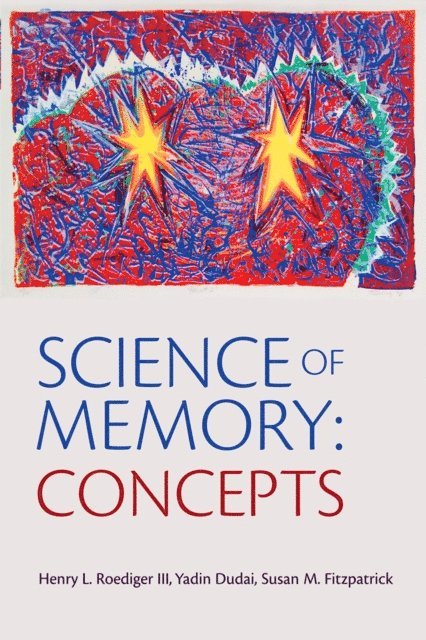
Scientists currently study memory from many different perspectives: neurobiological, ethological, animal conditioning, cognitive, behavioral neuroscience, social, and cultural. The aim of this book is to help initiate a new science of memory by bringing these perspectives together to create a unified understanding of the topic. The book began with a conference where leading practitioners from all these major approaches met to analyze and discuss 16 concepts that are crucial to our understanding of memory. Each of these 16 concepts is addressed in a section of the book, and in the 66 succinct chapters that fill these sections, a leading researcher addresses the section''s concept by clearly stating his or her position on it, elucidating how it is used, and discussing how it should be used in future research. For some concepts, there is general agreement among practitioners from different fields and levels of analysis, but for others there is general disagreement and much controversy. A final chapter in each section, also written by a leading researcher, integrates the various viewpoints offered on the section''s concept, then draws conclusions about the concept. This groundbreaking volume will be an indispensable reference for all the students and researchers who will build upon the foundation it provides for the new science of memory.
Häftad, Engelska, 2007
848 kr
Skickas inom 5-8 vardagar
The study of learning and memory occurs in several scientific traditions: neurobiology, neurogenetics, neurochemistry; animal learning and behaviour; behavioural neuroscience; ethological and evolutionary approaches; cognitive psychology; neuropsychology, computational modelling, and artifical intelligence all contribute. However, researchers using one approach typically work in relative isolation from those using other approaches. The aim of the volume is to bring together leading researchers in the various fields of learning and memory to discuss the field's core concepts, across disciplinary boundaries, with the hope that such discussion will enhance and reorient the field and lead to a more unified science of memory. Science of Memory: Concepts is not to be simply another edited volume that reports research by contributors, but rather a searching examination of 16 fundamental concepts in the field. For each, three position papers describe how the concept is viewed in the author's particular tradition. There is an integrator for each concept, who will pull together the main themes from the various contributions and elucidates key points of agreement and disagreement. The volume will begin with an introductory chapter by Yadin Dudai, Roddy Roediger, and Endel Tulving, and will end with a concluding chapter by Susan Fitzpatrick. Science of Memory is essential reading for professional researchers and students in all the various fields of learning and memory.
E-bok
PDF, Engelska, 2007464 kr
Läs direkt efter köp
Scientists currently study memory from many different perspectives: neurobiological, ethological, animal conditioning, cognitive, behavioral neuroscience, social, and cultural. The aim of this book is to help initiate a new science of memory by bringing these perspectives together to create a unified understanding of the topic. The book began with a conference where leading practitioners from all these major approaches met to analyze and discuss 16 concepts that are crucial to our understanding of memory. Each of these 16 concepts is addressed in a section of the book, and in the 66 succinct chapters that fill these sections, a leading researcher addresses the section''s concept by clearly stating his or her position on it, elucidating how it is used, and discussing how it should be used in future research. For some concepts, there is general agreement among practitioners from different fields and levels of analysis, but for others there is general disagreement and much controversy. A final chapter in each section, also written by a leading researcher, integrates the various viewpoints offered on the section''s concept, then draws conclusions about the concept. This groundbreaking volume will be an indispensable reference for all the students and researchers who will build upon the foundation it provides for the new science of memory.