Susan Martin – författare
Visar alla böcker från författaren Susan Martin. Handla med fri frakt och snabb leverans.
18 produkter
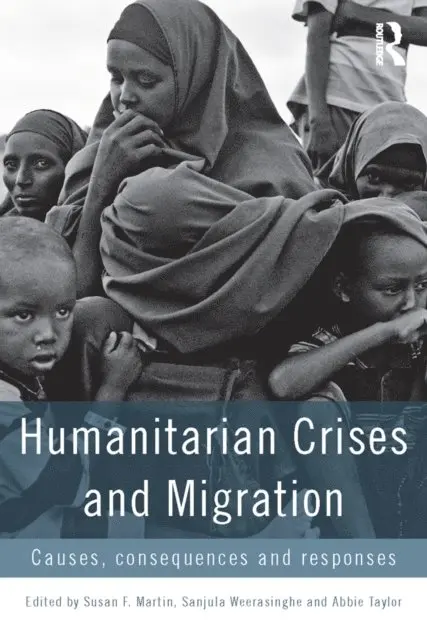
Humanitarian Crises and Migration
Causes, Consequences and Responses
Av Susan Martin, Sanjula Weerasinghe m. fl.
Inbunden, 2014
2515 kr
Lägg i varukorg
Whether it is the stranding of tens of thousands of migrant workers at the Libyan–Tunisian border, or the large-scale displacement triggered by floods in Pakistan and Colombia, hardly a week goes by in which humanitarian crises have not precipitated human movement. While some people move …
Humanitarian Crises and Migration
Causes, Consequences and Responses
Av Susan Martin, Sanjula Weerasinghe m. fl.
Häftad, 2014
751 kr
Lägg i varukorg
Whether it is the stranding of tens of thousands of migrant workers at the Libyan–Tunisian border, or the large-scale displacement triggered by floods in Pakistan and Colombia, hardly a week goes by in which humanitarian crises have not precipitated human movement. While some people move …
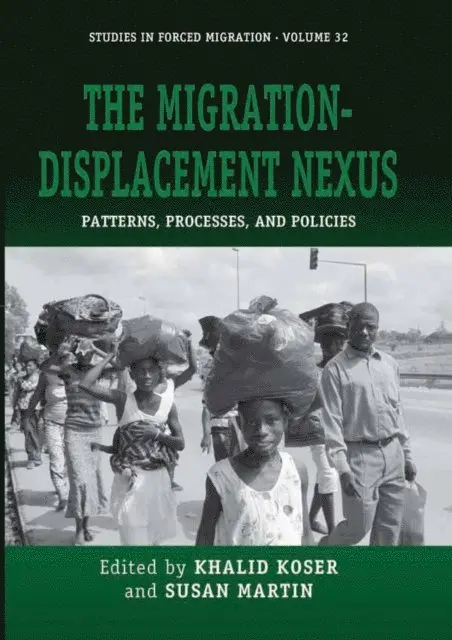
Migration-Displacement Nexus
Patterns, Processes, and Policies
Inbunden, 2011
1921 kr
Lägg i varukorg
The “migration-displacement nexus” is a new concept intended to capture the complex and dynamic interactions between voluntary and forced migration, both internally and internationally. Besides elaborating a new concept, this volume has three main purposes: the first is to focus empirical attention …
Migration-Displacement Nexus
Patterns, Processes, and Policies
E-bok, 2011
287 kr
Lägg i varukorg
The “migration-displacement nexus” is a new concept intended to capture the complex and dynamic interactions between voluntary and forced migration, both internally and internationally. Besides elaborating a new concept, this volume has three main purposes: the first is to focus empirical attention …
Cassidy et al.: Women and Empire, 1750-1939, Vol. I
Volume 1: Australia
Av Susan Martin
E-bok, 2021
1030 kr
Lägg i varukorg
First published in 2008. Women and Empire, 1750-1939 functions to extend significantly the range of the History of Feminism series (co-published by Routledge and Edition Synapse), bringing together the histories of British and American women''s emancipation, represented in earlier sets, into …
Cassidy et al.: Women and Empire, 1750-1939, Vol. I
Volume 1: Australia
Av Susan Martin
E-bok, 2021
1052 kr
Lägg i varukorg
First published in 2008. Women and Empire, 1750-1939 functions to extend significantly the range of the History of Feminism series (co-published by Routledge and Edition Synapse), bringing together the histories of British and American women''s emancipation, represented in earlier sets, into …
Humanitarian Crises and Migration
Causes, Consequences and Responses
Av Abbie Taylor, Sanjula Weerasinghe m. fl.
E-bok, 2014
813 kr
Lägg i varukorg
Whether it is the stranding of tens of thousands of migrant workers at the Libyan–Tunisian border, or the large-scale displacement triggered by floods in Pakistan and Colombia, hardly a week goes by in which humanitarian crises have not precipitated human movement. While some people move …
Humanitarian Crises and Migration
Causes, Consequences and Responses
Av Abbie Taylor, Sanjula Weerasinghe m. fl.
E-bok, 2014
795 kr
Lägg i varukorg
Whether it is the stranding of tens of thousands of migrant workers at the Libyan–Tunisian border, or the large-scale displacement triggered by floods in Pakistan and Colombia, hardly a week goes by in which humanitarian crises have not precipitated human movement. While some people move …
Waves of War
Av Susan Martin
E-bok, 2016
52 kr
Lägg i varukorg
On D-Day, June 6th, 1944, the Allies landed approximately 156-thousand troops on the beaches in Normandy called “Operation Overload.” Fighting alongside them were 73-thousand Americans on two beaches. On Omaha Beach there were 23,250. On Utah Beach 23,250. And 15,500 more made up the airborne …
Night Visitor
Av Susan Martin
E-bok, 2021
187 kr
Lägg i varukorg
Muffled sounds coming from the front of the house...Think about when you saw that unfamiliar animal for the first time! Oh my gosh! Did you see a fluffy striped tail, paws that have fingers, curious beady black eyes, and was he rummaging through your trash can? Did he suddenly look up to see you? …
Can I tell you about Depression?
A guide for friends, family and professionals
Av Christopher Dowrick, Susan Martin
Häftad, 2015
245 kr
Lägg i varukorg
Part of the Reading Well scheme. 35 books selected by young people and health professionals to provide 13 to 18 year olds with high-quality support, information and advice about common mental health issues and related conditions.Meet Julie - a women who suffers from periods of depression. Julie and …
Bedeutung der IFRS für die Bilanzpolitik deutscher Unternehmen
Av Susan Martin
Häftad, 2012
385 kr
Lägg i varukorg
We Started a Nightclub
Birth of the Pyramid Cocktail Lounge as Told by Those Who Lived It
Av Susan Martin, Brian Butterisk m. fl.
Häftad, 2024
444 kr
Lägg i varukorg
We Started a Nightclub: The Birth of the Pyramid Cocktail Lounge as Told by Those Who Lived It is the story of the beginnings of the club that was the launching pad for countless talented performers, musicians, and artists—many at the earliest stages of their careers. It begins in 1981 at the last …
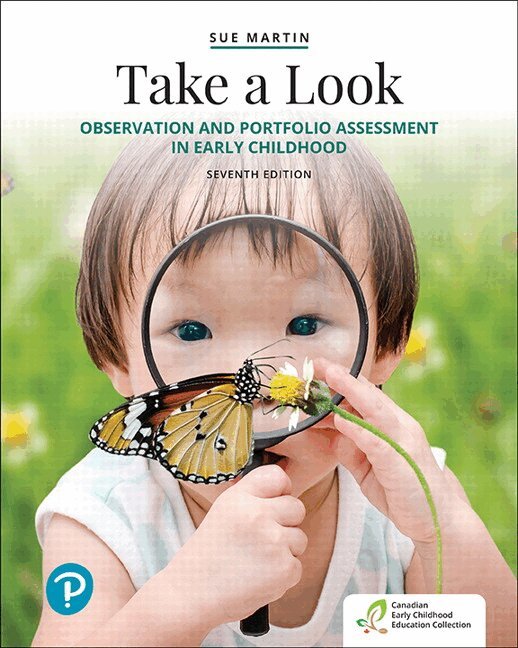
Take a Look
Observation and Portfolio Assessment in Early Childhood
Av Susan Martin
Häftad, 2019
1088 kr
Tillfälligt slut
A practical and accessible introduction to early childhood observation methods. Take A Look: Observation and Portfolio Assessment in Early Childhood has been praised for its practical approach, clarity, and ease of use. Its detailed coverage of observation methods leads the reader to develop skills …