Susan Shirk - Böcker
Visar alla böcker från författaren Susan Shirk. Handla med fri frakt och snabb leverans.
2 produkter
2 produkter
263 kr
Skickas inom 5-8 vardagar
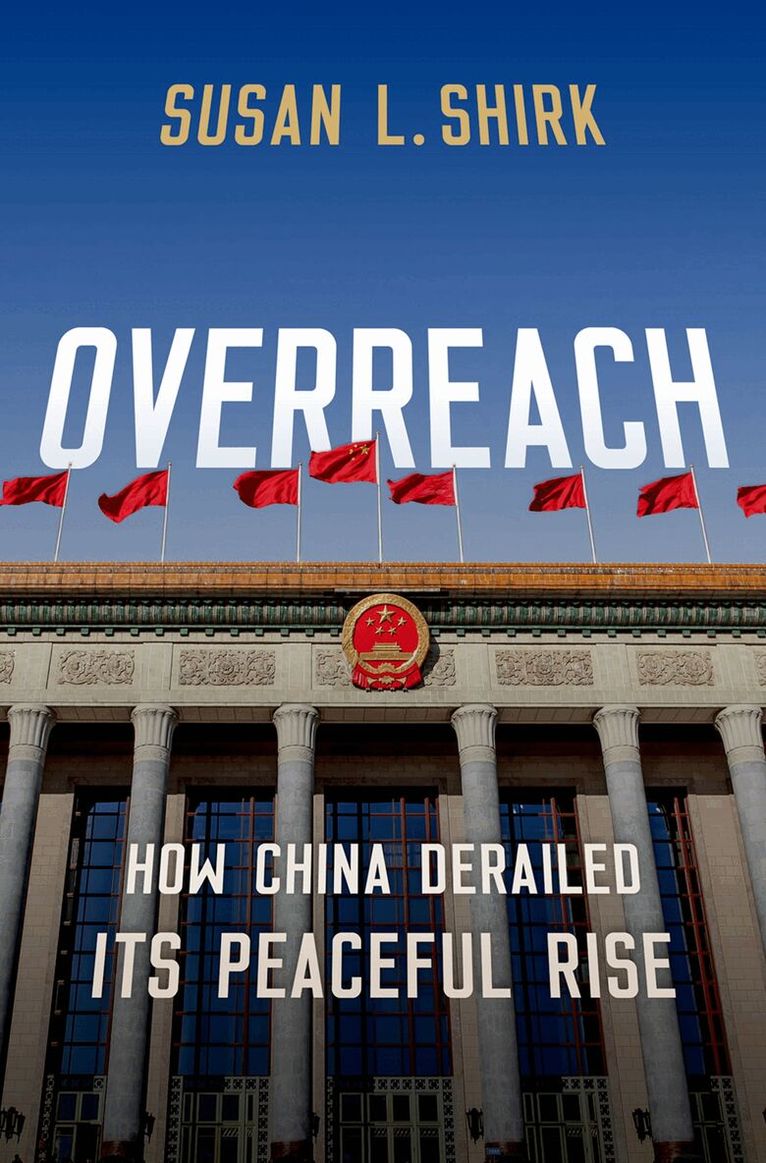
Winner, The Lionel Gelber PrizeSilver Medal, Arthur Ross Book AwardFor decades, China's rise to power was characterized by its reassurance that this rise would be peaceful. Then, as Susan L. Shirk, shows in this sobering, clear-eyed account of China today, something changed.For three decades after Mao's death in 1976, China's leaders adopted a restrained approach to foreign policy. They determined that any threat to their power, and that of the Chinese Communist Party, came not from abroad but from within—a conclusion cemented by the 1989 Tiananmen crisis. To facilitate the country's inexorable economic ascendence, and to prevent a backlash, they reassured the outside world of China's peaceful intentions.Then, as Susan Shirk shows in this illuminating, disturbing, and utterly persuasive new book, something changed. China went from fragile superpower to global heavyweight, threatening Taiwan as well as its neighbors in the South China Sea, tightening its grip on Hong Kong, and openly challenging the United States for preeminence not just economically and technologically but militarily. China began to overreach. Combining her decades of research and experience, Shirk, one of the world's most respected experts on Chinese politics, argues that we are now fully embroiled in a new cold war.To explain what happened, Shirk pries open the "black box" of China's political system and looks at what derailed its peaceful rise. As she shows, the shift toward confrontation began in the mid-2000s under the mild-mannered Hu Jintao, first among equals in a collective leadership. As China's economy boomed, especially after the Global Financial Crisis of 2008, Hu and the other leaders lost restraint, abetting aggression toward the outside world and unchecked domestic social control. When Xi Jinping took power in 2012, he capitalized on widespread official corruption and open splits in the leadership to make the case for more concentrated power at the top. In the decade following, and to the present day—the eve of the 20th CCP Congress when he intends to claim a third term—he has accumulated greater power than any leader since Mao. Those who implement Xi's directives compete to outdo one another, provoking an even greater global backlash and stoking jingoism within China on a scale not seen since the Cultural Revolution.Here is a devastatingly lucid portrait of China today. Shirk's extensive interviews and meticulous analysis reveal the dynamics driving overreach. To counter it, she argues, the worst mistake the rest of the world, and the United States in particular, can make is to overreact. Understanding the domestic roots of China's actions will enable us to avoid the mistakes that could lead to war.
191 kr
Skickas inom 5-8 vardagar
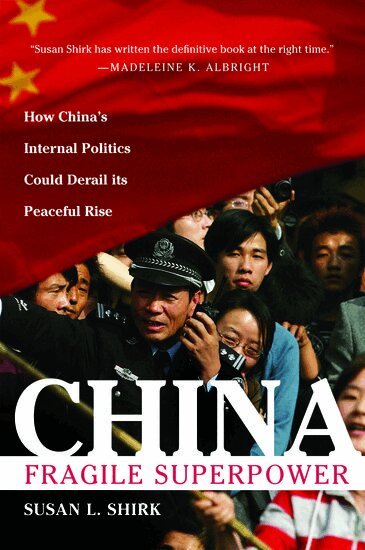
Once a sleeping giant, China today is the world's fastest growing economy--the leading manufacturer of cell phones, laptop computers, and digital cameras--a dramatic turn-around that alarms many Westerners. But in China: Fragile Superpower, Susan L. Shirk opens up the black box of Chinese politics and finds that the real danger lies elsewhere--not in China's astonishing growth, but in the deep insecurity of its leaders. China's leaders face a troubling paradox: the more developed and prosperous the country becomes, the more insecure and threatened they feel. Shirk, a former Deputy Assistant Secretary of State responsible for China, knows many of today's Chinese rulers personally and has studied them for three decades. She offers invaluable insight into how they think--and what they fear. In this revealing book, readers see the world through the eyes of men like President Hu Jintao and former President Jiang Zemin. We discover a fragile communist regime desperate to survive in a society turned upside down by miraculous economic growth and a stunning new openness to the greater world. Indeed, ever since the 1989 pro-democracy protests in Tiananmen Square and the fall of communism in the Soviet Union, Chinese leaders have been haunted by the fear that their days in power are numbered. Theirs is a regime afraid of its own citizens, and this fear motivates many of their decisions when dealing with the U.S. and other foreign nations. In particular, the fervent nationalism of the Chinese people, combined with their passionate resentment of Japan and attachment to Taiwan, have made relations with these two regions a minefield. It is here, Shirk concludes, in the tangled interactions between Japan, Taiwan, China, and the United States, that the greatest danger lies. Shirk argues that rising powers such as China tend to provoke wars in large part because other countries mishandle them. Unless we understand China's brittle internal politics and the fears that motivate its leaders, we face the very real possibility of avoidable conflict with China. This book provides that understanding.