Susan Zieger - Böcker
Visar alla böcker från författaren Susan Zieger. Handla med fri frakt och snabb leverans.
5 produkter
5 produkter
242 kr
Skickas inom 7-10 vardagar
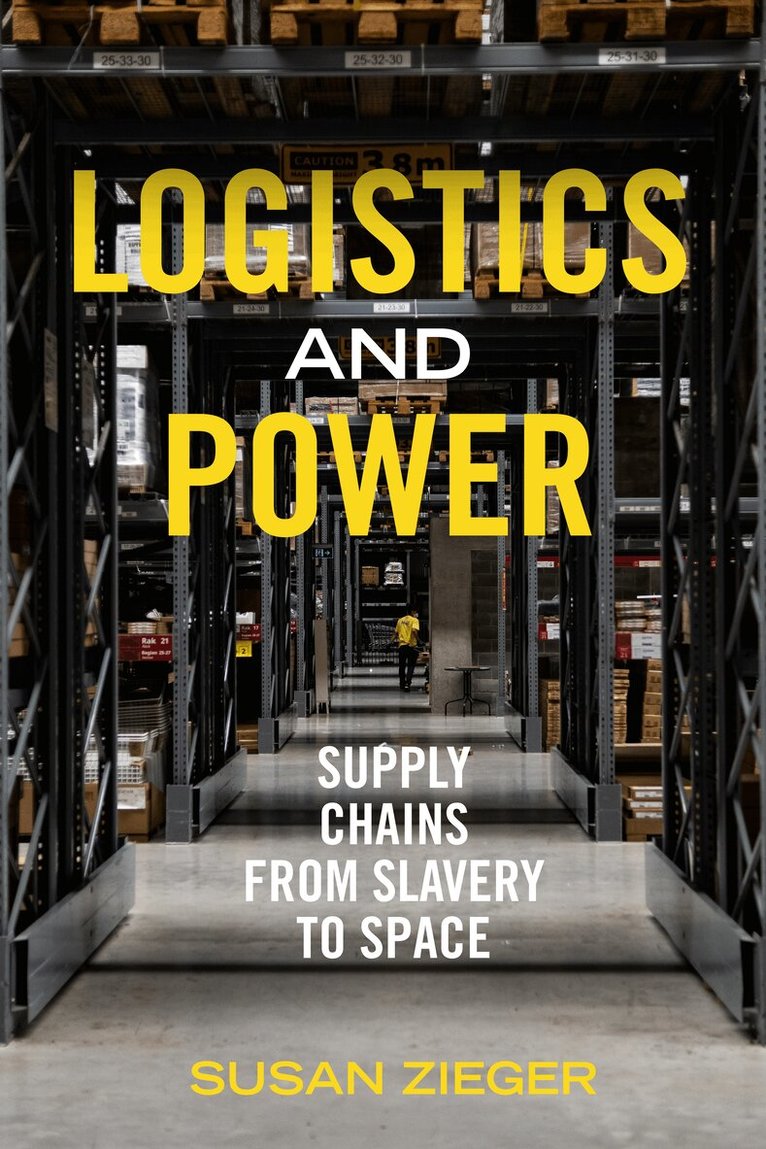
From supply chains to surveillance, how logistics drives modern power—and its consequences. Movement is the lifeblood of capital, even more so than growth. If goods, people, and information don't flow, then profits don't either. Ensuring that laborers, shipping containers, media, commercially valuable data, and much else are in the right place at the right time demands a subtle choreography. Enter logistics. Susan Zieger argues that logistics is the foundation of power in our time. Blending detailed historical research with real-life stories that crystallize the human and ecological consequences of supply chains, Logistics and Power shows how the pursuit of efficient movement has come to organize economies while disordering societies and selves. Logistics emerges as the key to consumerism and the experience of work. It justifies corporate and police surveillance, illuminates patterns of migration and exploitation, and explains why the oceans are clotted with plastic. It is in the sphere of logistics that capitalist motives are most dramatically in tension with planetary needs. A headfirst encounter with the obscure forces subordinating all goals below those of capital, Logistics and Power points the way to an alternative: a mindful and politically attentive kind of movement compatible with human thriving.
1 296 kr
Skickas inom 10-15 vardagar
How did we arrive at our contemporary consumer media economy? Why are we now fixated on screens, imbibing information that constantly expires, and longing for more direct or authentic kinds of experience? The Mediated Mind answers these questions by revisiting a previous media revolution, the nineteenth-century explosion of mass print. Like our own smartphone screens, printed paper and imprinted objects touched the most intimate regions of nineteenth-century life. The rise of this printed ephemera, and its new information economy, generated modern consumer experiences such as voracious collecting and curating, fantasies of disembodied mental travel, and information addiction. Susan Zieger demonstrates how the nineteenth century established affective, psychological, social, and cultural habits of media consumption that we still experience, even as pixels supersede paper. Revealing the history of our own moment, The Mediated Mind challenges the commonplace assumption that our own new media lack a past, or that our own experiences are unprecedented.
386 kr
Skickas inom 7-10 vardagar
How did we arrive at our contemporary consumer media economy? Why are we now fixated on screens, imbibing information that constantly expires, and longing for more direct or authentic kinds of experience? The Mediated Mind answers these questions by revisiting a previous media revolution, the nineteenth-century explosion of mass print. Like our own smartphone screens, printed paper and imprinted objects touched the most intimate regions of nineteenth-century life. The rise of this printed ephemera, and its new information economy, generated modern consumer experiences such as voracious collecting and curating, fantasies of disembodied mental travel, and information addiction. Susan Zieger demonstrates how the nineteenth century established affective, psychological, social, and cultural habits of media consumption that we still experience, even as pixels supersede paper. Revealing the history of our own moment, The Mediated Mind challenges the commonplace assumption that our own new media lack a past, or that our own experiences are unprecedented.
1 085 kr
Skickas inom 7-10 vardagar
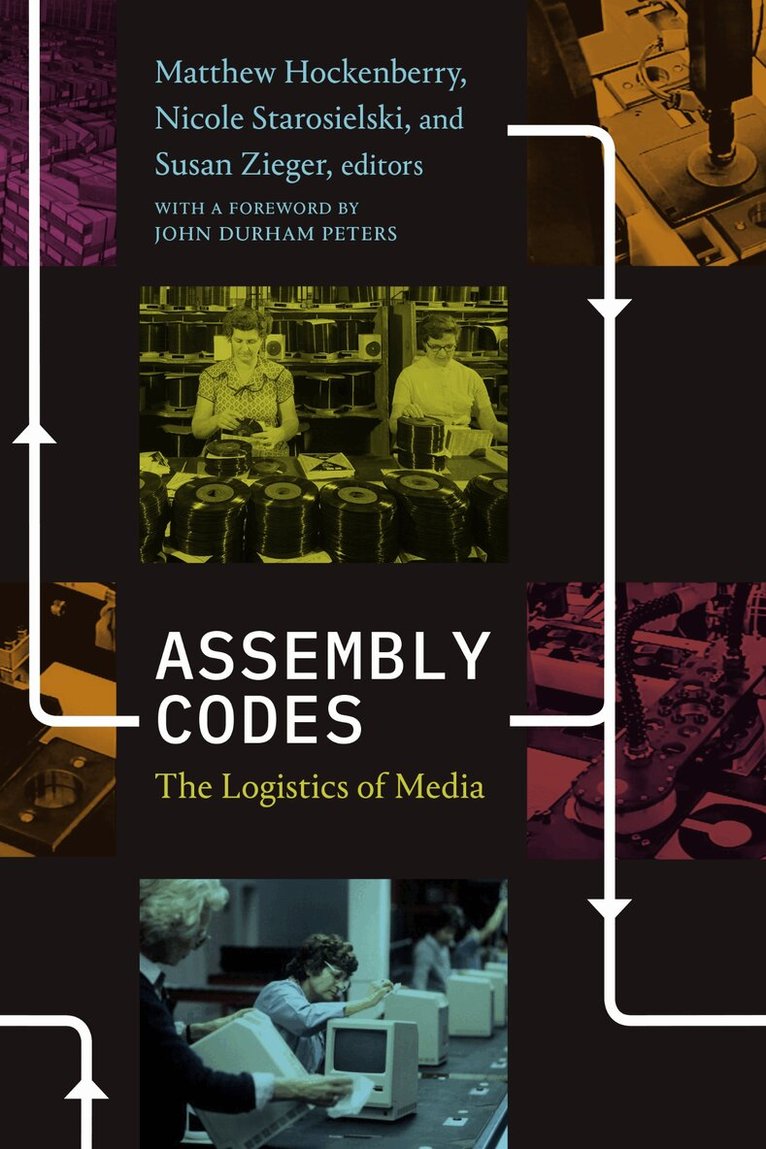
The contributors to Assembly Codes examine how media and logistics set the conditions for the circulation of information and culture. They document how logistics-the techniques of organizing and coordinating the movement of materials, bodies, and information-has substantially impacted the production, distribution, and consumption of media. At the same time, physical media, such as paperwork, along with media technologies ranging from phone systems to software are central to the operations of logistics. The contributors interrogate topics ranging from the logistics of film production and the construction of internet infrastructure to the environmental impact of the creation, distribution, and sale of vinyl records. They also reveal how logistical technologies have generated new aesthetic and performative practices. In charting the specific points of contact, dependence, and friction between media and logistics, Assembly Codes demonstrates that media and logistics are co-constitutive and that one cannot be understood apart from the other.ContributorsEbony Coletu, Kay Dickinson, Stefano Harney, Matthew Hockenberry, Tung-Hui Hu, Shannon Mattern, Fred Moten, Michael Palm, Ned Rossiter, Nicole Starosielski, Liam Cole Young, Susan Zieger
283 kr
Skickas inom 7-10 vardagar
The contributors to Assembly Codes examine how media and logistics set the conditions for the circulation of information and culture. They document how logistics-the techniques of organizing and coordinating the movement of materials, bodies, and information-has substantially impacted the production, distribution, and consumption of media. At the same time, physical media, such as paperwork, along with media technologies ranging from phone systems to software are central to the operations of logistics. The contributors interrogate topics ranging from the logistics of film production and the construction of internet infrastructure to the environmental impact of the creation, distribution, and sale of vinyl records. They also reveal how logistical technologies have generated new aesthetic and performative practices. In charting the specific points of contact, dependence, and friction between media and logistics, Assembly Codes demonstrates that media and logistics are co-constitutive and that one cannot be understood apart from the other.ContributorsEbony Coletu, Kay Dickinson, Stefano Harney, Matthew Hockenberry, Tung-Hui Hu, Shannon Mattern, Fred Moten, Michael Palm, Ned Rossiter, Nicole Starosielski, Liam Cole Young, Susan Zieger