Susanna Priest – författare
Visar alla böcker från författaren Susanna Priest. Handla med fri frakt och snabb leverans.
6 produkter
6 produkter
Häftad, Engelska, 2018
367 kr
Skickas inom 5-8 vardagar
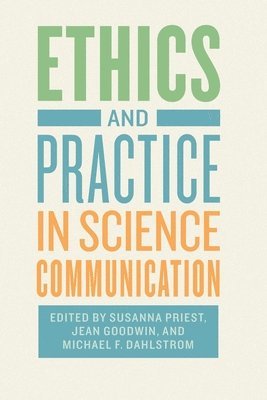
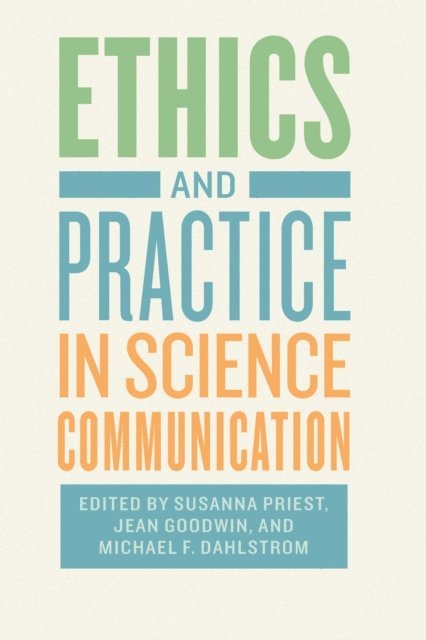
From climate to vaccination, stem-cell research to evolution, scientific work is often the subject of public controversies in which scientists and science communicators find themselves enmeshed. Especially with such hot-button topics, science communication plays vital roles. Gathering together the work of a multidisciplinary, international collection of scholars, the editors of Ethics and Practice in Science Communication present an enlightening dialogue involving these communities, one that articulates the often differing objectives and ethical responsibilities communicators face in bringing a range of scientific knowledge to the wider world.In three sections—how ethics matters, professional practice, and case studies—contributors to this volume explore the many complex questions surrounding the communication of scientific results to nonscientists. Has the science been shared clearly and accurately? Have questions of risk, uncertainty, and appropriate representation been adequately addressed? And, most fundamentally, what is the purpose of communicating science to the public: Is it to inform and empower? Or to persuade—to influence behavior and policy? By inspiring scientists and science communicators alike to think more deeply about their work, this book reaffirms that the integrity of the communication of science is vital to a healthy relationship between science and society today.
E-bok
Engelska, 2018575 kr
Läs direkt efter köp
From climate to vaccination, stem-cell research to evolution, scientific work is often the subject of public controversies in which scientists and science communicators find themselves enmeshed. Especially with such hot-button topics, science communication plays vital roles. Gathering together the work of a multidisciplinary, international collection of scholars, the editors of Ethics and Practice in Science Communication present an enlightening dialogue involving these communities, one that articulates the often differing objectives and ethical responsibilities communicators face in bringing a range of scientific knowledge to the wider world. In three sections—how ethics matters, professional practice, and case studies—contributors to this volume explore the many complex questions surrounding the communication of scientific results to nonscientists. Has the science been shared clearly and accurately? Have questions of risk, uncertainty, and appropriate representation been adequately addressed? And, most fundamentally, what is the purpose of communicating science to the public: Is it to inform and empower? Or to persuade—to influence behavior and policy? By inspiring scientists and science communicators alike to think more deeply about their work, this book reaffirms that the integrity of the communication of science is vital to a healthy relationship between science and society today.
Inbunden, Engelska, 2016
1 102 kr
Skickas inom 10-15 vardagar
This book asks and answers the question of what communication research and other social sciences can offer that will help the global community to address climate change by identifying the conditions that can persuade audiences and encourage collective action on climate. While scientists often expect that teaching people the scientific facts will change their minds about climate change, closer analysis suggests this is not always the case. Communication scholars are pursuing other ideas based on what we know about influence and persuasion, but this approach does not provide complete answers either. Some misconceptions can be corrected by education, and some messages will be more powerful than others. The advent of the Internet also makes vast stores of information readily available. But audiences still process this information through different filters, based on their own values and beliefs – including their understanding of how science works. In between momentous events, media coverage of climate tends to recede and individuals turn their attention back to their daily lives. Yet there is a path forward: Climate change is a social justice issue that no individual – and no nation – can solve on their own. A different sort of communication effort can help.
E-bok
PDF, Engelska, 20161 410 kr
Läs direkt efter köp
This book asks and answers the question of what communication research and other social sciences can offer that will help the global community to address climate change by identifying the conditions that can persuade audiences and encourage collective action on climate. While scientists often expect that teaching people the scientific facts will change their minds about climate change, closer analysis suggests this is not always the case. Communication scholars are pursuing other ideas based on what we know about influence and persuasion, but this approach does not provide complete answers either. Some misconceptions can be corrected by education, and some messages will be more powerful than others. The advent of the Internet also makes vast stores of information readily available. But audiences still process this information through different filters, based on their own values and beliefs – including their understanding of how science works. In between momentous events, media coverage of climate tends to recede and individuals turn their attention back to their daily lives. Yet there is a path forward: Climate change is a social justice issue that no individual – and no nation – can solve on their own. A different sort of communication effort can help.
Häftad, Engelska, 2019
856 kr
Skickas inom 5-8 vardagar
This book asks and answers the question of what communication research and other social sciences can offer that will help the global community to address climate change by identifying the conditions that can persuade audiences and encourage collective action on climate. While scientists often expect that teaching people the scientific facts will change their minds about climate change, closer analysis suggests this is not always the case. Communication scholars are pursuing other ideas based on what we know about influence and persuasion, but this approach does not provide complete answers either. Some misconceptions can be corrected by education, and some messages will be more powerful than others. The advent of the Internet also makes vast stores of information readily available. But audiences still process this information through different filters, based on their own values and beliefs – including their understanding of how science works. In between momentous events, media coverage of climate tends to recede and individuals turn their attention back to their daily lives. Yet there is a path forward: Climate change is a social justice issue that no individual – and no nation – can solve on their own. A different sort of communication effort can help.
Inbunden, Engelska, 2018
1 090 kr
Tillfälligt slut
From climate to vaccination, stem-cell research to evolution, scientific work is often the subject of public controversies in which scientists and science communicators find themselves enmeshed. Especially with such hot-button topics, science communication plays vital roles. Gathering together the work of a multidisciplinary, international collection of scholars, the editors of Ethics and Practice in Science Communication present an enlightening dialogue involving these communities, one that articulates the often differing objectives and ethical responsibilities communicators face in bringing a range of scientific knowledge to the wider world.In three sections—how ethics matters, professional practice, and case studies—contributors to this volume explore the many complex questions surrounding the communication of scientific results to nonscientists. Has the science been shared clearly and accurately? Have questions of risk, uncertainty, and appropriate representation been adequately addressed? And, most fundamentally, what is the purpose of communicating science to the public: Is it to inform and empower? Or to persuade—to influence behavior and policy? By inspiring scientists and science communicators alike to think more deeply about their work, this book reaffirms that the integrity of the communication of science is vital to a healthy relationship between science and society today.