Susanne Vees-Gulani - Böcker
Visar alla böcker från författaren Susanne Vees-Gulani. Handla med fri frakt och snabb leverans.
4 produkter
4 produkter
545 kr
Skickas inom 7-10 vardagar
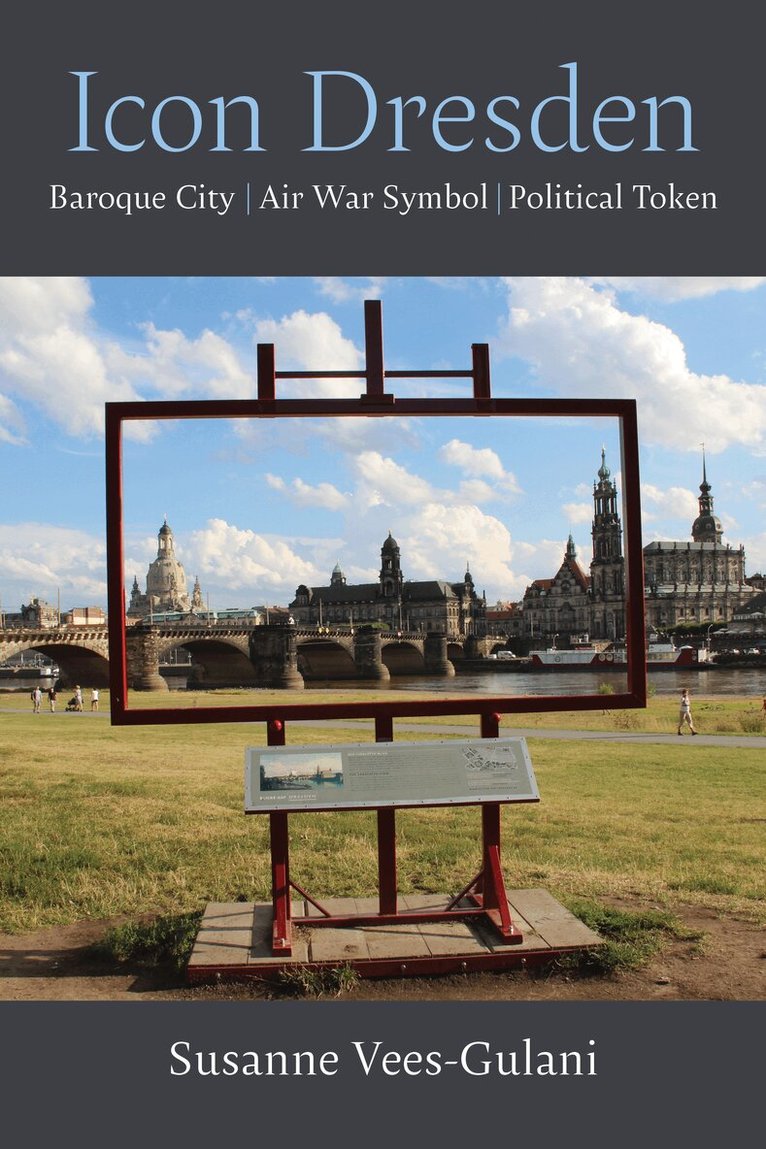
Icon Dresden explores how memory and politics in Dresden after its 1945 bombing are deeply intertwined with the city’s urban history. It highlights the complex origins of Dresden’s reputation as an exclusively cultural center, focusing on urban planning, marketing, tourism, and the city’s visual archive since the 17th century. Based on this iconic status, a narrative of victimhood arose after its destruction that ignored responsibilities while highlighting the city’s innocence. Despite its origin in Nazi propaganda, this narrative influenced postwar political discourse in socialist and post-reunification Germany. Icon Dresden also provides insight into Dresden’s role under National Socialism and the GDR’s evasive response to this history. It reveals how the strong presence of far-right movements in the city today stems from multiple discourses formed over centuries and communicated from generation to generation. Drawing on urban, heritage, and tourism studies, visual and memory studies, and environmental psychology, Icon Dresden examines Dresden’s history, identity, visual representations, and rebuilding decisions. It exposes the narratives that define its place in German and international memory and how, paradoxically, they support both Dresden’s current image as a symbol of peace and reconciliation and its backing of nativist and far-right movements.
1 753 kr
Skickas inom 7-10 vardagar
Icon Dresden explores how memory and politics in Dresden after its 1945 bombing are deeply intertwined with the city’s urban history. It highlights the complex origins of Dresden’s reputation as an exclusively cultural center, focusing on urban planning, marketing, tourism, and the city’s visual archive since the 17th century. Based on this iconic status, a narrative of victimhood arose after its destruction that ignored responsibilities while highlighting the city’s innocence. Despite its origin in Nazi propaganda, this narrative influenced postwar political discourse in socialist and post-reunification Germany. Icon Dresden also provides insight into Dresden’s role under National Socialism and the GDR’s evasive response to this history. It reveals how the strong presence of far-right movements in the city today stems from multiple discourses formed over centuries and communicated from generation to generation. Drawing on urban, heritage, and tourism studies, visual and memory studies, and environmental psychology, Icon Dresden examines Dresden’s history, identity, visual representations, and rebuilding decisions. It exposes the narratives that define its place in German and international memory and how, paradoxically, they support both Dresden’s current image as a symbol of peace and reconciliation and its backing of nativist and far-right movements.
Del 95 - Studies in German Literature Linguistics and Culture
Generational Shifts in Contemporary German Culture
Inbunden, Engelska, 2010
983 kr
Tillfälligt slut
The concept of the generation in today's German culture and literature, and its role in German identity.In the debates since 1945 on German history and culture, the concept of generations has become ever more prominent. Recent and ongoing shifts in how the various generations are seen -- and see themselves -- in relation to historyand to each other have taken on key importance in contemporary German cultural studies. The seismic events of twentieth-century German history are no longer solely first-generational lived experiences but are also historical moments seen through the eyes of successor generations. The generation, seen as a category of memory, thus holds a key to major shifts in German identity. The changing generational perspectives of German writers and filmmakers not onlyreflect but also influence these trends, exposing both the expected differences between generational views and unexpected continuities. Moreover, as younger artists reframe recent history, older generations like the 1968ers are also contributing to these shifts by reassessing their own experiences and cultural contributions. This volume of new essays applies current discourse on generations in German culture to contemporary works dealing with major sociohistorical events since the Nazi period.Contributors: Svea Bräunert, Laurel Cohen-Pfister, Friederike Eigler, Thomas C. Fox, Katharina Gerstenberger, Erin McGlothlin, Brad Prager, Ilka Rasch, Susanne Rinner, Caroline Schaumann, Maria Stehle, Reinhild Steingröver, Susanne Vees-Gulani.Laurel Cohen-Pfister is Associate Professor of German at Gettysburg College, and Susanne Vees-Gulani is Assistant Professor of German and Comparative Literature at Case Western Reserve University.
1 865 kr
Skickas inom 5-8 vardagar
Dieses Buch analysiert Werke der Nachkriegsliteratur, die Flächenbombardements deutscher Städte behandeln, im Kontext der Traumatheorie und der Schuldfrage im Hinblick auf Deutschlands Nazi-Vergangenheit. In diese Untersuchung ist die Diskussion der jüngsten Vergangenheit eingebettet, die sich mit dem Luftkrieg des 2. Weltkriegs und seinem Einfluss auf die deutsche Kultur in einem weiteren historischen, gesellschaftlichen und psychologischen Sinn befasst.