Suzannah Lipscomb - Böcker
Visar alla böcker från författaren Suzannah Lipscomb. Handla med fri frakt och snabb leverans.
11 produkter
11 produkter
119 kr
Skickas
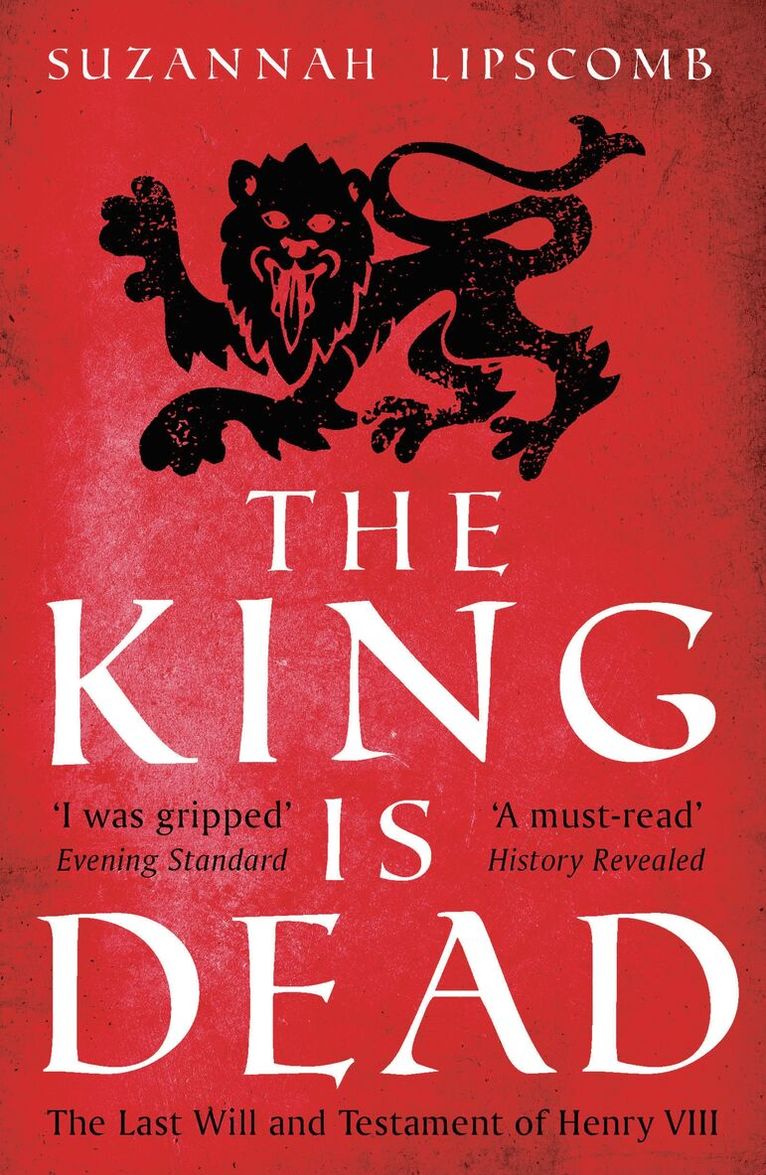
On 28 January 1547, the sickly and obese King Henry VIII died at Whitehall. Just hours before his passing, his last will and testament had been read, stamped and sealed. The will confirmed the line of succession as Edward, Mary and Elizabeth; and, following them, the Grey and Suffolk families. It also listed bequests to the king's most trusted councillors and servants.Henry's will is one of the most intriguing and contested documents in British history. Historians have disagreed over its intended meaning, its authenticity and validity, and the circumstances of its creation. As well as examining the background to the drafting of the will and describing Henry's last days, Suzannah Lipscomb offers her own, illuminating interpretation of one of the most significant constitutional documents of the Tudor period.'A bold and original attempt to unravel one of the great mysteries of English history' DAVID STARKEY
183 kr
Skickas
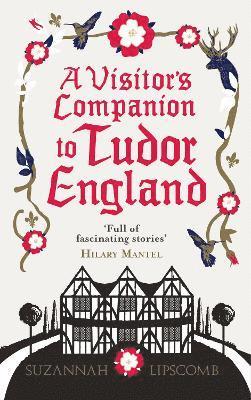
Join historian Suzannah Lipscomb as she reveals the hidden secrets of palaces, castles, theatres and abbeys to uncover the stories of Tudor England. From the famous palace at Hampton Court where dangerous court intrigue was rife, to less well-known houses, such as Anne Boleyn's childhood home at Hever Castle or Tutbury Castle where Mary Queen of Scots was imprisoned, follow in the footsteps of the Tudors in the places that they knew.In the corridors of power and the courtyards of country houses we meet the passionate but tragic Kateryn Parr, Henry VIII's last wife, Lady Jane Grey the nine-day queen, and hear how Sir Walter Raleigh planned his trip to the New World. This lively and engaging book reveals the rich history of the Tudors and paints a vivid and captivating picture of what it would have been like to live in Tudor England.
606 kr
Skickas inom 5-8 vardagar
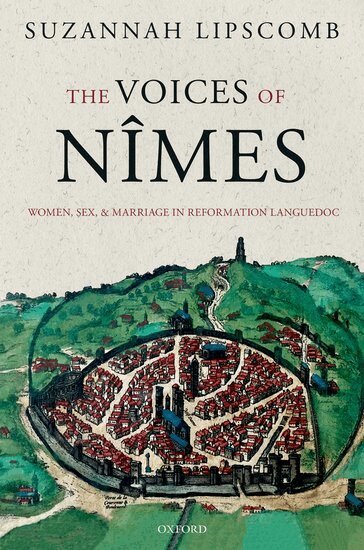
Most of the women who ever lived left no trace of their existence on the record of history. Sixteenth- and seventeenth-century women of the middling and lower levels of society left no letters or diaries in which they expressed what they felt or thought. Criminal courts and magistrates kept few records of their testimonies, and no ecclesiastical court records are known to survive for the French Roman Catholic Church between 1540 and 1667. For the most part, we cannot hear the voices of ordinary French women - but this study allows us to do so.Based on the evidence of 1,200 cases brought before the consistories - or moral courts - of the Huguenot church of Languedoc between 1561 and 1615, The Voices of Nîmes allows us to access ordinary women's everyday lives: their speech, behaviour, and attitudes relating to love, faith, and marriage, as well as friendship and sex. Women appeared frequently before the consistory because one of the chief functions of moral discipline was the regulation of sexuality, and women were thought to be primarily responsible for sexual sin. This means that the registers include over a thousand testimonies by and about women, most of whom left no other record to posterity. Women also featured so prominently before the consistories because of an ironic, unintended consequence of the consistorial system: it empowered women. Women quickly learnt how to use the consistory: they denounced those who abused them, they deployed the consistory to force men to honour their promises, and they started rumours they knew would be followed up by the elders. The registers therefore offer unrivalled evidence of women's agency, in this intensely patriarchal society, in a range of different contexts, such as their enjoyment of their sexuality, choice of marriage partners, or idiosyncratic spiritual engagement. The consistorial registers, therefore, let us see how independent, self-determining, and vocal women could be in an age when they had limited legal rights, little official power, and few prospects. As a result, this book suggests we need to reconceptualize female power: women's power was not just hidden, manipulative, and devious, but also far more public than historians have previously recognized.
254 kr
Skickas
Most of the women who ever lived left no trace of their existence on the record of history. Sixteenth- and seventeenth-century women of the middling and lower levels of society left no letters or diaries in which they expressed what they felt or thought. Criminal courts and magistrates kept few records of their testimonies, and no ecclesiastical court records are known to survive for the French Roman Catholic Church between 1540 and 1667. For the most part, we cannot hear the voices of ordinary French women - but this study allows us to do so.Based on the evidence of 1,200 cases brought before the consistories - or moral courts - of the Huguenot church of Languedoc between 1561 and 1615, The Voices of Nimes allows us to access ordinary women's everyday lives: their speech, behaviour, and attitudes relating to love, faith, and marriage, as well as friendship and sex. Women appeared frequently before the consistory because one of the chief functions of moral discipline was the regulation of sexuality, and women were thought to be primarily responsible for sexual sin. This means that the registers include over a thousand testimonies by and about women, most of whom left no other record to posterity.Women also featured so prominently before the consistories because of an ironic, unintended consequence of the consistorial system: it empowered women. Women quickly learnt how to use the consistory: they denounced those who abused them, they deployed the consistory to force men to honour their promises, and they started rumours they knew would be followed up by the elders. The registers therefore offer unrivalled evidence of women's agency, in this intensely patriarchal society, in a range of different contexts, such as their enjoyment of their sexuality, choice of marriage partners, or idiosyncratic spiritual engagement. The consistorial registers, therefore, let us see how independent, self-determining, and vocal women could be in an age when they had limited legal rights, little official power, and few prospects. As a result, this book suggests we need to reconceptualize female power: women's power was not just hidden, manipulative, and devious, but also far more public than historians have previously recognized.
146 kr
Skickas
One of the best-known figures of British history, collective memory of Henry VIII presents us with the image of a corpulent, covetous, and cunning king whose appetite for worldly goods met few parallels, whose wives met infamously premature ends, and whose religion was ever political in intent. 1536 - focusing on a pivotal year in the life of the King - reveals a fuller portrait of this complex monarch, detailing the finer shades of humanity that have so long been overlooked. We discover that in 1536 Henry met many failures - physical, personal, and political - and emerged from them a revolutionary new king who proceeded to transform a nation and reform a religion. A compelling story, the effects of which are still with us today, 1536 shows what a profound difference can be made merely by changing the heart of a king.
567 kr
Skickas inom 10-15 vardagar
After 500 years Henry VIII still retains a public fascination unmatched by any monarch before or since. Whilst his popular image is firmly associated with his appetites - sexual and gastronomic - scholars have long recognized that his reign also ushered in profound changes to English society and culture, the legacy of which endure to this day. To help take stock of such a multifaceted and contested history, this volume presents a collection of 17 essays that showcase the very latest thinking and research on Henry and his court. Divided into seven parts, the book highlights how the political, religious and cultural aspects of Henry's reign came together to create a one of the most significant and transformative periods of English history. The volume is genuinely interdisciplinary, drawing on literature, art history, architecture and drama to enrich our knowledge. The first part is a powerful and personal account by Professor George W. Bernard of his experience of writing about Henry and his reign. The next parts - Material Culture and Images - reflect a historical concern with non-documentary evidence, exploring how objects, collections, paintings and buildings can provide unrivalled insight into the world of the Tudor court. The parts on Court Culture and Performance explore the literary and theatrical world and the performative aspects of court life, looking at how the Tudor court attempted to present itself to the world, as well as how it was represented by others. The part on Reactions focuses upon the political and religious currents stirred up by Henry's policies, and how they in turn came to influence his actions. Through this wide-ranging, yet thematically coherent approach, a fascinating window is opened into the world of Henry VIII and his court. In particular, building on research undertaken over the last ten years, a number of contributors focus on topics that have been neglected by traditional historical writing, for example gender, graffiti and clothing. With contributions from many of the leading scholars of Tudor England, the collection offers not only a snapshot of the latest historical thinking, but also provides a starting point for future research into the world of this colourful, but often misrepresented monarch.
2 170 kr
Skickas inom 10-15 vardagar
After 500 years Henry VIII still retains a public fascination unmatched by any monarch before or since. Whilst his popular image is firmly associated with his appetites - sexual and gastronomic - scholars have long recognized that his reign also ushered in profound changes to English society and culture, the legacy of which endure to this day. To help take stock of such a multifaceted and contested history, this volume presents a collection of 17 essays that showcase the very latest thinking and research on Henry and his court. Divided into seven parts, the book highlights how the political, religious and cultural aspects of Henry's reign came together to create a one of the most significant and transformative periods of English history. The volume is genuinely interdisciplinary, drawing on literature, art history, architecture and drama to enrich our knowledge. The first part is a powerful and personal account by Professor George W. Bernard of his experience of writing about Henry and his reign. The next parts - Material Culture and Images - reflect a historical concern with non-documentary evidence, exploring how objects, collections, paintings and buildings can provide unrivalled insight into the world of the Tudor court. The parts on Court Culture and Performance explore the literary and theatrical world and the performative aspects of court life, looking at how the Tudor court attempted to present itself to the world, as well as how it was represented by others. The part on Reactions focuses upon the political and religious currents stirred up by Henry's policies, and how they in turn came to influence his actions. Through this wide-ranging, yet thematically coherent approach, a fascinating window is opened into the world of Henry VIII and his court. In particular, building on research undertaken over the last ten years, a number of contributors focus on topics that have been neglected by traditional historical writing, for example gender, graffiti and clothing. With contributions from many of the leading scholars of Tudor England, the collection offers not only a snapshot of the latest historical thinking, but also provides a starting point for future research into the world of this colourful, but often misrepresented monarch.
165 kr
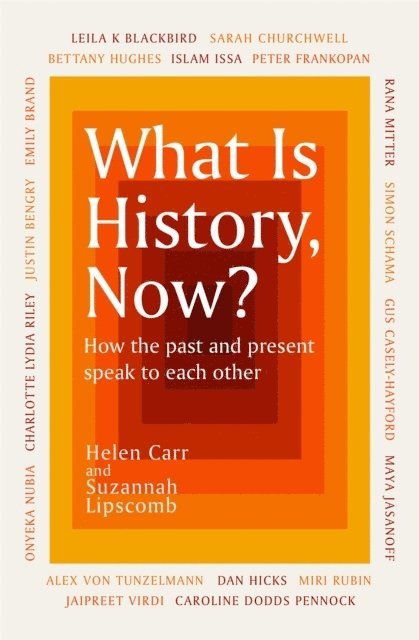
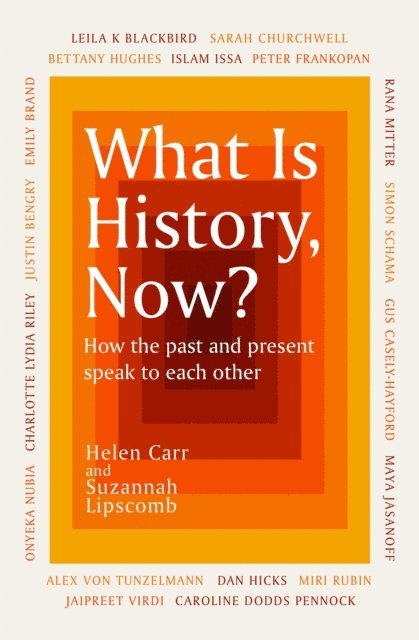
This groundbreaking new collection addresses the burning issue of how we interpret history today. What stories are told, and by whom, who should be celebrated, and what rewritten, are questions that have been asked recently not just within the history world, but by all of us. Featuring a diverse mix of writers, both bestselling names and emerging voices, this is the history book we need NOW.WHAT IS HISTORY, NOW? covers topics such as the history of racism and anti-racism, queer history, the history of faith, the history of disability, environmental history, escaping imperial nostalgia, hearing women's voices and 'rewriting' the past. The list of contributors includes: Justin Bengry, Leila K Blackbird, Emily Brand, Gus Casely-Hayford, Sarah Churchwell, Caroline Dodds Pennock, Peter Frankopan, Bettany Hughes, Dan Hicks, Onyeka Nubia, Islam Issa, Maya Jasanoff, Rana Mitter, Charlotte Riley, Miri Rubin, Simon Schama, Alex von Tunzelmann and Jaipreet Virdi.
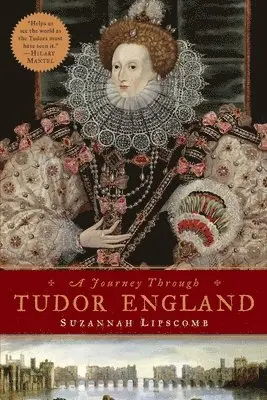
Journey Through Tudor England: Hampton Court Palace and the Tower of London to Stratford-upon-Avon and Thornbury Castle
Inbunden, Engelska, 2019
557 kr
Skickas inom 3-6 vardagar
Journey Through Tudor England: Hampton Court Palace and the Tower of London to Stratford-Upon-Avon and Thornbury Castle
Häftad, Engelska, 2014
308 kr
Skickas inom 3-6 vardagar
329 kr
Skickas inom 3-6 vardagar